Haemophilia is in most cases, an inherited X-linked recessive bleeding disorder, with a prevalence of 1:5000 for haemophilia A (a deficiency in clotting factor VIII) and 1:25000 for haemophilia B (a deficiency in clotting factor IX) of the male population [1]. Without coagulation factor replacement, patients with severe haemophilia experience periodic spontaneous bleeding into joints and muscles.
Advances in medical care and pharmaceutical treatment have resulted in increased life expectancy, and have switched the emphasis of care from the management of bleeds and infectious disease to the prevention of chronic disability. However, the development of inhibitors to coagulation factor substitution therapy is a serious complication of treatment that arises in 30% of those with haemophilia A and 3% of those with haemophilia B [2]. Inhibitor eradication requires intensive daily infusion of factor concentrate but tolerance can be achieved within 6-12 months, although some may take up to 36 months [2]. The persistence of inhibitors can have major implications for a patient's morbidity and mortality, as well as their quality of life and that of their caregivers [3]. Most research in this area has focused on the biomedical pathoetiology of the development of inhibitors in children with severe haemophilia as well as the pharmacological management. Available data analysing this group's perception of their quality of life are rather limited. The aim of this study was to examine how children and their families affected by inhibitors perceived their quality of life.
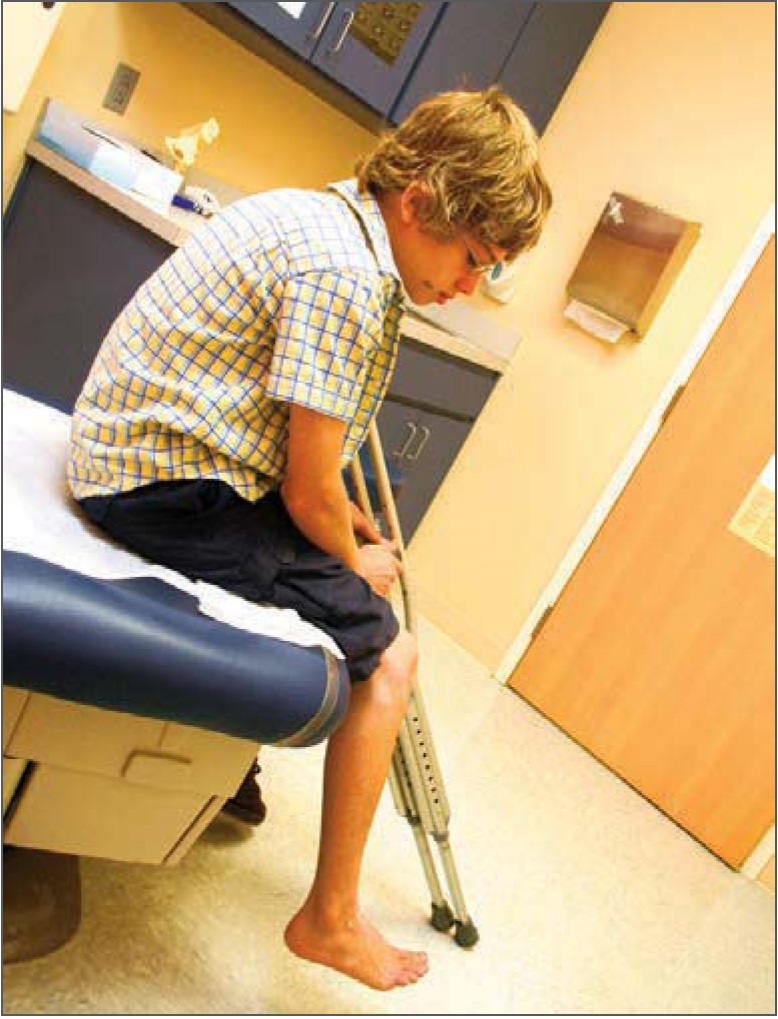
The persistence of an inhibitor can have major implications for the quality of life of a haemophilia patient
©Shutterstock Inc
Methodology
Between September 2008 and April 2012, a review of published data was conducted via a search of electronic databases (Medline, CINAHL, EMBASE, PscyINFO, ASSIA, Google Scholar, Google) as well as journals and books. The search terms used were: quality of life, health belief, behaviour, health behaviour, adolescents, children, child, paediatric, health, community, empowerment, participation, chronic, chronic disease, chronic condition, haemophilia, inhibitor, physical, social, psychological, wellbeing, family, impact, family life, system, model of care, healthcare.
A qualitative research approach was adopted to measure the perception of quality of life in boys with inhibitors using health status measures. Qualitative research seeks to elicit descriptive data and to generate hypotheses as well as explain social phenomena [4]. In the present study, this allowed important issues to be identified by the subjects, in the context of their ‘real lives'.
Ethical approval for the study was granted by the Institute of Child Health/Great Ormond Street Hospital Research Ethics Committee, following which we recruited five boys aged 8-15 years with severe haemophilia and inhibitors, and parents/carers from seven families (Table 1). All subjects were patients of two large haemophilia comprehensive care centres in London.
Table 1
Patient characteristics at time of interview
In most cases boys and their parents were interviewed separately, allowing participants the opportunity to discuss sensitive issues freely without concerns about upsetting or contradicting each other. Only one boy (who was aged nine) felt more comfortable being interviewed with his parents.
Interviews were semi-structured the interview guide included 14 questions, which differed for parents and boys (Table 2); in interviews with the boys, questions were structured in simpler terms and some were broken down into two parts. The guide reflected the aims and objectives of the study and was informed by the literature review, discussion with peers and senior colleagues as well as the CHOKLAT measure of quality of life in boys with haemophilia [5]. Mind maps were used to note general themes, words, concepts and questions so that they could be amalgamated to create the interview schedule [6].
Table 2
Questions to participants
Interviews were tape-recorded unless the patient objected, in which case written notes would hgave been taken (there were no objections). All tapes were transcribed for analysis.
The narrative accounts were analysed using thematic analysis: this involved systematic and rigorous searching and coding of data, from which themes were outlined, exemplified, and illustrated with verbatim extracts of the participant’s response. Emergent themes were named and coded: some were exclusive to an individual while others were common to several interviewees. Identification of similarities and differences served to illuminate the focus of the study. This process has been described as open coding [7]. Subsequent analysis involved axial coding, a grouping together of similar themes into broader categories in order to understand the phenomenon to which they relate [7]. Transcripts for the parents and the boys who participated in the study were analysed separately, but the findings were linked if similar categories were identified in the analysis. To maintain confidentiality participants are coded as boy (B), mother (M), father (F), and family number. So B5 related to the boy from family 5 (see Table 1)
Results
In the open coding and axial coding processes, eight categories for both boys and parents were inductively derived (Table 3). Subsequent analysis of the data to select and identify the core categories and systematically relating these to other categories resulted in the emergence of three main themes: coping strategy, emotional well-being and support. These themes described and captured the experiences of the family coping and living with severe haemophilia and inhibitors, and are described in more detail below.
Table 3
The core themes that emerged in interviews with boys and parents
Coping Strategy
Several interview questions explored how boys and their families coped with their illness and disability within the context of family life and social relationships. Uncertainty and the limitation associated with their illness were aspects that many found difficult to come to accept. There were times when they coped better with their illness than at others, for example, when they had not had joint or muscle bleeds for a short period of time.
Another example of coping was learning to self-infuse at an early age. This gave individuals some control over their disability. For example, B5 was only nine years old when he started to treat himself. He said: “I treat myself because it will be hard for the nurses to keep on coming every day. After they do my mine they have to go to other people, so I’d done it.”
B2 gave a typical example of how he managed his disability: “I had to think about things lot more before doing them because I know if I did certain things it will just like completely wreck the next two or so weeks.”
Absences from school due to hospital admissions and appointments had in some cases contributed to a sense of isolation and a lack of academic achievement. This was a common issue with most of the boys, as M6 remarked: “[He has had] a lot of hospitalisation in his life, which has affected him academically. He had so much time off school that he has got very behind.”
The boys attempted to forget about their illness and its impact on their lives. But the onset of a spontaneous or a trauma-induced bleed, which can cause long absences from school were frustrating and compounded the boys’ feelings of powerlessness. B2 said: “It’s just annoying really … I don’t understand why it stopped working … It’s just really irritating.” B5 said he was “Upset … because I was missing a lot of time off school.”
Despite these setbacks, the boys were able to balance concerns about their disability with having a normal life. As B6 put it: “Generally you get used to it really and just get on with life. Some things you can do and some things you can’t do.”
Parents, however, recognised that they had to cope with the condition, for the sake of their son and the rest of the family. M5 noted: “I’ve got no choice. He is my son.” F7 stated: “We have to care for him. He is our son.”
For these parents, just getting on with looking after their son, without questioning why, represented an important coping device. Mothers were usually responsible for the day-to-day care and division of labour provided a coping strategy for these families.
Some of these parents used normalisation and positive framing as an attempt to manage the condition. For example, factor treatment is normally administered in the mornings and evenings before and after school activities. Such compartmentalisation of their son’s disability was seen as an attempt to manage the condition.
M1 saw laughter as a way of coping. She said: “If you don’t laugh you’re going to cry aren’t you?”
Parents’ contact with services was an important contributory factor to their ability to cope. Several parents shared a common view. M1 stated: “I do think the centre is really, really good.” M4 offered a similar view: “First of all I am grateful to the team, we have received lots of good attention, especially as they make it more fun when he goes there. It’s like one big happy family.”
For all families, this support from haemophilia specialists was crucial in coping with their son’s care and their emotional well-being.
Emotional well-being
There was no evidence to suggest that the boys were unable to make friends at school as a result of their haemophilia: all had good social networks and were looked after by their friends, both in and out of school. Their frustration stemmed from the inability to join in some activities as they wished. Although these boys sometimes felt ‘depressed’, these periods remained transient.
Half of the boys interviewed were overweight due to lack of mobilisation following bleeds. An increase in bodyweight may further damage the joints of haemophilia patients that are already challenged by intra-articular bleeding [8]. The lack of mobilisation made some of the boys feel depressed. Two of the boys received counselling, which they found very useful. M2 expressed a similar view about her son’s frequent bleeds: “He missed a lot of school, put on weight, then he was depressed about his weight, and he couldn’t do any sports.”
Some of the boys recognised that successfully coping with their illness was important for others beside themselves, in particular their mothers. B2 felt sad about the distress experienced by his mother: “Well mum had to see me like that, which I remember her being quite upset about. I could tell it was upsetting my mum and you know I didn’t want to upset my mum.’ B7 also stated: “If my mother cries … I get sad too.”
Other work has shown that family reactions can affect substantially how adolescents felt and coped with their illness [9]. Social support was a significant mediator in coping with the effects of chronic illness. For the chronically ill child, their social network is composed mainly of family and close friends [10] so it is vital that their haemophilia does not have a great impact on those around them.
Parents mentioned the impact of haemophilia on the family. Guilt emerged as an important feature. M1 stated: “I feel guilty because I think ….. If it weren’t for me you won’t [sic] have that.”
To treat a child daily/twice daily can be painful as this is administered peripherally or via a port-a-cath. This can be distressing for the boys and their parents. M3 emphasised noted that, “there is a big element of guilt … if something does go wrong.”
Parents of children with disabilities can face considerable physical, emotional and financial stress and that health professionals can play a key role in preventing this by helping families develop balanced coping strategies that meet the medical and emotional needs of all members of the family [11]. The parents expressed similar stresses, and this varied slightly among participants depending on their family circumstances and the type of support available. Nearly all of the parents agreed that caring for a child with inhibitors was stressful and demanding, for example loss of school attendance due to the increase in spontaneous bleeds, increased infusion therapy, which meant that the child is exposed on a daily basis to needle pricks. All the distress the child experienced can have likely repercussions for the functioning of the whole family. M2 summed up the feelings of many parents: “It has been a very stressful time … No mother will want to see their son crying and you can’t do nothing [sic] about it … I think I had probably a bit of a break down from it all.” M5 said: “It was very difficult because most of the time I was in and out of hospital. He missed a lot of school.”
One of the biggest challenges for these parents was the fact that their son already had a severe form of disability (haemophilia) that was compounded further by the development of an inhibitor. Once the inhibitor was diagnosed, the usual “replacement therapy” was rendered ineffective. These parents understandably went through a very angry and difficult phase. M2 summed it up: “You need an outside interest as such, just to take your mind of all the crap that is going on. [Otherwise], you end up not actually dealing with it and I think it just causes so much stress.” This particular mother ended up with depression some years after her son’s diagnosis.
Adolescents must cope with the unique demands of their chronic condition along with the developmental tasks associated with their age group and there must be a balance between the two [9]. M2 emphasised that, “I am not going to abuse the system or what the haemophilia centre does for me, but I have to remember that I have a teenage son with other needs.”
Another issue highlighted was the impact on siblings, who have their own needs but must contend with the greater needs of their brother. Many struggled to cope at times with being the sibling of a child with special needs, feeling worried or jealous of the attention their brother received. M1 shared what her (unaffected) son said to her which she called ‘a terrible thing’: “Mum you never brought me up, I had to bring myself up.”
M6 expressed the feelings of the other siblings: “Recently he was very ill … and the other three kids were very worried … There was even a point when we thought oh me god something bad is going to happen here.”
Most of the parents had no-one to talk to: although they had family and friends, they did not wish to “burden” them. Also many felt that others would have no understanding of haemophilia and inhibitors compared to other chronic conditions. As a result, they felt increasingly isolated. M2 said, “I didn’t go out. I became insular and depressed.” M3 agreed: “I felt isolated rather, not [from] my family but [from] my friends”
Most parents felt a sense of loss and ill-prepared to deal with the consequences of haemophilia and inhibitors , especially how it influenced their developing son and their care. M3 stated: “Sometimes you think: ‘Ok you are crying.’ Obviously it’s a cry of pain, but [you ask yourself] Is he teething? Hopefully he is teething you don’t want … you go into self-denial.”
M6 said: “It’s a big shock to be told that the perfect baby you thought, you had may not be and actually you’ve got this problem.”
Some parents expressed their feelings about the future hopes and expectations for their sons. F6 was optimistic: “He will do something to the best of his capabilities and hopefully, hopefully it will be the right one for him. He will survive.” Similarly F7 echoed this: “He will be alright in the end. He has got his family to support him.”
Despite the support from their haemophilia centres, there is however, evidence of lack or little support elsewhere for these families. The next section will explore this area.
Support
All of the participants commented on their good relationships with their haemophilia doctors and nurses and valued the ability to talk to them not only about their disability but also about other general issues. When the boys were asked whether health professionals could do more to help them, all of them were ‘happy’ with the care they received. B1 advised caution: “First of all don’t spoil them … otherwise when they are older, they will think they can have whatever they want.”It reinforced the point that these boys should be treated as ‘normal’ as possible.
The lack of knowledge among other professionals, in particular in the early stages of diagnosis and out of hours support, was a major concern. Poor awareness about haemophilia and inhibitors was common and participants felt that their child had to go through unnecessary pain with their lives at times put at risk, due to poor knowledge. M4 stated: “I think they should be better educated … and be able to test children, because your child could fall down and if they have haemophilia they may have internal bleeding. One minute your child is fine and next minute your child will fall into coma and die, and afterwards, that’s when they find out your child had haemophilia. So I think they should work better towards that.”
F4 concurred: “If all doctors know the signs of haemophilia then they will know what to check for.”
Parents felt that the condition is rare and therefore there was not enough general awareness of the condition achieved through the media. M1 remarked: “It can only be done by the media. There are snippets [about] it. They should go more in depth, make ‘World in Action’ one day, and have a whole thing on haemophilia and inhibitors and how it affects everybody. It will be useful for people to understand.”
They were also frustrated and concerned about the “out-of-hours” health services due to the lack of knowledge on how to manage these boys promptly following a bleed. M4 echoed this point: “When he had the circumcision and I took him to the GP, he neglected us. He was bleeding for three days non-stop. We might have LOST him you know.”

F6 criticised health care professionals for not knowing enough about their child’s illness. He commented that some of them seemed disinterested in their child’s suffering: “The doctor comes round and says ‘what is wrong with him?’ and I say: ‘go and read his notes and come back. You are the doctor,’”
Discussion
The psychosocial impact of chronic conditions can increase stress on the child and family. Several studies have highlighted the link between mental health and well being in childhood and adolescents [12,13] (Eiser and Morse, 2001; Clark et al, 2006). Evidence from the data gathered suggested that a chronic condition such as severe haemophilia with inhibitors can represent a major psychosocial burden more than those without inhibitors. The impact of on-going stress from treatments, social disruption, changes in plans and expectations can be a substantial challenge to the social and emotional wellbeing of the affected person and their family [14].
Adolescents with chronic conditions still have the same needs as their peers without a chronic condition [15]. This was evident within the group of boys that participated in this study. Therefore, a “global check-up” that surveys their health habits and lifestyles should be included as part of their regular assessment. The quality of life element should be given due attention in any chronic paediatric illness [16]. In order to have the potential to optimise the quality of health of the patient, it is therefore important to develop an honest and open relationship between the treating physician, nurse, child and their parents.
The feelings of stress, guilt, and isolation were great concerns to the participants of this study. Our role as health care professionals is to work closely with these families in identifying solutions to these problems. The evaluation of quality of life has an important role to play throughout the course of a patient’s condition. Regular assessment and discussion of the individual’s quality of life will lead to a better understanding between the treaters and the child and his parents [17]. The key to achieving this will be through developing a partnership with the patients and their families. Quality of life measurement in practice can influence and improve clinical decision making by ensuring that treatment and evaluation of care focuses on the patient rather than the disease. However, the tools used must be valid, appropriate, reliable, adaptable and easy to interpret and to achieve this the tool need to be audited/evaluated/revaluated frequently [18].
An area of great concern for many families is the apparent lack of suitably qualified staff in emergency departments equipped with the right skills, expertise, and knowledge to care for children with haemophilia. Future development should perhaps explore a nurse-led first-tier on-call service with consultant support to facilitate these vulnerable patients. This will provide added support to the existing consultant on-call service particularly when it is devised across network models of care.
Conclusion
This small-scale qualitative study examined the perception of the quality of life in boys with inhibitors and their parents/carers. Some of the findings in the study can be related to families who have children with other chronic conditions. The comments offered by boys and their parents suggest that having an inhibitor has a substantial impact on the quality of life of boys and their families. The increased risk of bleeding and subsequent physical disability, and the uncertainty of treatment effectiveness greatly impacts on the boys who are affected by this complication and their families, and should not be underestimated: in particular it threatens the coping mechanisms that many had developed for dealing with haemophilia.
While there is adequate awareness within haemophilia care of the psychosocial impact of inhibitor development on family life, this may not always be seen as a priority when managing boys with inhibitors. It is crucial that service providers responsible for haemophilia care provide adequate resources to help support boys and their families. Service innovations such as a nurse-led on-call support should be considered.
Longitudinal investigations are difficult to conduct but are needed in order to clarify and provide the understanding of the process by which families confront stressful events and how these relate to functioning. This may help to evaluate families as they progress from initial diagnosis to key developmental phases and may help identify the periods of greatest challenges and aid in developing strategies to mitigate those threats that have an impact on family dynamics and quality of life.