At the Royal Free Hospital, we offer a family-based model of care. This is a complete contrast to the paternalistic, “doctor” knows best model where nurses and let alone patients had little role to play. It now seems curious that there was a time when it was thought dangerous to educate patients and to allow them to administer their own treatment. Thus, the paternalistic approach began to be overtaken by a more holistic multidisciplinary approach that included the patient.
In haemophilia, this was exemplified by, among others, four key health professionals. Katharine Dormandy who, as both a doctor and young working mother, saw family-based care as being quite natural and very far from a threat. A paper in the BMJ published in 1966 really shows the beginnings of a change in approach [1]. The first paragraph of the paper reads:
“Education is not a subject that would normally be discussed in a medical journal, but in the case of haemophilia when the patient is severely affected, education and the prevention of crippling are closely associated and the doctors are continually forced to consider education … unless these children are educationally equipped to hold sedentary jobs their future employment will be precarious.”
This was a paper that addressed the context of the patient and not purely the medical management. Patients were beginning to survive longer through better treatment, but they were not going to be fit for manual work, which would have been the tradition for most ordinary families, where the fathers and grandfathers would have done manual work. This group of healthcare professionals was thinking more widely, if we were going to support our patients to be able to support themselves and their families, then how were we going to ensure that they had the right education for more sedentary jobs? Katharine Dormandy had a genuine interest in her patients. She was interested in their whole context including where they came from and how they lived.
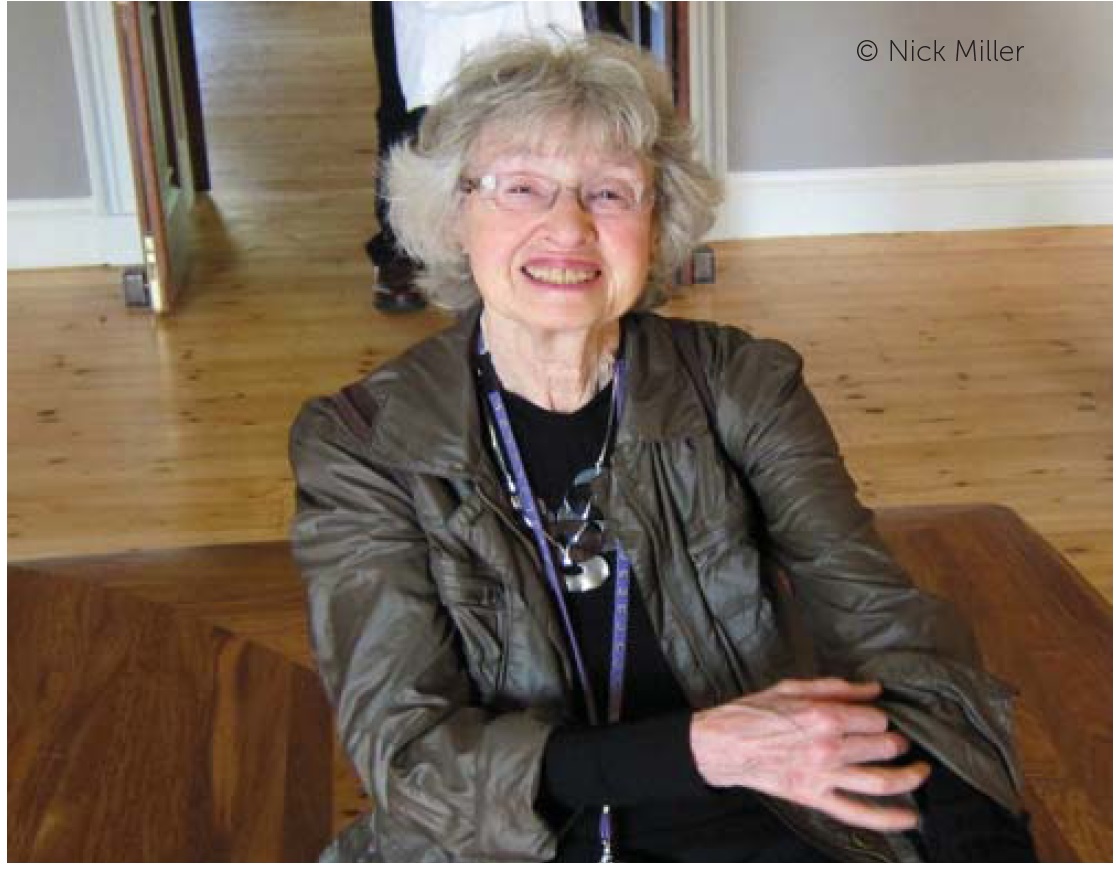
Riva Miller was born in South Africa and she trained as a medical social worker. She and her husband, Hilton, came to the UK and they settled initially in Manchester. She gained some experience in haematology there, and they then moved to London. She started working at the Royal Free Hospital, initially in cardiology and anticoagulation and joined the haemophilia department in 1965. Riva Miller had many qualities. She was intellectual and articulate, professionally courageous, collaborative and practical, systemically minded, humorous, perceptive and irreverent. She brought in Elizabeth Boyd, who initially joined the department as a psychosocial assistant, but eventually became an extremely proficient welfare rights adviser: she had a very strong impact on patients’ lives because she was able to negotiate the system and obtain the correct benefits for them. These skills were later recognized when she became a trustee of both the MacFarlane Trust and the Skipton Fund.
In the field of psychotherapy in the1960s, there was a movement away from psychoanalysis in favour of taking ideas from cybernetics and general systems theory which included focusing in particular on the role of communication. Out of this work, family therapy developed.
Nicola Dunn
Nicola Dunn is a systemic individual and family therapist. She has worked at the Katherine Dormandy Haemophilia Centre & Thrombosis Unit at the Royal Free Hospital for 15 years and prior to that worked within HIV/AIDS at the Ian Charlson Centre and within Public Health. She has published on the well-being of patients, carriers and families affected by bleeding conditions but is also interested in what supports both the staff who treat these patients and the organisations they work within.
Dr Eleanor Goldman joined the haemophilia centre in 1976 and established a very strong collaboration with Riva Miller – both were trained in systemic psychotherapy – and began to introduce this family therapy approach. Together, they developed a systemic family therapy model for haemophilia, in which reviews combined medical care and family counselling. Some of these sessions were video-taped and reviewed by Eleanor and Riva, who used the method to improve and evolve their practice. From the1980s, the haemophilia world was hit first by the crisis of HIV/AIDS and then by hepatitis C. Two of the challenges, which both Eleanor and Riva developed a recognized expertise in, was to develop ways of giving a diagnosis to the patient and their families that was as compassionate as possible as well as supporting the patient as they lived with the uncertainty of their future in the face of the publics fear of infection.
I later joined the centre and had the honour of working with Riva Miller. Her approach to family therapy was based on phenomenology which included her signature phrase of “assume nothing”. At that time before we saw a family, we would establish a hypothesis about why they had a problem and what they were trying to work out. Then, as we crossed the threshold into the consulting room, we would throw our hypotheses away, sit down and observe what was vital and fresh about the family in the moment. Anyone who develops expertise in a subject is often asked to share it. Riva was a very active author and contributed to more than 250 papers and books. She also travelled extensively and shared her knowledge with students.
The family therapy expertise that was developed at the Royal Free Hospital has now been extended to specialised clinics such as in orthopaedics, women’s bleeding issues and genetic counselling clinics. As the family-based model is also a systemic model it has also been applied to multidisciplinary team working and looking at organisational change in hospitals. Within the orthopaedic multidisciplinary team clinics, the aim is to allow the surgeons to get on with doing what they do best, while the physiotherapy and family therapy team manage the psychological, practical and family issues. They also facilitate decision-making – supporting patients who decide to have joint-replacement surgery.
The integrated multidisciplinary way of working means that the Royal Free has a history of family therapists being part of medical reviews, of employing an “early warning system” for patients’ psycho-social needs, and of encouraging the multidisciplinary team to think systemically about our patients. We have a weekly multidisciplinary team meeting, which I chair, where we discuss cases and establish how we will support and work with our patients and families.
At each life stage, families face different challenges whether it is in planning to have children, dealing with a diagnosis, or negotiating the teenage years. In a similar way the treatment of haemophilia has also changed dramatically over the years so our older group of patients, who are now moving into the third age, face very different concerns to our younger patients.
Current family issues often centre on maintaining employment and having enough resources. In most families, both parents have jobs outside the home, and we need to work with that necessity. Young people are trying to get employment, and older patients who, due to the impact of haemophilia, may have been reliant on welfare, are now facing a reduction in the benefits system, which is understandably frightening for them. In London, there are rising property prices, so we have young people living much longer at home, often well into their 20s and families accommodating their adult children’s partners. We have an ageing population and we have life lived on social media and the internet for young people. These all pose new challenges for families which require creative solutions.
The achievements of Riva Miller and the multidisciplinary team at the Royal Free Hospital are testament to the words frequently attributed to cultural anthropologist Margaret Mead: “Never doubt that a small group of thoughtful, committed, citizens can change the world. Indeed, it is the only thing that ever has.”