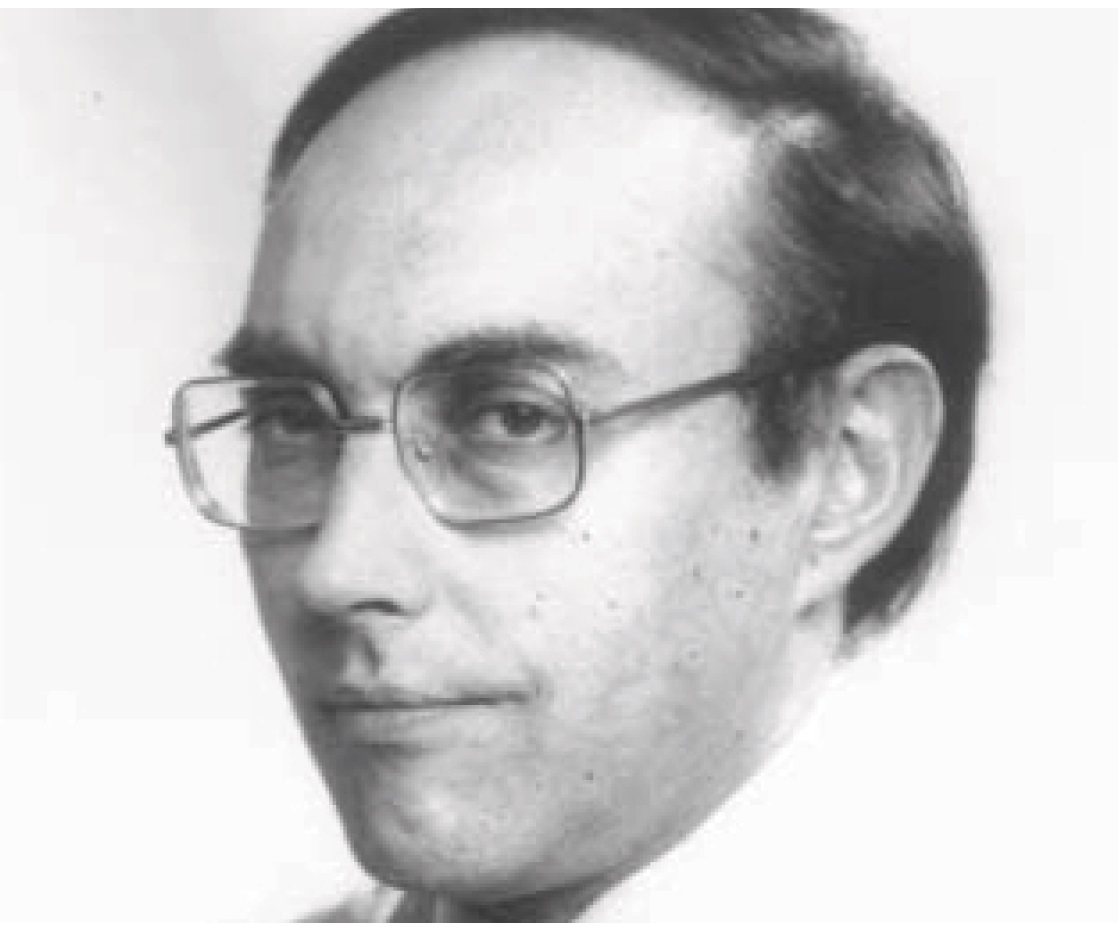
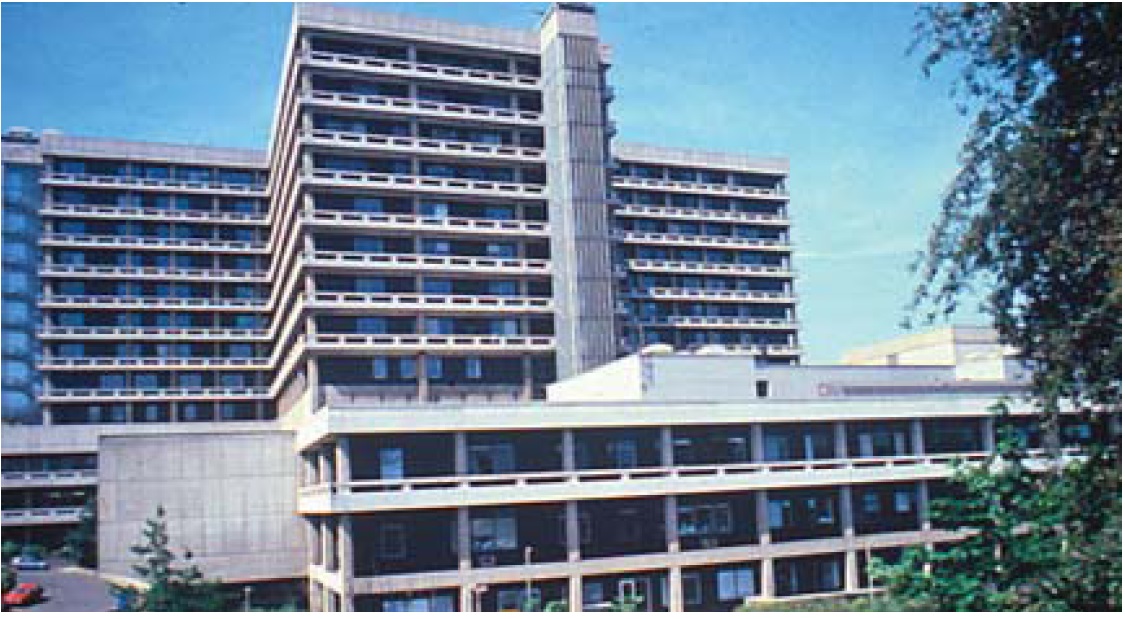
Katharine Dormandy had pioneered the manufacture of cryoprecipitate in the Department of Haematology at the Royal Free Hospital. Working with her research assistants, this allowed her to pioneer home treatment with cryoprecipitate in the UK [1]. When the newer, large pool clotting factor concentrates began to be used in the late 1970s, it became apparent that intensively-treated people with haemophilia were getting abnormalities of liver function tests. Katharine Dormandy therefore established a study that compared patients at the Royal Free who were exclusively treated with cryoprecipitate with those in Worcester in the United States who were exclusively treated with the new concentrates. While both groups of patients had raised transaminases, this was more common in those treated with the concentrates [2]. This was subsequently shown to be due to hepatitis C (initially known as non-A non-B hepatitis), which has a carriage rate of one in 300. In a comment at the end of this paper, published in 1977, Dormandy noted, “The long-term significance of the various abnormalities recorded here is unknown. Aggressive therapy should continue.”
In 1982, I came to work at the Royal Free under the supervision of the first director, Peter Kernoff, and Howard Thomas, who was a consultant hepatologist in the Department of Medicine. They were seeking a full-time clinical research physician to work for three years on problems relating to liver disease in people with haemophilia. I was to follow 58 patients who had had a first exposure to large-pool clotting factor concentrates [3]. Looking at non-A non-B hepatitis was a challenge as there were no markers and the diagnosis was based on the patient having a normal transaminase before the treatment and being followed-up every two weeks over a period of three months; if during this period there was an elevation of 2.5 times the upper limit of normal and hepatitis A, B, EBV and CMV had been excluded. We found a virtual 100% attack rate [3]. Furthermore, in 21 patients, in whom detailed information was available, those who received commercial factor VIII had an incubation period of three weeks while those who received NHS factor VIII (from British blood donors) had an incubation period of seven weeks. It is likely that the difference in the incubation period reflects a higher viral load in the American concentrate. However, both groups of patients became infected, suggesting that patients would get hepatitis C from any concentrate made from any plasma anywhere. We also reported that large-pool clotting factor was associated with a vasculitis that could only be improved by reducing treatment [4]. Today we recognise that hepatitis C can be associated with cryoglobulinaemia and that reducing the antigenic stimulation, results in some improvement.
In addition, we reported a patient with multiple viral infections from clotting factor concentrates, including hepatitis C, hepatitis B, HIV and delta agent [5].
The HIV epidemic
The HIV epidemic was short, and occurred between 1979 and 1985. The first Royal Free patient who seroconverted was also the first documented patient to seroconvert in this country [6]. He had severe von Willebrand disease and following abdominal bleeding in the summer of 1979 he was given a commercial concentrate. Although we did not know it at the time, reading his notes suggests that he seroconverted in November/December 1979: once we had a test for HIV in 1985/86 we were able to retrospectively test stored serum and confirm when seroconversion occurred for each of those within our cohort [6]. However, even in 1982 we were able to determine whether or not patients had a problem based on the clinical manifestations of immunodeficiency, such as oral candida, or a lymphocyte count less than one or a CD4 ratio of less than one. We established that there was a steady decline in the CD4 count and that this was associated with the development of AIDs [7].
Once we had the test for HIV, we defined a cohort of 111 men with haemophilia infected with HIV following treatment with clotting factor concentrates. We determined that the median age of their infection was 22 years (range 2-77) and the median date of infection was January 1983 (range December 1979 to July 1985). In addition, all of these patients were co-infected with hepatitis C, either at the time that they first received their infection with HIV or earlier. There was a 50% cumulative probability of developing AIDS at a CD4 count of 50. From this, it was possible to predict that one-quarter of the people infected would remain free of AIDS for 20 years or more, without treatment [8]. At the time, this received considerable media coverage as it contradicted the “received wisdom” of AIDS as a “death sentence”.
This was clearly a very challenging time for the whole team. The comprehensive care model of haemophilia enabled the whole team to provide care at a particularly challenging time when an average 10 patients were dying each year. Nevertheless, there was good news with the introduction of antiretroviral therapy, first with zidovudine and then with combination therapy, in the early to mid 1990s. Data from the national cohort show that the death rate began to fall soon after this point [9].
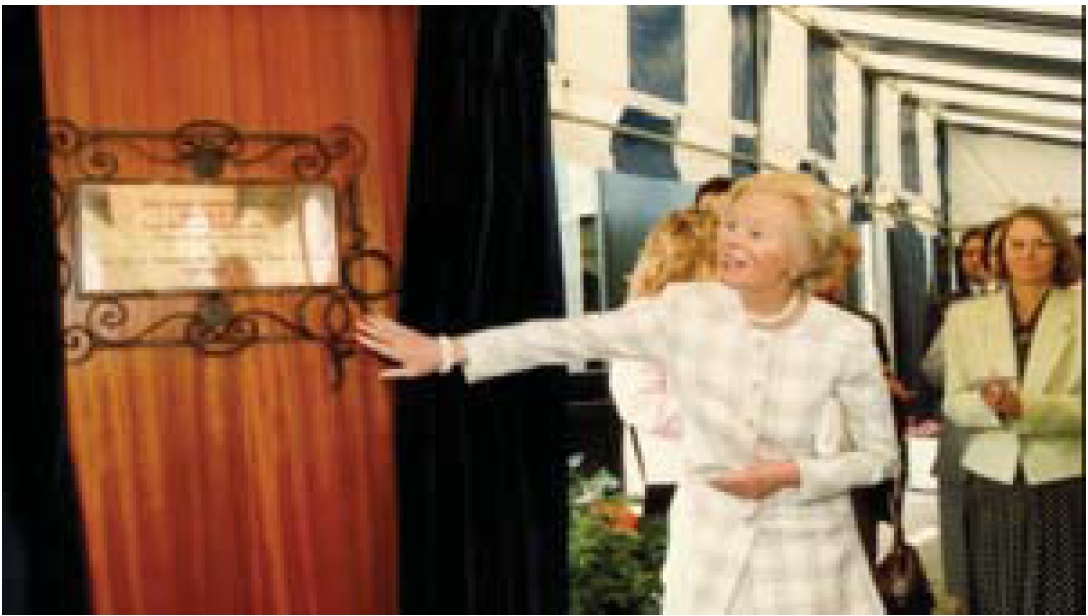
At this difficult time, the Katharine Dormandy Trust had been very active in raising money, and in 1994 the foundation was laid for the centre extension, which was opened by the Duchess of Kent.
Hepatitis C
The hepatitis C epidemic was slowly progressing at this time and knowledge only evolved much later. As early as 1981, an anonymous leader in the BMJ had stated that “in some cases early death from liver disease may be the price paid by haemophiliacs for the improved quality of life afforded by the easy availability of clotting factor concentrate” [10]. In 1998, I interviewed Dr Rosemary Biggs, who had been the Director of the Oxford Centre from 1949 and asked her, “What happened when hepatitis came along?” She made a statement which, on the face of it, is quite brutal: “The next thing that started to crop up is that patients started to get jaundice, and we felt at that time they were better off alive and having jaundice than dead with haemophilia.” But it is really important to remember that before we had treatment, the life expectancy for somebody with haemophilia was less than 20 years.
The very first large-pool concentrates became available in 1961: these were factor IX concentrates, developed from human plasma by Edith Bidwell. The first patient to receive factor IX concentrate was a 4-year old child from Edinburgh. He had developed a large haematoma in the antecubital fossa that had become septic and amputated under cover of factor IX concentrate [12]. In 1995, when this historic amputation was written up, the patient was telephoned and was well and leading an active life [13]. This concentrate in the 1960s was life-saving.
Those first concentrates would have transmitted hepatitis C in 1961; they were not heated until 1985, after which time there were no further transmissions. Yet the virus was not identified until 1989, and there were no antibody tests until 1991. In 1992, there was polymerase chain reaction for virus identification, and then through the 1990s various treatments became available, with interferon and in combination with ribavirin and later the protease inhibitors.
Applying the same techniques used with HIV to the natural history of hepatitis C, it was possible to identify a cohort of 310 Royal Free patients for whom the date of the first infusion with large pool clotting factor concentrate was known precisely [14]. All 310 patients were infected with HCV between 1961 and 1985. However, we also showed that monoinfection with hepatitis C is a slowly progressing disorder – after 25 years, 3% had died from liver failure after mono-infection. However, the relative hazard of death among the 125 individuals co-infected with hepatitis C and HIV was heightened by five times.
Christine A. Lee
Christine A. Lee was an undergraduate at Somerville College, Oxford and the University of Oxford Medical School. She completed part-time haematology training at St George’s Hospital in 1982, and has worked at the Royal Free Haemophilia Centre from 1983, as Action Research research fellow; from 1987 as consultant haematologist; and from 1991, as director until 2005. In 1996, she was awarded DSc (Med) for her work on tranfusion-transmitted disease. She was given a personal chair as Professor of Haemophilia in 1997. In 2010, she was awarded FRCOG for her contribution to the management of inherited bleeding disorders in women. In 2013, she was awarded the lifetime achievement award by the World Federation of Hemophilia in recognition, in particular, of her foundation and editorship of the journal Haemophilia, the official journal of WFH, from 1993 until 2013.
Clearly, these epidemics strengthened the argument for using recombinant factor VIII, and the first recombinant trial patient in Europe was treated at the Royal Free in 1988 [15]. In the spring of 1996, UKHCDO recommended that patients should be treated with recombinant products, yet it was only after a media campaign that the trust was able to use it, initially for children in autumn 1996 and not in adults until 2000.
Variant Creutzfeldt-Jakob disease (CJD)
Obviously the history of “unknown” viral infections transmitted by blood products was the main argument for using recombinant products, and in 1996, humans started getting variant CJD [16]. There was a major concern about whether people with haemophilia would have a problem so together with Oxford and Edinburgh, where we had exclusively treated a large group of patients with clotting factor concentrate derived from UK donor sources between 1962 and 1995, we looked at the brains of 33 patients with severe haemophiila A who had died from HIV. We identified no prions [17]. To date, no patient with haemophilia has developed variant CJD, although the long-term outcome remains unknown. One patient, a 73-year-old man with severe haemophilia A, was found post-mortem to have prion disease in the spleen; he had not died from it but the risk assessment suggested that the infection had come from contaminated blood products [18].
A chequered history
Despite this apparently chequered history, haemophilia does provide one of the best examples of medicine and advances in basic science which, in a very short time, have been translated into clinical practice. However, we do still have to remember that effective treatment is rarely free of adverse side-effects.
“It was the best of times, it was the worst of times, it was the age of wisdom, it was the age of foolishness, it was the epoch of belief, it was the epoch of incredulity, it was the season of Light, it was the season of Darkness, it was the spring of hope, it was the winter of despair, we had everything before us, we had nothing before us, we were all going direct to Heaven, we were all going direct the other way.” Charles Dickens in A Tale of Two Cities.
Peter Kernoff, centre director 1978-1991: “We are seeking a full-time clinical research physician to work for up to 3 years on problems relating to liver disease in haemophiliacs.”