Congenital haemophilia A (HA) is characterised by a lack of factor (F)VIII; those with the severe form have endogenous FVIII levels of <1% [1]. Joint bleeding from HA can lead to arthropathy, which results in pain and functional disability [2,3,4,5]. This, in turn, can impede an individual’s ability to participate in physical and social activities, or engage with school or work [2,6,8], which may influence the quality of life (QoL) and psychosocial health of those affected [1,2,7,9,10].

The standard of care for HA is FVIII prophylaxis, which is associated with reductions in joint bleeding rates and subsequent arthropathy compared with on-demand FVIII replacement [1]. It is also linked to increased participation in educational, professional, and recreational activities, resulting in improved QoL [1]. Despite the benefits of FVIII prophylaxis, the standard and extended half-life options require intravenous administration 1–4 times per week [1,11,12], representing a substantial treatment burden and a related negative impact on QoL [7].

Emicizumab is a humanised, bispecific monoclonal antibody that bridges activated FIX and FX to improve haemostasis [13,14]. It has demonstrated effective bleeding control in numerous clinical trials [15,16,17,18,19,20,21], and is approved for treatment of people with HA (PwHA) of all ages with or without FVIII inhibitors [22]. Emicizumab offers a flexible dosing frequency and is administered subcutaneously [1], which may reduce treatment burden compared with intravenous administration. It is also reported to improve work/school attendance [23] and physical activity, [24] compared with FVIII prophylaxis.

Re-evaluating treatment options can provide benefit to both clinical outcomes and QoL, in addition to enhancing physical and social functioning for PwHA [25]. Treatment re-evaluation can be facilitated by shared decision-making (SDM), which fosters a collaborative dialogue between PwHA and healthcare providers (HCPs). This supports individuals in deciding on treatments that align with their preferences, aspirations, and healthcare needs, by ensuring the person is well informed about the benefits and potential drawbacks of available treatment options [26].

Limited data are available on the day-to-day experiences of PwHA switching to emicizumab treatment, and there is a need for increased understanding of the patient’s perspective to facilitate SDM. This study aimed to describe experiences of switching from FVIII prophylaxis to emicizumab among participants in the HemiNorth 2 study.

MATERIALS AND METHODS

Study design and participants

Semi-structured interviews were conducted with participants, and the data were analysed using inductive qualitative content analysis [27], which is suited for exploring poorly understood phenomena [28]. The standards for reporting qualitative research (SRQR) were followed throughout the research process [29].

Eligible participants were recruited from the Swedish cohort in the HemiNorth 2 study (MO42245; EudraCT# 2020-003256-32), who had received emicizumab for 48 weeks. The HemiNorth 2 population were rolled over from the HemiNorth non-interventional study ([NIS] MO42590) [30] after receiving FVIII prophylaxis for ≥24 weeks (Figure 1). The NIS included people aged ≥12–60 years, with severe HA, no FVIII inhibitors, ≥1 treated joint/muscle bleed in the 52 weeks prior to enrolment, and a medical need for a treatment change for reasons including, but not limited to, poor venous access, high treatment burden, and/or poor adherence. Most participants in the NIS reported either a moderate or high level of physical activity throughout the study period and experienced a relatively high annualised bleeding rate [30].
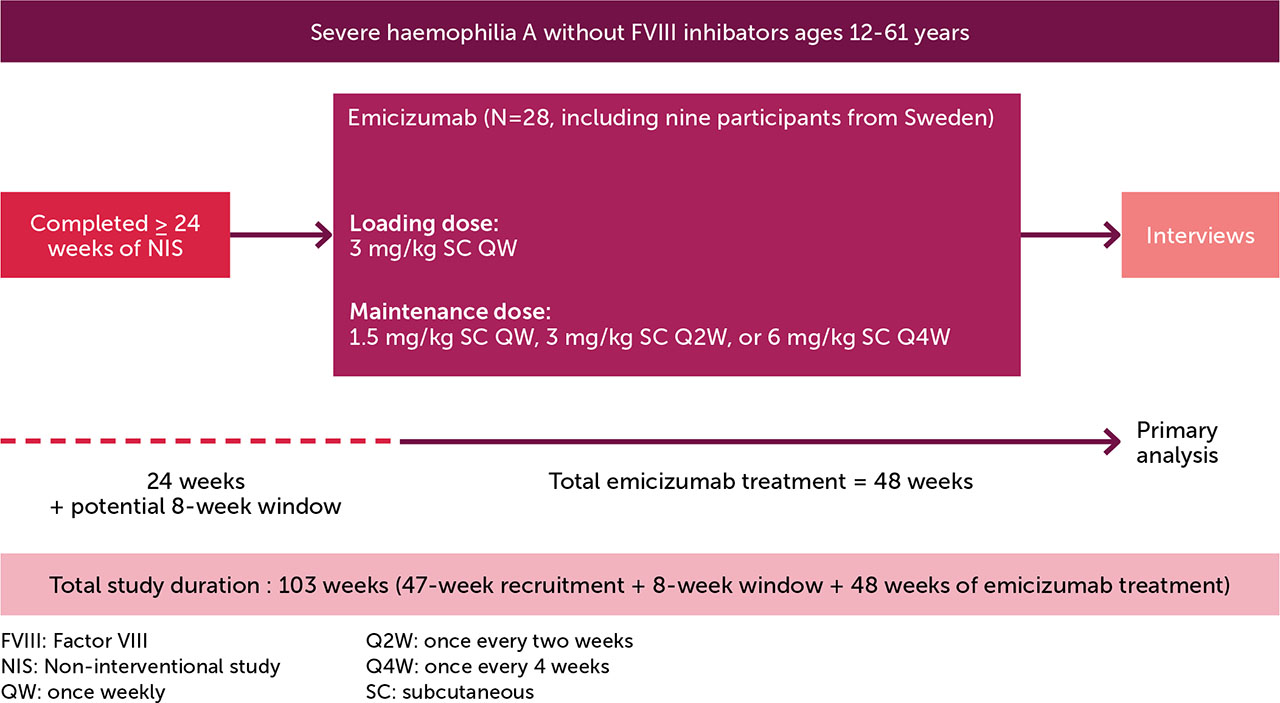
Figure 1.

Non-interventional study and HemiNorth2 study design

Interviews were conducted during week 48 of the HemiNorth 2 study.

graphic/j_jhp-2025-0011_fig_001.jpg

Data collection

The interviews were conducted by the first author after the 48-week period of emicizumab treatment; they were audio-recorded and transcribed verbatim. A semi-structured interview guide was used; the main questions were “Tell me about your experiences of switching to a non-factor treatment” and “Tell me about your daily life with haemophilia”.

Data analysis

Data were analysed through inductive qualitative content analysis [27]. Meaningful responses that captured the essence of the participants’ experiences of switching to emicizumab treatment were highlighted and condensed into brief phrases, which were labelled with codes. Throughout the analytical process, findings were discussed amongst the authors to ensure agreement. Trustworthiness was ensured by measures of credibility, dependability, and transferability, as described by Graneheim and Lundman [27].

Ethics

The study was approved by the Swedish Ethical Review Authority (2022-02191-02). All participants gave their oral and written informed consent to participation and publication of the results. No authors had an HCP relationship with any of the participants. One participant was <18 years old, and his caregiver was present during the interview.

RESULTS

All nine Swedish participants in HemiNorth 2 agreed to participate (Table 1). The mean (standard deviation) age was 33.1 (12.1) years. The open-ended interviews were conducted between March and November 2023 via a teleconferencing system (n=7) or telephone (n=2); the participants chose their preferred format [31]. The interviews had a mean duration of 34 (range: 22–45) minutes.

Table 1.

Demographic and medical data of participants*

Participants (n=9)
DEMOGRAPHIC CHARACTERISTICS
Mean (SD) age, years 33.1 (12.1)
Family situation, n (%) Married/Cohabiting 5 (55.5)
Single 4 (44.4)
Education, n (%) Elementary school 1 (11.1)
Upper secondary school 5 (55.5)
College/University 3 (33.3)
CLINICAL CHARACTERISTICS
Treatment before switch, n (%) Prophylaxis with SHL 4 (44.4)
Prophylaxis with EHL 5 (55.6)
Mean (SD) duration of emicizumab treatment (weeks) 47.3 (3.3)
Emicizumab treatment regimen Once weekly 8 (88.9)
Every 2 weeks 1 (11.1)
Every 4 weeks 0
Target joints at baseline, n (%) 2 (22.2)
Mean calculated ABR before switch (95% CI) 10.0 (4.79–18.38)
Mean calculated ABR after switch (95% CI) 2.0 (0.25–7.27)
Joint health (based on HEAD-US scores42) at baseline, n (%) Healthy joints 4 (44.4)
Synovitis 4 (44.4)
  Synovitis only 1 (11.1)
  Synovitis and OCD 3 (33.3)
OCD only 1 (11.1)

* Demographic information was collected during the HemiNorth 2 study

ABR: annualised bleeding rate

CI: confidence interval

EHL: extended half-life

OCD: osteochondral damage

SD: standard deviation

SHL: standard half-life

HEAD-US: Haemophilia Early Arthropathy Detection with Ultrasound

The analysis generated three categories and eight sub-categories describing the participants’ experiences of switching from FVIII prophylaxis to emicizumab (Table 2).

Table 2.

Categories and sub-categories of participant responses

CATEGORIES SUB-CATEGORIES
Adapting to a new reality Learning the new treatment
The treatment takes less time and space in life
New difficulties and different pain
A feeling of normality Changed situation in professional life
New prerequisites for physical activity
Hope for the future
Shattered expectations The disease persists
The difference may not be significant

Adapting to a new reality

This category comprised three sub-categories: ‘Learning the new treatment’, ‘The treatment takes less time and space in life’ and ‘New difficulties and different pain’. This category encompassed the changes in daily life involved with adapting to the new treatment; switching treatments demanded the acquisition of new knowledge and skills but also took up less space and time in the participants’ lives.

Learning the new treatment

Switching treatments induced anticipation and anxiety in the participants. They described feeling worried during the first few administrations of emicizumab; this feeling diminished after the initial months of treatment.

Both before and during the switch, participants required guidance on how the medication works, considerations for home treatment, managing bleeds, and recognising potential side effects. Verbal information from HCPs was described as important. The HCPs’ information was trusted, and eased anxiety about the switch; however, it took time to build confidence in, and get accustomed to, the new medication.

“A bit nerve-wracking. There’s always a risk when switching medication. I wondered, will my body respond to this, or will I experience any side effects? When you read through the package inserts and all, you start thinking, ‘Okay! How will I identify these potential side effects if they occur? You start getting a bit worked up and wondering...”

(P8, 31–40 years)

Some participants sought additional information regarding experiences with emicizumab from a patient perspective, via YouTube and other internet platforms; they felt that sometimes the HCP lacked or was unable to convey this perspective.

The treatment takes less time and space in life

Administration was reportedly less time consuming after switching to emicizumab compared with previous treatment. Several participants mentioned they previously found it difficult to locate veins for injections, which was no longer an issue with the subcutaneous route of administration, removing the need for multiple administration attempts. Additionally, emicizumab treatment was more convenient because it was given less frequently and could be administered in the evening, on a fixed day.

“No, I would definitely say it’s less. Partly because it’s a smaller part of the daily routine to take medication. It’s partly much less of a process to take it, you can take it quickly and easily in the evening before going to bed, just once a week.”

(P6, 21–30 years)

Some participants had previously been bothered by bruises and scars from venous injections on the backs of their hands and the crooks of their arms. After switching, the scars began to fade, and the disease felt less visible to others.

Although some reported that the treatment took less time and space in their daily lives; others stated they did not notice much difference, finding neither FVIII prophylaxis nor emicizumab treatment burdensome.

New difficulties and different pain

All participants described switching to subcutaneous administration as an adjustment, with many highlighting unfamiliarity with varying the injection site. All participants felt that taking the medication was painful; the needle caused discomfort when piercing the skin, and they were caught off guard by this. They also highlighted the technical difficulty in keeping the needle stable when administering emicizumab.

“Yeah, I mean, now you know how, how it is, you know. So, it’s really just a bit like, well, you grit your teeth, and then you know it doesn’t take that long, and you just do it, you know. It’s not, well, it’s mostly mental preparation, I think.”

(P4, 21–30 years)

A feeling of normality

This category included three sub-categories: ‘Changed situation in professional life’, ‘New prerequisites for physical activity’ and ‘Hope for the future’. In this category, enhanced feeling of normality, general health, and hope among the participants was emphasised.

Changed situation in professional life

Some participants described a transformation in their professional lives after switching, particularly individuals engaged in physically demanding occupations. The necessity to explain their condition to colleagues and the resulting impact on work diminished considerably, which was compounded by fewer work absences. A newfound sense of normalcy at work was described, and the novel experience of blending in with peers was highlighted.

“I can recover a little faster, work more efficiently now than I did before... it’s like, for example, I’ve nailed frames and such and nailed a staple into my thumb. I just removed it. It wasn’t stuck in too deeply, but it was in there. If I had been on the other medication, I would’ve had to go home. Now, I just put on a bandage or wrapped it up a bit, and after a day or so, it was fine again. I could still work.”

(P2, 41–50 years)

Those with less physically demanding occupations described no impact on their professional lives after the switch, although they noted that haemophilia had little influence on their professional lives when being treated with FVIII prophylaxis.

New perspectives on physical activity

Participants reported that the change in treatment enhanced their physical activity and reduced the need to schedule training and physical activities around treatment days. A newfound sense of spontaneity and freedom to engage in activities at will was prevalent; however, this did not always translate into increased physical activity. Instead, there was a shared emphasis on preserving a sense of normalcy, for which the ability to engage in physical activities was a significant contributor.

Some participants expressed newfound confidence in physical activity and training, with less associated joint pain. It took a few months after switching before the pain lessened, and it was mainly reported by participants with previous joint damage.

“So, I’ve always had to be cautious, like, can I do this without risking to hurt myself too much, so that I need to take sick leave... I’m a bit vivacious now, you know. So, in that way, I definitely have more confidence.”

(P8, 31–40 years)

Hope for the future

The non-factor treatment greatly improved the participants’ hope for future advancements in haemophilia treatment, which some had reportedly lost before. With the new treatment, they dared to look forward and envision continued development and treatment of the disease.

As the disease took less time and space in daily life, feelings of improved health emerged, with no visible needle marks on arms and hands, reduced sick leave, fewer bleeds, and a positive outlook on the future. A few participants described their family members and other people around them perceiving them as more energetic and happier after switching. Relatives and friends shared in the participants’ joy over the positive change.

“You feel like, well, how can I put it? It’s like being born again, you could say.”

(P2, 41–50 years)

Previously, some participants engaged in challenging physical activities, such as long hikes or climbing mountains, against advice from family members and HCPs, to “defy” the disease and prove it did not hinder or define them as individuals. After the treatment change, they participated in these activities simply because they wanted to.

Shattered expectations

This category included two sub-categories: ‘The disease persists’ and ‘The difference may not be significant’, which underlined that not all expectations of the new treatment were fulfilled. The participants realised that their physical injuries were still present, and that the disease still impacted their lives.

The disease persists

Hopes for the benefit of emicizumab were high before the switch. Some time after switching, participants came to realise that their existing physical injuries would persist. The movement restrictions remained, and the disease was still part of their lives. The pain had diminished but was still present for those with pre-existing joint damage; the realisation that joint pain would not completely disappear was disappointing. Some expressed concern about microbleeds and the long-term damage these might cause. In some cases, participants perceived the bleeds on emicizumab differently compared with those on FVIII prophylaxis; they were seen as superficial, small bleeds that were harder to stop.

“That… the pain would disappear or that my joints would function as they should. But that wasn’t the case, unfortunately, for me...”

(P1, 31–40 years)

The difference may not be significant

A number of participants discussed career aspirations they had been unable to reach due to haemophilia. With the new treatment, those dreams were revived. However, participants were disappointed to learn that emicizumab did not mitigate all the fundamental limitations in their professional lives.

Participants described fewer bleeds, although some bleeding persisted. Concerns around additional FVIII treatment, and when this was required, were common, with an expressed need for more knowledge on this. Some participants did not notice any difference in bleeding after the switch; they were satisfied with the bleed protection conferred by both FVIII concentrate and emicizumab.

“I didn’t notice a difference bleeding-wise by taking the factor concentrate or the emicizumab.”

(P9, 51–60 years)

DISCUSSION

These results revealed that switching from FVIII prophylaxis to emicizumab increased the feeling of normality, with the disease taking less time and space in the participants’ daily lives. Previous quantitative studies reporting on the experiences of PwHA who switched from FVIII prophylaxis to emicizumab, as measured by patient-reported outcome measures, reported reduced burden of treatment with emicizumab [32,33], which aligns with the results of this study. Qualitative data on participants’ experiences in switching to emicizumab further substantiate these findings, with respondents attributing reduced burden to lower administration frequency for emicizumab, as well as the shorter subcutaneous administration time [34]. However, it is important to note that the cited data were collected in people with FVIII inhibitors, who often face different treatment burden challenges compared with people without FVIII inhibitors [35].

The impact of HA on employment has been extensively reported [2,6,7,8], and is reiterated in the current study. Despite the short study period, most participants reported improvements in their professional lives following the switch, quoting fewer work absences as a contributor to this. Improvements in professional life following emicizumab initiation have been similarly observed in other studies [18,23,24]. Most of the participants here articulated a newfound ‘normality’ in their professional lives. A previous study investigating the employment of young adults with HA found 25% of 230 respondents reported that nobody at their workplace knew about their HA, and 37% reported that only a few knew [6]. This underscores the desire for many PwHA to fit in with their peers, which is echoed in this analysis.

Participants felt that the treatment change allowed them the freedom to perform physical activity at any time they wished. They also felt less fear of pain after physical activity. Despite this, their physical activity levels did not increase after the switch. This suggests that the physical activity of PwHA is partly influenced by factors other than bleed protection and pain; these could include independent motivation, peer influence, or access to support systems encouraging physical activity [36].

Some participants expressed disappointment that emicizumab treatment did not live up to their expectations, particularly in those with pre-existing injuries. Previous research indicates that alternative prophylactic treatments, including emicizumab, may not alleviate all aspects of haemophilia, especially when joint damage has already occurred [37,38], and additional research into experiences with switching to emicizumab corroborates this [34]. It is essential for HCPs to have open discussions with individuals considering emicizumab when engaging in SDM, ensuring they have a clear, realistic understanding of what to expect regarding joint pain and pre-existing injuries before making the transition to alternative prophylaxis.

The results indicated that knowledge on how the medication functions in the body and how to manage bleeding episodes was lacking in some cases. Some interviewees reported not knowing when it was appropriate to administer FVIII concentrate for a bleed, which has also been expressed in previous experiences with emicizumab [34]. This gap in communication suggests the need for improved education and more comprehensive discussions between PwHA and HCPs to ensure clarity around the new treatment. All participants described difficulty adjusting to the initial pain and technical difficulty associated with subcutaneous administration of emicizumab. This has also been reported in another study at a single Haemophilia Treatment Centre, in which 13% of participants listed subcutaneous injections as a knowledge gap when switching [39]. People initiating emicizumab may have only a few appointments with their HCP to learn to administer the treatment, compared with weekly meetings over multiple months when learning to administer intravenous treatment. While this may reduce healthcare resource utilisation, it could also limit opportunities for patient education and support. Our results suggest that people initiating emicizumab treatment may benefit from tailored discussion and more follow-up visits, offering them greater opportunity to learn how to manage their new treatment. This approach can help ensure that they feel supported and empowered to make informed decisions on their care. Some participants felt they lacked insights from a patient perspective. To address this, HCPs could refer individuals who are considering switching to emicizumab to patient advocacy groups. These groups can offer educational resources specifically designed to meet the needs and understanding of PwHA, potentially enhancing the SDM process [40]. In a previous report investigating patient perspectives on novel treatments, respondents also listed magazines and social media as sources of information; the latter was reportedly useful for exchanging experiences with peers. However, participants also reported difficulty in knowing what to search for, and how to find information that was relevant to their specific situation [41].

Limitations

Participants were recruited from the Swedish cohort of the HemiNorth 2 study, meaning that they may not be representative of the whole HA population, although they did represent the entire Swedish population of the study. All participants were ≤45 years of age, meaning that older participants with a potentially greater disease burden were not represented. Additionally, the results reflect the initial 48 weeks of emicizumab treatment; further research is needed to capture the long-term experiences of PwHA being treated with emicizumab. The results of this study should be viewed as one interpretation that contributes to a broader understanding of the treatment-switching experiences of PwHA.

CONCLUSION

Our study findings convey reduced disease burden in PwHA switching to emicizumab, as well as a newfound sense of normality and hope for the future treatment of haemophilia. These experiences also highlight gaps in knowledge about emicizumab among PwHA, and unrealistic expectations in those with joint damage and pre-existing injuries; addressing these issues is a necessary step in ensuring optimal SDM practice and managing expectations when switching treatments.

ACKNOWLEDGMENTS

We want to thank the participants in the study for sharing their experiences. The HemiNorth 2 study was sponsored by F. Hoffmann-La Roche Ltd. Third party medical writing assistance, under the direction of the authors, was provided by Jake Hunter, MSc, of Ashfield MedComms, an Inizio company, and was funded by F. Hoffmann-La Roche Ltd.

Notes

[9] Conflicts of interest Conflict of interest

LMW has received research grants from CSL Behring and Takeda and speaker fees from Sobi. AO has received research grants from CSL Behring and Takeda.

[10] Contributed by Author contributions

LMW designed the study. LMW and AO analysed the data and wrote the first draft of the paper, as well as critically reviewing all revisions and approving the final version for submission.

[11] Data availability

For up-to-date details on Roche’s Global Policy on the Sharing of Clinical Information and how to request access to related clinical study documents, see here: https://go.roche.com/data_sharing

Anonymised records for individual patients across more than one data source external to Roche cannot, and should not, be linked due to a potential increase in risk of patient re-identification.

[12] Ethics

The study was approved by the Swedish Ethical Review Authority (MO42245; EudraCT# 2020-003256-32).

REFERENCES

1. 

Srivastava A, Santagostino E, Dougall A, et al. WFH guidelines for the management of hemophilia, 3rd edition. Haemophilia 2020; 26(Suppl 6): 1–158. doi: 10.1111/hae.14046.

A SrivastavaE SantagostinoA DougallWFH guidelines for the management of hemophilia, 3rd editionHaemophilia202026Suppl 6115810.1111/hae.14046

2. 

Davari M, Gharibnaseri Z, Ravanbod R, Sadeghi A. Health status and quality of life in patients with severe hemophilia A: A cross-sectional survey. Hematol Rep 2019; 11(2): 7894. doi: 10.4081/hr.2019.7894.

M DavariZ GharibnaseriR RavanbodA SadeghiHealth status and quality of life in patients with severe hemophilia A: A cross-sectional surveyHematol Rep2019112789410.4081/hr.2019.7894

3. 

O’Hara J, Walsh S, Camp C, et al. The impact of severe haemophilia and the presence of target joints on health-related quality-of-life. Health Qual Life Outcomes 2018; 16(1): 84. doi: 10.1186/s12955-018-0908-9.

J O’HaraS WalshC CampThe impact of severe haemophilia and the presence of target joints on health-related quality-of-lifeHealth Qual Life Outcomes20181618410.1186/s12955-018-0908-9

4. 

Poenaru D, Sandulescu MI, Cinteza D. Intraarticular management of chronic haemophilic arthropathy. Biomed Rep 2023; 19(3): 59. doi: 10.3892/br.2023.1641.

D PoenaruMI SandulescuD CintezaIntraarticular management of chronic haemophilic arthropathyBiomed Rep20231935910.3892/br.2023.1641

5. 

Gualtierotti R, Solimeno LP, Peyvandi F. Hemophilic arthropathy: Current knowledge and future perspectives. J Thromb Haemost 2021; 19(9): 2112–2121. doi: 10.1111/jth.15444.

R GualtierottiLP SolimenoF PeyvandiHemophilic arthropathy: Current knowledge and future perspectivesJ Thromb Haemost20211992112212110.1111/jth.15444

6. 

Witkop M, Guelcher C, Forsyth A, et al. Treatment outcomes, quality of life, and impact of hemophilia on young adults (aged 18–30 years) with hemophilia. Am J Hematol 2015; 90(S2): S3–S10. doi: 10.1002/ajh.24220.

M WitkopC GuelcherA ForsythTreatment outcomes, quality of life, and impact of hemophilia on young adults (aged 18–30 years) with hemophiliaAm J Hematol201590S2S3S1010.1002/ajh.24220

7. 

Wiley RE, Khoury CP, Snihur AWK, et al. From the voices of people with haemophilia A and their caregivers: Challenges with current treatment, their impact on quality of life and desired improvements in future therapies. Haemophilia 2019; 25(3): 433–440. doi: 10.1111/hae.13754.

RE WileyCP KhouryAWK SnihurFrom the voices of people with haemophilia A and their caregivers: Challenges with current treatment, their impact on quality of life and desired improvements in future therapiesHaemophilia201925343344010.1111/hae.13754

8. 

Trindade GC, Viggiano LGL, Brant ER, et al. Evaluation of quality of life in hemophilia patients using the WHOQOL-bref and Haemo-A-Qol questionnaires. Hematol Transfus Cell Ther 2019; 41(4): 335–341. doi: 10.1016/j.htct.2019.03.010.

GC TrindadeLGL ViggianoER BrantEvaluation of quality of life in hemophilia patients using the WHOQOL-bref and Haemo-A-Qol questionnairesHematol Transfus Cell Ther201941433534110.1016/j.htct.2019.03.010

9. 

Mahlangu J, Oldenburg J, Callaghan MU, et al. Health-related quality of life and health status in persons with haemophilia A with inhibitors: A prospective, multicentre, non-interventional study (NIS). Haemophilia 2019; 25(3): 382–391. doi: 10.1111/hae.13731.

J MahlanguJ OldenburgMU CallaghanHealth-related quality of life and health status in persons with haemophilia A with inhibitors: A prospective, multicentre, non-interventional study (NIS)Haemophilia201925338239110.1111/hae.13731

10. 

Oldenburg J, Tran H, Peyvandi F, et al. Health-related quality of life and health status in adolescent and adult people with haemophilia A without factor VIII inhibitors-A non-interventional study. Haemophilia 2021; 27(3): 398–407. doi: 10.1111/hae.14270.

J OldenburgH TranF PeyvandiHealth-related quality of life and health status in adolescent and adult people with haemophilia A without factor VIII inhibitors-A non-interventional studyHaemophilia202127339840710.1111/hae.14270

11. 

von Drygalski A, Chowdary P, Kulkarni R, et al. Efanesoctocog alfa prophylaxis for patients with severe hemophilia A. N Engl J Med 2023; 388(4): 310–318. doi: 10.1056/NEJMoa2209226.

A von DrygalskiP ChowdaryR KulkarniEfanesoctocog alfa prophylaxis for patients with severe hemophilia AN Engl J Med2023388431031810.1056/NEJMoa2209226

12. 

Hermans C, Reding MT, Astermark J, Klamroth R, Mancuso ME. Clinical studies of extended-half-life recombinant FVIII products for prophylaxis in adults and children: A critical review from the physician’s perspective. Crit Rev Oncol Hematol 2022; 174: 103678. doi: 10.1016/j.critrevonc.2022.103678.

C HermansMT RedingJ AstermarkR KlamrothME MancusoClinical studies of extended-half-life recombinant FVIII products for prophylaxis in adults and children: A critical review from the physician’s perspectiveCrit Rev Oncol Hematol202217410367810.1016/j.critrevonc.2022.103678

13. 

Blair HA. Emicizumab: a review in haemophilia A. Drugs 2019; 79(15): 1697–1707. doi: 10.1007/s40265-019-01200-2.

HA BlairEmicizumab: a review in haemophilia ADrugs201979151697170710.1007/s40265-019-01200-2

14. 

Kitazawa T, Esaki K, Tachibana T, et al. Factor VIIIa-mimetic cofactor activity of a bispecific antibody to factors IX/IXa and X/Xa, emicizumab, depends on its ability to bridge the antigens. Thromb Haemost 2017; 117(7): 1348–1357. doi: 10.1160/TH17-01-0030.

T KitazawaK EsakiT TachibanaFactor VIIIa-mimetic cofactor activity of a bispecific antibody to factors IX/IXa and X/Xa, emicizumab, depends on its ability to bridge the antigensThromb Haemost201711771348135710.1160/TH17-01-0030

15. 

Oldenburg J, Mahlangu JN, Bujan W, et al. The effect of emicizumab prophylaxis on health-related outcomes in persons with haemophilia A with inhibitors: HAVEN 1 Study. Haemophilia 2019; 25(1): 33–44. doi: 10.1111/hae.13618.

J OldenburgJN MahlanguW BujanThe effect of emicizumab prophylaxis on health-related outcomes in persons with haemophilia A with inhibitors: HAVEN 1 StudyHaemophilia2019251334410.1111/hae.13618

16. 

Young G, Liesner R, Chang T, et al. A multicenter, open-label, phase 3 study of emicizumab prophylaxis in children with hemophilia A with inhibitors. Blood 2019; 134(24): 2127–2138. doi: 10.1182/blood.2019001869.

G YoungR LiesnerT ChangA multicenter, open-label, phase 3 study of emicizumab prophylaxis in children with hemophilia A with inhibitorsBlood2019134242127213810.1182/blood.2019001869

17. 

Mahlangu J, Oldenburg J, Paz-Priel I, et al. Emicizumab prophylaxis in patients who have hemophilia A without inhibitors. N Engl J Med 2018; 379(9): 811–822. doi: 10.1056/NEJMoa1803550.

J MahlanguJ OldenburgI Paz-PrielEmicizumab prophylaxis in patients who have hemophilia A without inhibitorsN Engl J Med2018379981182210.1056/NEJMoa1803550

18. 

Shima M, Nogami K, Nagami S, et al. A multicentre, open-label study of emicizumab given every 2 or 4 weeks in children with severe haemophilia A without inhibitors. Haemophilia 2019; 25(6): 979–987. doi: 10.1111/hae.13848.

M ShimaK NogamiS NagamiA multicentre, open-label study of emicizumab given every 2 or 4 weeks in children with severe haemophilia A without inhibitorsHaemophilia201925697998710.1111/hae.13848

19. 

Yang R, Wang S, Wang X, et al. Prophylactic emicizumab for hemophilia A in the Asia-Pacific region: a randomized study (HAVEN 5). Res Pract Thromb Haemostast 2022; 6(2): e12670. doi: 10.1002/rth2.12670.

R YangS WangX WangProphylactic emicizumab for hemophilia A in the Asia-Pacific region: a randomized study (HAVEN 5)Res Pract Thromb Haemostast202262e1267010.1002/rth2.12670

20. 

Négrier C, Mahlangu J, Lehle M, et al. Emicizumab in people with moderate or mild haemophilia A (HAVEN 6): a multicentre, open-label, single-arm, phase 3 study. Lancet Haematol 2023; 10(3): e168–e177. doi: 10.1016/S2352-3026(22)00377-5.

C NégrierJ MahlanguM LehleEmicizumab in people with moderate or mild haemophilia A (HAVEN 6): a multicentre, open-label, single-arm, phase 3 studyLancet Haematol2023103e168e17710.1016/S2352-3026(22)00377-5

21. 

Pipe SW, Collins P, Dhalluin C, et al. Emicizumab prophylaxis in infants with hemophilia A (HAVEN 7): primary analysis of a phase 3b, open-label trial. Blood 2024; 143(14): 1355–1364. doi: 10.1182/blood.2023021832.

SW PipeP CollinsC DhalluinEmicizumab prophylaxis in infants with hemophilia A (HAVEN 7): primary analysis of a phase 3b, open-label trialBlood2024143141355136410.1182/blood.2023021832

22. 

European Medicines Agency. HEMLIBRA® solution for injection: Emicizumab. [Initial EU approval: 2018.] 2023. Available from https://www.ema.europa.eu/en/documents/product-information/hemlibra-epar-product-information_en.pdf (accessed November 2024).

European Medicines AgencyHEMLIBRA® solution for injection: Emicizumab. [Initial EU approval: 2018.]2023Available from https://www.ema.europa.eu/en/documents/product-information/hemlibra-epar-product-information_en.pdf (accessed November 2024).

23. 

Skinner MW, Negrier C, Paz-Priel I, et al. The effect of emicizumab prophylaxis on long-term, self-reported physical health in persons with haemophilia A without Factor VIII inhibitors in the HAVEN 3 and HAVEN 4 studies. Haemophilia 2021; 27(5): 854–865. doi: 10.1111/hae.14363.

MW SkinnerC NegrierI Paz-PrielThe effect of emicizumab prophylaxis on long-term, self-reported physical health in persons with haemophilia A without Factor VIII inhibitors in the HAVEN 3 and HAVEN 4 studiesHaemophilia202127585486510.1111/hae.14363

24. 

Hassan AS, Sherief LM, Hamdy M, Salamah A, El-Agamy OA. Physical activity limitations in children with severe haemophilia A. Does emicizumab make a difference? J Pak Med Assoc 2023; 73(Suppl 4): S31–S33. doi: 10.47391/JPMA.EGY-S4-10.

AS HassanLM SheriefM HamdyA SalamahOA El-AgamyPhysical activity limitations in children with severe haemophilia A. Does emicizumab make a difference?J Pak Med Assoc202373Suppl 4S31S3310.47391/JPMA.EGY-S4-10

25. 

Oldenburg J, Pipe SW, Mancuso ME, et al. Clinical experience of switching patients with severe hemophilia to rVIII-SingleChain or rIX-FP. Current Med Res Opin 2023; 39(2): 219–225. doi: 10.1080/03007995.2022.2116173.

J OldenburgSW PipeME MancusoClinical experience of switching patients with severe hemophilia to rVIII-SingleChain or rIX-FPCurrent Med Res Opin202339221922510.1080/03007995.2022.2116173

26. 

Thornburg CD, Coffin D. How clinicians and persons with hemophilia may approach shared decision-making. Expert Rev Hematol 2024; 17(6): 193–196. doi: 10.1080/17474086.2024.2353761.

CD ThornburgD CoffinHow clinicians and persons with hemophilia may approach shared decision-makingExpert Rev Hematol202417619319610.1080/17474086.2024.2353761

27. 

Graneheim UH, Lundman B. Qualitative content analysis in nursing research: concepts, procedures and measures to achieve trustworthiness. Nurse Educ Today 2004; 24(2): 105–112. doi: 10.1016/j.nedt.2003.10.001.

UH GraneheimB LundmanQualitative content analysis in nursing research: concepts, procedures and measures to achieve trustworthinessNurse Educ Today200424210511210.1016/j.nedt.2003.10.001

28. 

Elo S, Kyngäs H. The qualitative content analysis process. J Adv Nursing 2008; 62(1): 107–115. doi: 10.1111/j.1365-2648.2007.04569.x.

S EloH KyngäsThe qualitative content analysis processJ Adv Nursing200862110711510.1111/j.1365-2648.2007.04569.x

29. 

O’Brien BC, Harris IB, Beckman TJ, Reed DA, Cook DA. Standards for reporting qualitative research: a synthesis of recommendations. Acad Med 2014; 89(9): 1245–1251. doi: 10.1097/ACM.0000000000000388.

BC O’BrienIB HarrisTJ BeckmanDA ReedDA CookStandards for reporting qualitative research: a synthesis of recommendationsAcad Med20148991245125110.1097/ACM.0000000000000388

30. 

Björkqvist J, Astermark J, Holme PA, et al. Non-interventional study on health-related quality of life, physical activity and bleeds in severe non-inhibitor hemophilia A patients with a bleeding phenotype on FVIII prophylaxis in the Nordics. Res Pract Thromb Haemost 2024; 8: 363–364.

J BjörkqvistJ AstermarkPA HolmeNon-interventional study on health-related quality of life, physical activity and bleeds in severe non-inhibitor hemophilia A patients with a bleeding phenotype on FVIII prophylaxis in the NordicsRes Pract Thromb Haemost20248363364

31. 

Weller SC, Vickers B, Bernard HR, et al. Open-ended interview questions and saturation. PLoS One 2018; 13(6): e0198606. doi: 10.1371/journal.pone.0198606.

SC WellerB VickersHR BernardOpen-ended interview questions and saturationPLoS One2018136e019860610.1371/journal.pone.0198606

32. 

Oka G, Roussel-Robert V, Levivien C, Lopez I, Pieragostini R. Assessment of the clinical perception, quality of life and satisfaction of patients with severe congenital haemophilia A without inhibitor after 1 year of emicizumab therapy. Haemophilia 2023; 29(3): 709–715. doi: 10.1111/hae.14755.

G OkaV Roussel-RobertC LevivienI LopezR PieragostiniAssessment of the clinical perception, quality of life and satisfaction of patients with severe congenital haemophilia A without inhibitor after 1 year of emicizumab therapyHaemophilia202329370971510.1111/hae.14755

33. 

Kempton C, Trask P, Parnes A, et al. Development and testing of the Satisfaction Questionnaire with Intravenous or Subcutaneous Hemophilia Injection and results from the Phase 3 HAVEN 3 study of emicizumab prophylaxis in persons with haemophilia A without FVIII inhibitors. Haemophilia 2021; 27(2): 221–228. doi: 10.1111/hae.14222.

C KemptonP TraskA ParnesDevelopment and testing of the Satisfaction Questionnaire with Intravenous or Subcutaneous Hemophilia Injection and results from the Phase 3 HAVEN 3 study of emicizumab prophylaxis in persons with haemophilia A without FVIII inhibitorsHaemophilia202127222122810.1111/hae.14222

34. 

Fletcher S, Jenner K, Holland M, Khair K. The lived experience of a novel disruptive therapy in a group of men and boys with haemophilia A with inhibitors: Emi & Me. Health Expect 2022; 25(1): 443–454. doi: 10.1111/hex.13404.

S FletcherK JennerM HollandK KhairThe lived experience of a novel disruptive therapy in a group of men and boys with haemophilia A with inhibitors: Emi & MeHealth Expect202225144345410.1111/hex.13404

35. 

Oladapo AO, Lu M, Walsh S, O’Hara J, Kauf TL. Inhibitor clinical burden of disease: a comparative analysis of the CHESS data. Orphanet J Rare Dis 2018; 13(1): 198. doi: 10.1186/s13023-018-0929-9.

AO OladapoM LuS WalshJ O’HaraTL KaufInhibitor clinical burden of disease: a comparative analysis of the CHESS dataOrphanet J Rare Dis201813119810.1186/s13023-018-0929-9

36. 

Biasoli C, Baldacci E, Coppola A, et al. Promoting physical activity in people with haemophilia: the MEMO (Movement for persons with haEMOphilia) expert consensus project. Blood Transfus 2022; 20(1): 66–77. doi: 10.2450/2021.0138-21.

C BiasoliE BaldacciA CoppolaPromoting physical activity in people with haemophilia: the MEMO (Movement for persons with haEMOphilia) expert consensus projectBlood Transfus2022201667710.2450/2021.0138-21

37. 

Kiialainen A, Niggli M, Kempton CL, et al. Effect of emicizumab prophylaxis on bone and joint health markers in people with haemophilia A without factor VIII inhibitors in the HAVEN 3 study. Haemophilia 2022; 28(6): 1033–1043. doi: 10.1111/hae.14642.

A KiialainenM NiggliCL KemptonEffect of emicizumab prophylaxis on bone and joint health markers in people with haemophilia A without factor VIII inhibitors in the HAVEN 3 studyHaemophilia20222861033104310.1111/hae.14642

38. 

DiBenedetti D, Neme D, Pan-Petesch B, et al. Patient experience with efanesoctocog Alfa for severe hemophilia A: results from the XTEND-1 phase 3 clinical study exit interviews. Clin Therapeutics 2024; S0149-2918(24): 272–278. doi: 10.1016/j.clinthera.2024.09.010.

D DiBenedettiD NemeB Pan-PeteschPatient experience with efanesoctocog Alfa for severe hemophilia A: results from the XTEND-1 phase 3 clinical study exit interviewsClin Therapeutics2024S0149-29182427227810.1016/j.clinthera.2024.09.010

39. 

Lattimore SU, Hofstetter MT. Patient and family engagement during treatment change to emicizumab at a hemophilia treatment center. Blood 2019; 134(Supplement 1): :5796. doi: 10.1182/blood-2019-131030.

SU LattimoreMT HofstetterPatient and family engagement during treatment change to emicizumab at a hemophilia treatment centerBlood2019134Supplement 1579610.1182/blood-2019-131030

40. 

Valentino LA BV, Negrier C, O’Mahony B, Bias V, Sannie T, Skinner MW. Personalising haemophilia management with shared decision making. J Haem Pract. 2021; 8(1): 69–79. doi: 10.17225/jhp00178.

LA BV ValentinoC NegrierB O’MahonyV BiasT SannieMW SkinnerPersonalising haemophilia management with shared decision makingJ Haem Pract202181697910.17225/jhp00178

41. 

van Balen EC, Wesselo ML, Baker BL, et al. Patient perspectives on novel treatments in haemophilia: A qualitative study. Patient 2020; 13(2): 201–210. doi: 10.1007/s40271-019-00395-6.

EC van BalenML WesseloBL BakerPatient perspectives on novel treatments in haemophilia: A qualitative studyPatient202013220121010.1007/s40271-019-00395-6

42. 

Martinoli C, Della Casa Alberighi O, Di Minno G, et al. Development and definition of a simplified scanning procedure and scoring method for Haemophilia Early Arthropathy Detection with Ultrasound (HEAD-US). Thromb Haemost 2013; 109(6): 1170–1179. doi: 10.1160/TH12-11-0874.

C MartinoliO Della Casa AlberighiG Di MinnoDevelopment and definition of a simplified scanning procedure and scoring method for Haemophilia Early Arthropathy Detection with Ultrasound (HEAD-US)Thromb Haemost201310961170117910.1160/TH12-11-0874