This case study highlights how gendered care can exclude and disadvantage minority groups, including the trans community, delaying diagnosis and impacting access to care
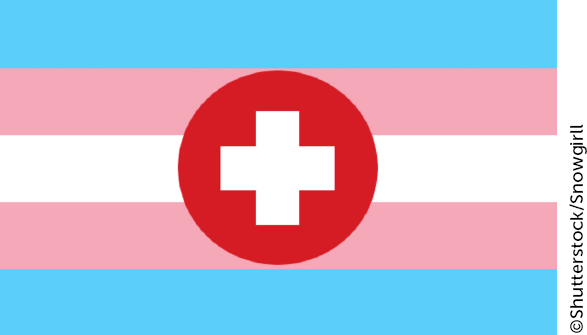
The past two decades have seen an evolving discussion as to the complexities of gender identity, particularly with respect to the healthcare needs of transgender (trans) people [1–3]. Among these needs, those of trans people with bleeding disorders are relatively unexplored.
Bleeding disorders encompass a group of conditions characterised by abnormalities in the clotting pathway. They include haemophilia A and B, and von Willebrand disease as well as rarer deficiencies of factors including II, V, VII, X, XIII, and platelet disorders such as Glanzmann thrombasthenia, Hermansky Pudlak syndrome and Bernard Soulier syndrome. Similarly, trans and nonbinary people are a minority within society. The number of people thought to be trans and non-binary has been estimated at between 0.1% and 2% for birth-assigned males/females, though the true figure is not known [4,5]. These relatively low numbers have resulted in historic marginalisation and difficulties in accessing care [4,6]. Their unique situation and specific health care needs make their care deserving of attention. Having a bleeding disorder (BD) brings an additional level of complexity that needs to be considered.
The literature on the healthcare needs of trans people is limited and has focused largely on the risks of hormone replacement therapy, in particular, the risks of thrombosis (myocardial infarction, pulmonary embolism and deep vein thrombosis), and erythrocytosis [7,8]. More recently, a number of papers have begun to address gender-affirming surgery in people with bleeding disorders [9,10]. These, however, have focused on the nature and intricacies of the surgery. The experiences of trans people themselves and what a diagnosis of a bleeding disorder might mean for them and their identity have not been discussed. As such, there is a significant gap in our understanding of the healthcare needs of trans people and how they navigate the complexities of living with a bleeding disorder.
This paper seeks to help improve our understanding by presenting the story of a trans person with a BD and how living with their BD has affected their healthcare needs, including gender-affirming surgery (see Table 1 for a glossary of trans terms). It will also seek to highlight how the current healthcare culture disadvantages not just trans people but all people with BDs.
Table 1.
Throughout this paper, Jay (a pseudonym) will be referred to by their preferred pronouns (they/them/their), including when discussing their pre-transition and menstrual history.
METHODOLOGY
Case selection
Jay was known to the author through their participation in another research project. Because of their willingness to take part in further research and the unique intersection of their condition and social situation, they were asked if they would be willing to take part in a separate qualitative case study.
Data collection and analysis
Two semi-structured qualitative interviews were conducted using a video conferencing platform. Video conferencing platforms have been found to be a useful and positive tool in qualitative research, including case studies [13–15].
The interviews followed a guide designed by the author specifically for this case study. The first interview addressed issues including Jay’s personal experience of their bleeding disorder, treatment history, and ongoing care. The second focused on the story of their transition, how this was affected by their bleeding disorder, and their thoughts on any future care, both for their BD and their transition.
Both interviews lasted approximately 60 minutes and were audio recorded. Each interview was transcribed verbatim and thematically analysed using an inductive coding methodology [16].
Ethics
The Health Research Authority (HRA) decision-making tools were used to decide whether a formal application to the HRA and NHS Research Ethics Committee (REC) would be required for the interview [17,18]. As this was a single case study involving no randomisation, no requirement to change the nature of the participant’s treatment and does not generate any transferable or generalisable data [19], it was not deemed to be research and, therefore, would require no REC review or approval. Jay, however, was asked to sign a consent form to confirm they were happy to be interviewed, pseudonymised and quoted in any publication.
To pseudonymise Jay the exact nature of their bleeding disorder has not be discussed; their symptoms, however, have been described. Jay’s geographical location and other potentially identifying information have also been redacted. Despite these precautions, it was stressed that complete anonymisation would not be possible as some of the specifics of their story may be recognisable to some who read the case study. Jay stated they understood the precautions being taken and the possibility of recognition but were happy to proceed. Ongoing verbal consent was sought at the beginning of each interview. Jay was also sent a copy of the publication before its submission to correct any factual errors and as a final check of consent.
Where direct quotes have been used, some have been paraphrased or altered to protect Jay’s identity. Where this has happened, a pseudonymised original transcript and the paraphrase were reviewed and sense-checked by an external validator to ensure accuracy. Jay was also asked to review the changes. No changes were made to any of the quotes used by either the validator or Jay.
Researcher positionality
Before presenting the results of this case study, it is important to note that I (the author) was assigned male at birth and am cisgendered (pronouns he/him). I am a white, Christian, middle-class UK resident with no direct personal experience of or involvement in the trans community. I am a registered nurse with 30 years’ experience, the last 12 of which have been in the field of rare bleeding disorders and research. I am currently completing a PhD in the lived experience of gene therapy for haemophilia.
RESULTS
Biography
Jay is a mixed-race, trans person in their 20s. Assigned female at birth (AFAB), they grew up in a culture that had a two-spirit tradition similar to that of the First Nations of North America and other third-gender traditions, including the Hijras in India and the Fa’afafine and Māhū in Polynesia [20,21]. Jay very much considers themself to be an inheritor of this tradition and refers to themself as, ‘a two-spirit person’. Their family, however, were profoundly homophobic and transphobic. They saw homosexuality as wrong and ‘sinful’ and understood trans people to have a ‘mental illness’. Because of this Jay’s relationship with them was often difficult and remains strained.
While they were raised and, for the most part, considered themself to be cisgender and straight, Jay had an awareness that they were not comfortable with this self-description. They did not, however, have the vocabulary, understanding or freedom to explore the nature of this discomfort more fully, so for many years, repressed their feelings.
‘My brain and my subconscious were like, “Oh okay, I’d better pretend to be this, and then when I’m an adult I can figure it out”.’
It was, therefore, only when Jay left home and went to college that they had a chance to explore both their sexuality and gender identity more fully. As they did, they began to realise, “yeah, [I know I’m] definitely not a woman”. It was at this point they felt that they finally began to be who they truly were and began their social and medical transition.
Throughout their life, Jay had suffered frequent bleeding episodes, including persistent bruising, oromucosal bleeding, haematemesis, haematuria, gastrointestinal bleeding, joint bleeds and epistaxis.
‘Some of my first memories are of the most rampant nosebleeds you could imagine and everyone around me thinking that it was totally normal. Which is so concerning, you know, because it’s not, it’s very much not normal.’
When their menses began at the age of 11, they reported abnormal uterine bleeding (AUB) lasting, on average, 11-15 days. They found it difficult to get recognition that there was a problem that required help; menstrual issues were generally downplayed and even dismissed by both their family and primary care physicians. After almost three years they were, however, prescribed an oral hormonal treatment for their periods. Due to the cultural and religious concerns of their family and community about the contraceptive pill:
‘I had to assure everyone I was not asking for birth control so that I could sleep around. I [was] asking for birth control so that I [could] stop bleeding.’
They initially found oral hormonal therapy unhelpful and were prescribed different formulations with varying degrees of success. They described feeling any relief from their AUB only after being fitted with a hormonal coil and the commencement of testosterone therapy in 2019, when they began their medical transition.
Jay was also born with a ‘heart defect’ and is prone to tachyarrhythmia. Their bleeds were, therefore, deemed to be of lesser importance as ‘bleeding is normal’. The difficult relationship they had with their parents compounded this, as they were often seen as ‘overly dramatic’ and prone to exaggerating their symptoms. Many of their symptoms were either ignored or dismissed and there was no recognition that there might be an underlying BD. Jay first truly understood they had a problem in 2020 when they were scheduled to undergo ‘top surgery’, the first of what they hoped would be a series of gender-affirming surgeries (see Table 2).
Table 2.
Gender affirming surgery [12]
As part of their pre-operative care, a coagulation screen was performed the week before surgery. On the day of the surgery, blood was retaken as they were told that there had been an issue with the previous set. This second set of blood tests showed a prolonged clotting time.
When the results came through, Jay was in the operating theatre being reviewed by the anaesthetist. They remember everything going quiet and said the operating team ‘looked at one another in confusion, but no one wanted to look me in the eye’. They were eventually informed by the surgeon that because of the prolonged clotting time, the cause of which was unknown, it would be unsafe to go ahead with the surgery.
Jay was discharged from the hospital and provided with the details of a haematologist to contact for further testing. Jay described being in a ‘fog of rage, despair, and misery, I remembered thinking how am I supposed to live, how am I supposed to survive, if my body prevents me from becoming my true self?’ They also remembered being consistently misgendered and deadnamed by the operating team.
Jay described being seen by a number of different haematologists over the next two years and getting contradictory information. They were told by one that, as they were ‘a woman’ they could not have a bleeding disorder and that the original surgical team must have been mistaken. During this time, Jay felt they were left stranded and that the care services they needed to access (both gender affirming and haematological) were unable or unwilling to provide care for them: unable because there they had no definitive diagnosis for their bleeding disorder and unwilling because of a prejudice against trans people. Jay said that many of the hospitals where they tried to access care were religious foundations and, as such, appeared uncomfortable providing care for them.
Eventually, Jay’s BD was diagnosed in 2022, but they were told that there was nothing that could be done because not enough was known about their condition, and that any potential surgery (including the gender affirming surgery) would be ‘too risky.’ Jay was even told by one haematologist that they should go home and ‘make out my will.’ They remained determined, however, ‘that nothing would stand in the way’ of them having the gender-affirming surgery that they needed. Their persistence meant that later that same year (2022) they were once again scheduled for top surgery, having been able to access the pro-coagulant therapy that would enable that surgery. They described the mental and emotional impact of struggling to achieve this as significant, saying.
‘There was no choice. It’s not something [I could] pretend didn’t exist and forget about. It is something that screamed [at me] every single second. Without it, I wouldn’t be here now.’
Initially, the surgery went well; the treatment Jay received prevented excessive bleeding, and they were discharged home after 24 hours. Receiving little in the way of follow-up care when one of their wounds became infected and dehisced, Jay had to seek assistance at a local emergency department rather than from the team who performed the surgery. During this episode, there was also a failure to recognise the nature of their bleeding disorder and take it into account, and surgical debridement was undertaken without appropriate pro-coagulant therapy cover. Despite this, there was no significant perioperative or postoperative bleeding.
Nearly two years later, Jay is pleased they had surgery and feel they are now able to pass more easily as a man without resorting to chest binding. They have, therefore, had some lessening of their gender incongruity but still have some problems as their AUB has returned with the discontinuation of their testosterone. This was stopped prior to surgery because of the increased cardiovascular risks and has not been restarted because of their cardiac condition [8]. They have also had their hormonal coil removed and replaced with a non-hormonal one.
‘The juxtaposition of knowing that I was not female and yet knowing that I was pumping female hormones into me so that I bled less was something that was causing me emotional distress.’
Jay feels that because of these ongoing menstrual problems, if it were not for their bleeding disorder, they would have pursued further gender-affirming surgery.
‘I don’t like to think about it too much because I think that it would have been something that I would have wanted to do but can’t because of this diagnosis.’
Jay also finds it difficult to hold down a regular job because of their continued AUB, epistaxis, haematemesis and joint-related mobility issues as well as, more recently, hearing loss. They have, however, not been able to access any consistent treatment for these problems and, in the case of their hearing loss, any recognition that it might be related to their bleeding disorder. Whenever they discuss any care concerns they have with their medical teams, be that primary care physician, or haematologist, they find their issues are often dismissed or belittled.
‘I found I was once again thought to be exaggerating or making up symptoms. There is a belief that they as doctors know best and that I as the patient did not.’
Jay is, therefore, mistrustful of doctors and hospitals.
Beyond transition surgery, though, they are very fearful that there may be other indications or bleeding episodes that might require surgical intervention, particularly joint surgery, as they have arthropathic changes in their joints (their hips in particular) and need to use crutches and a wheelchair for mobility purposes. When asked about how they see their future Jay says ‘I don’t think about it’. They are aware that their condition ‘is going to change my body, and I can’t stop that, and I don’t know what that’s going to mean’.
DISCUSSION
One of Jay’s major problems is AUB. At no point in their life, since the commencement of their menses, has Jay felt that their periods were well controlled. Their continuation and the treatment required to control them have, in many ways, added to rather than eased their gender incongruity. The nature of the discomfort that some trans and non-binary people feel about their periods is not well understood; indeed, the gendered nature of menstrual bleeding means that few, if any, trans and non-binary people have been included in menstrual experience studies [22,23]. Weiselberg, however, points out that trans men can find managing the practicalities of menstruation, including which bathrooms to use or obtaining sanitary products, profoundly distressing, inducing fear of exposure, victimisation and abuse (both physical and mental) [24]. It is, therefore, an impetus for many trans people to seek further surgery, including hysterectomy. Jay has admitted that they would have considered further surgery but feels that this is no longer an option because of their bleeding disorder.
It should also be noted that not all transgender people go on to have ‘bottom surgery’. Nolan, Kuhner and Dy report that the complex nature, expense and difficulty finding surgical teams capable of performing the procedures mean that only 42%-54% of trans and non-binary people assigned male at birth (AMAB) and 28% of trans and non-binary people AFAB have surgery beyond top surgery [25]. This means that nearly half of all trans and nonbinary people AFAB may continue to menstruate and will need to be monitored for cervical and ovarian carcinomas. Two-thirds of trans and non-binary people AMAB will also still require monitoring for testicular cancer, and all trans women will require monitoring for prostate cancer [26].
Another issue for trans people is the importance of being able to pass. Passing is more than just looking and dressing in a heteronormative manner but about an individual’s gender expression and their acceptance as a person of their preferred gender. It is, therefore, about expressing concepts of femininity and masculinity congruent with the community in which they live and society more generally. Both femininity and masculinity are, however, complex concepts that are socially, culturally, geographically, and temporally mediated [27–29], and can and are expressed very differently by different people in different contexts [30]. Trans gender expression is no less varied [27]. Some, however, have noted a tendency to express very idealised conceptions of both masculinity and femininity in an attempt to reduce the risk of discrimination, transphobia, and physical assault [31,32], which could, in turn, lead to further isolation and psychological distress.
Psychological distress, depression and suicidal ideation have also been highlighted as concerns within trans and non-binary communities [33]. Suicidality and non-suicidal self-injury, including hazardous drinking and recreational drug use, have been shown to be higher than in matched cisgender samples [34,35]. A 2023 study by Kidd et al. showed that 81.3% of respondents had had suicidal ideation at some point, and 42.0% had attempted suicide [36]. There is, though, often a reluctance for trans people to seek medical or psychological support because the medicalisation of their identities as well as the invasive and often voyeuristic nature of the questions asked, means many feel an acute sense of stigma and prejudice when they do [28,37,38].
For many, misgendering and deadnaming by healthcare staff, the unequal power dynamic, and the inherently gendered nature of healthcare are also a problem and are indicative of an underlying misogynistic and transphobic culture within medicine that discriminates against and stigmatises transgender people [39]. These issues have been a problem for Jay in regard to getting a definitive diagnosis for their bleeding disorder and getting the necessary medical assistance for that. For many years, their bleeding symptoms, particularly their AUB, were dismissed as unimportant; that they were being overly dramatic and that they could not possibly have a bleeding problem. Despite the awareness that bleeding disorders, including haemophilia, can and do affect all people irrespective of gender [15], and that AUB can be an underlying symptom thereof, accurate diagnosis can take up to 16 years from menarche [41–42]. For Jay it took 10 years to discover that they had a prolonged clotting time and a further two years to get a final diagnosis and a surgical treatment plan.
To improve the engagement with and access to healthcare services by the trans and non-binary community and mitigate many of the issues that have been highlighted in this case study, several recommendations can be made. These include, not just the education of health care professionals [37,38], but also the initiation of material changes to the structure and the fabric of a service, brought about by the community’s inclusion in its design, implementation, and delivery [39,43].
Limitations
As with all case studies, whose focus is that of an individual, this has limited generalisability [44,45]. That said, case studies are a valuable way of capturing the complex nature of intersecting conditions and their social determinants, including the psychological, historical and cultural factors of an individual’s life. They are, therefore, able to guide future research and improve care [46,47].
CONCLUSION
The greater visibility of trans issues over the past 20 years has highlighted the culture of healthcare, and in particular, the gendering nature of care. This case study highlights how gendered care excludes and disadvantages minority groups, including the trans community, delaying diagnosis and preventing access to care. There is, therefore, a need to include the trans and non-binary communities in service design, implementation and delivery to re-evaluate and tailor services to meet the needs of all service users without resorting to either homogenisation or stereotype.