EHC Think Tank members used the concept of a ‘guiding star’ and associated ‘near stars’ to identify steps to address challenges in the health care system around access equity and future care pathways for rare diseases

graphic/j_jhp-2023-0023_fig_004.jpg

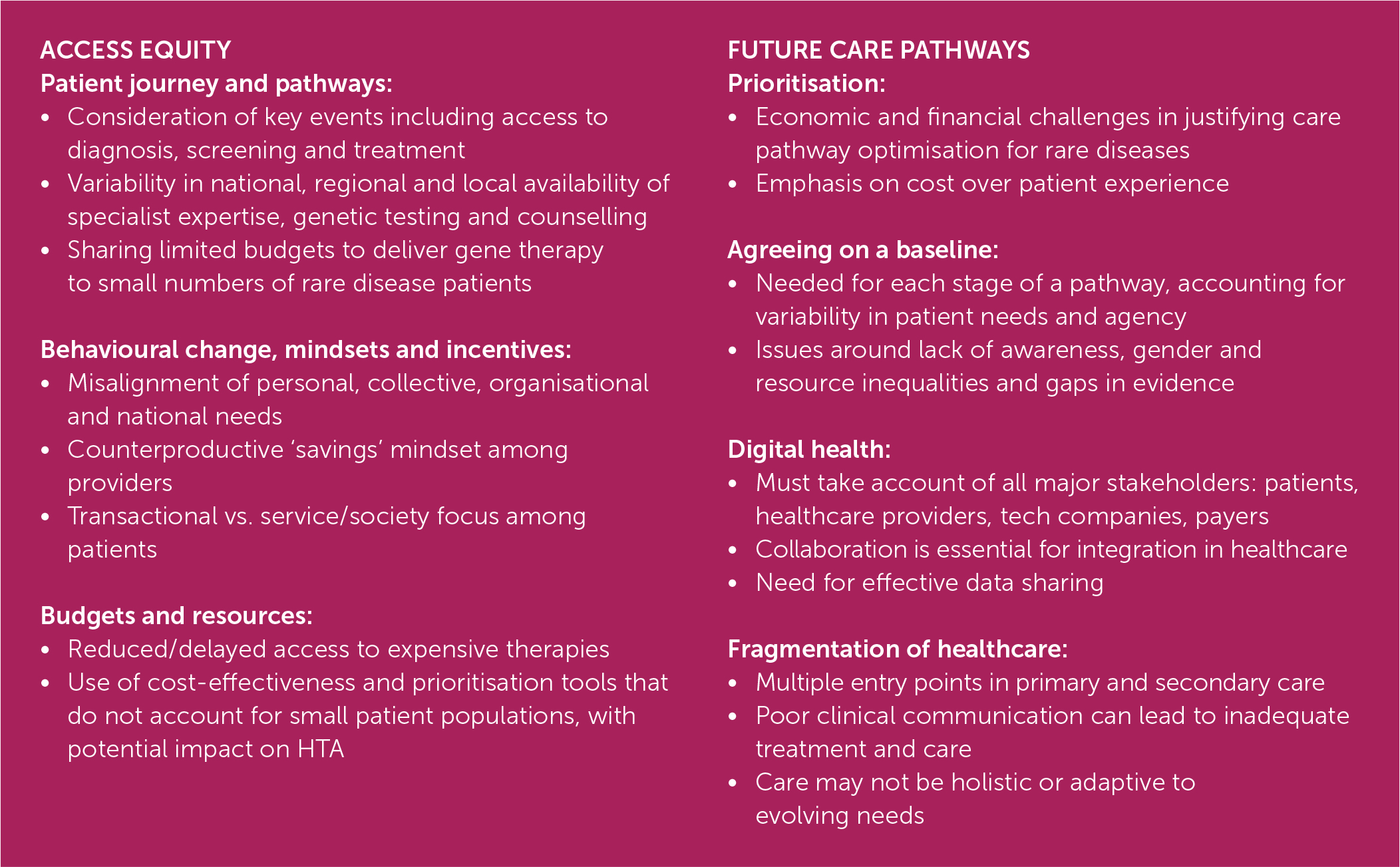
At the first workshops of the EHC Think Tank Workstreams on Access Equity and Future Care Pathways, respectively, stakeholders representing healthcare providers, patient groups, regulators, policymakers, research and industry, participated in virtual meetings to identify challenges to progress in these important areas related to patient care (Figure 1), and to propose potential solutions [1,2]. Following the format of other Think Tank Workstreams, the second workshops for each of the workstreams involved participants working towards consensus on:

  1. Identifying a ‘guiding star’ to determine the direction/course for ongoing focus

  2. Defining achievable ‘near star’ milestones

  3. Exploring the enablers and constraints to achieving these milestones.

Figure 1.

Summary of challenges to progress to equitable access to care (Access Equity) and enabling improved care pathways (Future Care Pathways) [1,2]
graphic/j_jhp-2023-0023_fig_001.jpg

GUIDING STARS

The symbol of a ‘guiding star’ was used to align each workstream around a long-term, ambitious, but realistically achievable solution derived from the challenges identified in the first workshops.

Access Equity

The guiding star for Access Equity is aimed at addressing challenges around the patient journey and pathways, behavioural change, mindsets and incentives, budget and resources, creating transparency, upcoming supply issues for therapies, uncertainty regarding regulations, and information and education, including health literacy [1]. As such, the group proposed that it should aspire to a healthcare system that gives the patient the ability to benefit from care and treatment fairly and impartially (Figure 2).

Figure 2.

Guiding star and near star aims for the EHC Think Tank Workstream on Access Equity

graphic/j_jhp-2023-0023_fig_002.jpg

Future Care Pathways

The Future Care Pathways Workstream formulated a guiding star to address challenges regarding financial challenges, the need to agree on a baseline for specific pathways and keep them updated and relevant, digital health, and fragmentation of healthcare [2]. The guiding star proposed, was the right intervention at the right time by the right healthcare professional in the right formats with a variety of methods of delivery to suit the person, (Figure 3).

Figure 3.

Guiding star and near star aims for the EHC Think Tank Workstream on Future Care Pathways

graphic/j_jhp-2023-0023_fig_003.jpg

NEAR STARS

The symbol of ‘near stars’ was used to chart several shorter-term, more readily achievable milestones along the path towards the long-term guiding star goal for each workstream (Figures 2 and 3). All near-star goals are subject to adjustment based on work progressing, and the system reacting in response. As a dynamic process, this may lead to new learnings that reorient towards other or new near-star goals ultimately progressing towards the guiding star. Both workstreams identified goals related to behavioural change.

Near-star goals for the Workstream on Access Equity were:

  • Changing the narrative on budget and resources

  • Changing the behaviours of stakeholders in the healthcare system.

Those identified by the Workstream on Future Care Pathways were:

  • Creating combined digital and human pathways

  • Using patient behaviour to inform nudges and incentives

  • Creating data-driven pathways.

CHANGING THE NARRATIVE ON BUDGET AND RESOURCES

1.

Participants in the Workstream on Access Equity felt that changing the narrative from a ‘cost’ to an ‘investment’ perspective could enable a healthier society in the future. This requires a redefinition of the perception of ‘value’, whereby the system moves beyond healthcare decisions based largely on monetary considerations towards an approach that considers value in terms that include broader societal benefits and long-term gains [3,4]. Greater transparency is needed in decision-making, particularly in Health Technology Assessment, pricing and negotiations, and the regulation of access to treatment, healthcare and social services [5]. Even with the framework established by the new European Regulation on Health Technology, which is due to come into effect in 2025 [6], it is yet to be seen how challenges around input from patient groups and the use of real-world evidence will bring in broader perspectives, and HTA processes will continue to differ between countries as a result of differences in healthcare systems and payers. Improving partnerships between healthcare system stakeholders, including patients, would help to foster trust, growth, and collaboration [7], including partnerships between seemingly more disparate entities, such as researchers and commercial enterprises. Amplifying, sharing and mainstreaming best practice public-civic-private partnerships could be a helpful first step.

The healthcare narrative needs to move from a focus on funding for ‘fixing the patient’ to proactive investment in early intervention and prevention of comorbidities, with the potential to improve overall health and reduce long-term healthcare costs [8,9]. A more holistic perspective takes account of the ability to return to work and care for family – not just the price of treatment [10,11]. The merits of investing in ‘living better for a longer time’ rather than ‘waiting for serious illness’ need to be better understood. This links to broader discussions about equity and fostering a transition from an ‘us vs. them’ approach to a focus on specific relevant health outcomes and values aligned with patient needs [12]. Measuring outcomes will be essential for achieving effective healthcare budget allocation, including capturing non-monetary benefits to assess genuine return on healthcare investment. However, if we wish to move towards a more societal perspective, defining, following and measuring these outcomes becomes more difficult.

At a governmental level, allocating a fixed share of gross domestic product (GDP) to healthcare may constrain change by limiting investment. Given that healthcare in Europe is generally funded by taxpayers who want to understand how their money is spent, a shift in the narrative should emphasise the importance of equitable distribution across age groups and patient populations [13]. Addressing short-term thinking, which often constrains long-term healthcare investment [14], is a priority, necessitating a shift towards longterm planning and budget allocation. Insights from behavioural science and change management can help reshape perceptions, align incentives, and promote behaviours that benefit individuals and society [15].

Considerable constraints remain, not least the complex interplay of diverse national healthcare systems across Europe and the lack of a universally agreed way to identify and measure value and its implications for long-term planning and investment. Innovative pilots and data projects play a crucial role in driving change in healthcare [16]. The COVID-19 pandemic has also underscored the importance of health and equitable access to healthcare services [17]. Overall, these shifts in narrative can pave the way towards a more equitable and effective healthcare system that acknowledges patients as people, living healthy lives, supported by insights from secure and optionally open-source long-term data.

CHANGE OF BEHAVIOUR

2.

The need for behavioural change underpinned achievable shorter-term goals for both the Access Equity and Future Care Pathways Workstreams.

To move towards a healthcare system that enables the patient to benefit from care and treatment fairly and impartially, participants in the second Access Equity workshop recommended investigating healthcare stakeholders' mindsets and intrinsic incentives in the healthcare system [18,19] that may facilitate a change in stakeholder behaviour.

Transformation towards more equitable access to healthcare could potentially be powered by evidencebased narratives, as demonstrated by initiatives such as the European Reference Networks (ERNs) for rare diseases [20,21]. These virtual, pan-European healthcare provider networks aim to facilitate discussion on complex or rare diseases and conditions that require highly specialised treatment and concentrate knowledge and resources [19]. At a national level, the concept of Patient and Public Involvement (PPI) is gaining momentum and facilitating changes that support the types of stakeholder collaboration required in healthcare [22]. The strong and committed multi-stakeholder collaboration and broader communication found in initiatives of this kind should be supported and facilitated as enablers for behavioural change.

Multi-level stakeholder collaboration will be paramount to reinforce the urgency of the need for action to ensure a healthy healthcare system. In addition, visionary leadership, training, and capacity building will empower healthcare professionals (HCPs) to provide inclusive care. Leveraging research in change management and behavioural science can equip healthcare systems with strategies to influence behaviour positively [16].

Regarding stakeholder behaviour, the main constraints on progress towards Access Equity are a lack of accountability and a tendency to assume issues are other stakeholders’ responsibility [23]. Resistance to change is a natural human characteristic, and attitudes are entrenched in healthcare systems, with the potential for power struggles among stakeholders and clashes of personality [24]. The scale of change needed may present a constraint, and even identifying a starting point may be difficult. Conducting a behaviour change pilot could be useful, especially in starting and testing a change intervention. However, this would not guarantee that lasting, positive changes would be scalable across organisations and projects – examples of pilots being translated to (inter)national programs are scarce. Lack of persistence may also constrain progress; a commitment and belief in long-term change will be needed, alongside accepting that progress may occur in small steps and victories may be limited – at least early on.

Incentives were also considered important for the successful development of Future Care Pathways, notably at critical points of the patient pathway to achieve optimal outcomes, such as the time of diagnosis. Understanding a patient’s behaviour before and while on a pathway will help determine the need for and format of nudges and incentives, e.g., psychological or financial.

Participants in the Workstream on Future Care Pathways identified a series of enablers for implementing the behaviours, nudges to patients and incentives for innovation that are needed at different stages and times while taking account of changes to patients’ lives. A multidisciplinary network, including the community, organisations and volunteers, could facilitate seamless, joined-up provision of care by signposting and supporting patients along care pathways. Nudges could be included at key points in pathways to remind patients of necessary actions [25,26].

An early prevention mindset should be encouraged across healthcare systems so that, for example, prophylaxis is incorporated as a routine part of care pathways for bleeding disorders [27]. In addition, incentives are needed to nurture a culture of innovation in pathway development, with collaborative research and motivational payment models for care providers.

Changing behaviour is a multi-layered endeavour and this creates considerable challenges. Lack of time, effort and energy are likely to deter some stakeholders from contributing to the coordinated improvements needed to ensure care pathways where the right intervention at the right time by the right healthcare professional in the right formats with methods of delivery suited to the person is standard [28]. Resource constraints may impact the availability of financial incentives, thereby hindering networks of facilitators from fully performing their roles in guiding patients along their pathways. As with Access Equity, unclear accountability is also a constraint. Who is responsible for initiating change, and who will be affected by decisions? A lack of understanding of the objectives and reasons for behavioural change may leave stakeholders unsure of who is accountable and unwilling to take responsibility.

COMBINED DIGITAL AND HUMAN PATHWAYS

3.

Future Care Pathways need to be seamless and personalised, with integrated digital and AI-based technologies when applicable and relevant for patients, clinicians and healthcare systems, without losing the necessary human connection. This can enable real-time monitoring of pathway effectiveness. Key objectives and minimum standards must be agreed upon to achieve improved patient outcomes at affordable costs. Reference pathways should be defined that can be adapted to individual patient needs, and a coordinated and collaborative approach should be implemented between providers of clinical and social care, with input from providers of dental, housing, economic and educational support as needed [29,30]. Integrated and personalised health budgets for providers would facilitate this.

Human aspects, particularly trust between stakeholders and the system, are important enablers of change. Once this is established, other elements, such as shared decision-making between patients and HCPs, will follow. An organisational set-up should be defined which enables personalised pathways grounded in patient agency and evidence at all levels. Sharing common goals may make the organisation and implementation of pathways easier and potentially more cost-effective. Of the technical and digital aspects needed for the development of Future Care Pathways, the infrastructure of supercomputing and cloud solutions already exists, and is ready to be capitalised [17].

Despite this seemingly rosy outlook for combining digital and human aspects of Future Care Pathways, there are constraints. Financial and legal aspects need to be worked out before change is possible, and significant investment will be needed to develop and implement new processes and tools. Technical and digital challenges include inadequate implementation of technological infrastructure and limited systems integration [31,32] and the need for appropriate, unbiased data collection [33,34]. On the ‘human’ side, there is a risk that healthcare providers will feel pressured into implementing new care pathways before they are ready, making them hesitate to introduce new concepts, tools, and processes [32,33]. While recognising the value of collaboration, people and institutions may also be wary of working together and trusting each other [32]. There may be an element of power dynamics that delays or impedes progress in pathway development and implementation. Successful implementation will require human-centred design and the inclusion of patients at all stages for the technology to be ‘sticky’ and deliver sustainable mutual value [35].

OPTIMISING USE OF DATA

4.

Routine data collection from patients should be used to understand and improve each pathway for individual patients and for the collective patient group [36]. Key patient outcomes need to be defined, including patient-reported experience measures/patient-reported outcome measures (PREMs/PROMs), and the end goal for each pathway stage regarding long-term health. National initiatives using patient experience data to map and improve care pathways, including developing consensus-based care pathways, have been reported in areas including breast cancer and elective surgery [37,38], and could provide useful models for rare disease. Fragmented and inconsistent data collection and outcome measures across policy domains (e.g., healthcare, education, labour market, social security) create barriers to information sharing and outcome measurement that may delay progress in developing Access Equity and Future Care Pathways. However, initiatives are underway to harmonise data flow within and between European countries.

Launched by the European Commission in May 2022, the European Health Data Space (EHDS) has the potential to provide valuable information to inform evidence-based decision-making [39]. EHDS supports data sharing for better healthcare delivery, better research, innovation, and policymaking across Europe while maintaining full compliance with EU data protection standards. Approved organisations can access electronic data (e.g., patient summaries, e-prescriptions, images and image reports, laboratory results and discharge reports) in a common European format.

Established and planned use of electronic medical records and online registries enable easier patient data collection, and online platforms will facilitate the completion of PREM and PROM data [40]. There needs to be a clear purpose for collecting data, and HCPs and patients should be involved in decisions about what and how data are collected, how data are processed, and who has access to the data [41]. How data are handled and presented should make sense to both patients and HCPs, and patients wish to see that collected data are being actively used in treatment decisions. Established patient networks and advocates can help ensure patients’ visions and needs are acted upon.

The co-creation of data research studies between patients, academia, and life science companies can go a long way to addressing the needs of multiple stakeholders. Patient groups require support and knowledge to drive evidence-based data collection that can address their communities' unmet needs. The data collected from patients needs to serve more than one partner.

Several constraints are likely to impede the optimisation of data collection. Data collection and data entry are time-consuming for HCPs, and patients may resist completing questionnaires if they do not understand their value. Anyone involved in data collection must be aware of potential security issues and data protection requirements, including the General Data Protection Regulation (GDPR) [42]. There is also a risk that inadequate data quality, data access, data interoperability, and representativeness of data may foster health inequalities [13,43].

SUMMARY AND NEXT STEPS

The EHC Think Tank’s Workstream on Access Equity aspires to a healthcare system that enables the patient to benefit from care and treatment fairly and impartially. Through an alternative co-creation process, workstream members identified focus areas, relating to behaviour, mindsets and narratives, which need to change to realise patient access equity.

The Workstream on Future Care Pathways argues that it is prudent to ensure the right intervention at the right time by the right healthcare professional in the right formats with a variety of methods of delivery to suit the person. Achieving this requires a focus on patient behaviour to inform nudges and incentives, embracing and utilising digital tools, and making decisions based on data-driven evidence.

The next step for each workstreams will be to explore the key enablers and constraints to progress towards these goals in more depth, and to develop a series of actions through which it is feasible for workstream members to facilitate positive change in the broader healthcare system.

ACKNOWLEDGEMENTS

This paper became feasible through the valuable contribution of the members of the EHC Think Tank Workstreams on Access Equity and Future Care Pathways. The authors would like to thank all participants in these workstreams and to acknowledge the contributions of Helen Stoop (Takeda Pharmaceutical Company Limited), Mary Wang (Rare Diseases International), Christian Jervelund (Copenhagen Economics), Susan Daniels (Lumanity), Richard Habis (Ashemadrid), Nick Meade (Genetic Alliance UK), Guillermo Tobaruela (F. Hoffmann-La Roche Ltd), Sheba Joseph (EUPATI representative).

The authors have advised no interests that might be perceived as posing a conflict or bias.

This paper does not contain any studies involving human participants or animals performed by any of the authors.

THE EHC THINK TANK

The European Haemophilia Consortium (EHC) Think Tank was launched in June 2021. Building on existing advocacy activities, the initiative brings together a broad group of stakeholders to engage with key thematic areas or workstreams identified as priority areas for ‘systems change’ within European health care systems [44].

The EHC Think Tank seeks to mobilise the agency and purpose of all stakeholders in the health care system to collectively design and champion potential solutions to existing problems. Workstream members are invited based on their expertise and potential for constructive engagement, including patient and industry perspectives alongside a balance of HCP academic, regulatory, governmental and geographical representation. All workstream activities are held under the Chatham House rule to enable inclusive and open discussion [45]. Each workstream is project-managed from within its individual membership. Members set their own agendas, timelines, and targeted outputs, with operational, logistical, methodological and facilitation support from EHC staff and Think Tank practitioners.

The following key topic areas have been the subject of workstream discussion and activity:

  • Registries

  • The Hub and Spoke Model

  • Patient Agency

  • Access Equity

  • Future Care Pathways

REFERENCES

1 

Skouw-Rasmussen N, Savini L; EHC Think Tank. Access equity: key questions and challenges – A report from the 1st workshop of the European Haemophilia Consortium (EHC) Think Tank Workstream on Access Equity. J Haem Pract 2023; 10(1) 56-61 doi: 10.2478/jhp-2023-0011.

N Skouw-Rasmussen L Savini EHC Think Tank. Access equity: key questions and challenges – A report from the 1st workshop of the European Haemophilia Consortium (EHC) Think Tank Workstream on Access Equity. J Haem Pract2023; 10(1) 56-61 doi: 10.2478/jhp-2023-0011.

2 

Skouw-Rasmussen N, Savini L; EHC Think Tank. Future Care Pathways – A report from the 1st workshop of the EHC Think Tank Workstream on Future Care Pathways. J Haem Pract 2023; 10(1) 74-81. doi: 10.2478/jhp-2023-0013.

N Skouw-Rasmussen L Savini EHC Think Tank. Future Care Pathways – A report from the 1st workshop of the EHC Think Tank Workstream on Future Care Pathways. J Haem Pract2023; 10(1) 74-81. doi: 10.2478/jhp-2023-0013.

3 

Ken Lee KH, Matthew Austin J, Pronovost PJ. Developing a measure of value in health care. Value Health 2016; 19(4): 323-5. doi: 10.1016/j.val.2014.12.009.

KH Ken Lee J Matthew Austin PJ. Pronovost Developing a measure of value in health care. Value Health2016; 19(4): 323-5. doi: 10.1016/j.val.2014.12.009.

4 

Teisberg E, Wallace S, O’Hara S. Defining and implementing value-based health care: a strategic framework. Acad Med 2020; 95(5): 682-685. doi: 10.1097/ACM.0000000000003122.

E Teisberg S Wallace S. O’Hara Defining and implementing value-based health care: a strategic framework.Acad Med2020; 95(5): 682-685. doi: 10.1097/ACM.0000000000003122.

5 

Santos AS, Guerra-Junior A, Ruas CM. Improving transparency in Health Technology Assessment. Value Health 2017; 20 (9): PA707-A708. doi: 10.1016/j.jval.2017.08.1858.

AS Santos A Guerra-Junior CM. Ruas Improving transparency in Health Technology Assessment. Value Health2017; 20 (9): PA707-A708. doi: 10.1016/j.jval.2017.08.1858.

6 

European Commission. Regulation on Health Technology Assessment. Available from https://health.ec.europa.eu/health-technology-assessment/regulation-health-technology-assessment_en (accessed 18 October 2023).

European Commission. Regulation on Health Technology Assessment. Available from https://health.ec.europa.eu/health-technology-assessment/regulation-health-technology-assessment_en (accessed 18 October 2023).

7 

Berry LL, Awdish RLA, Letchuman S, Steffensen KD. Trust-based partnerships are essential – and achievable – in health care service. Mayo Clin Proc 2021; 96(7): 1896-1906. doi: 10.1016/j.mayocp.2021.03.035.

LL Berry RLA Awdish S Letchuman KD. Steffensen Trust-based partnerships are essential – and achievable – in health care service. Mayo Clin Proc2021; 96(7): 1896-1906. doi: 10.1016/j.mayocp.2021.03.035.

8 

Seychell M, Hackbart B. The EU health strategy – Investing in health. Public Health Rev 2013; 35: 4. doi: 10.1007/BF03391689.

M Seychell B. Hackbart The EU health strategy – Investing in health. Public Health Rev2013; 35: 4. doi: 10.1007/BF03391689.

9 

Costa-Font J, Jimenez-Martin S, Vilaplana C. Does long-term care subsidization reduce hospital admissions and utilization. J Health Econ 2018; 58: 43-66. doi: 10.1016/j.jhealeco.2018.01.002.

J Costa-Font S Jimenez-Martin C. Vilaplana Does long-term care subsidization reduce hospital admissions and utilization. J Health Econ2018; 58: 43-66. doi: 10.1016/j.jhealeco.2018.01.002.

10 

Suhrcke M, McKee M, Sauto Arce R, Tsolova S, Mortensen J. Investment in health could be good for Europe’s economies. BMJ 2006; 333(7576): 1017-1019. doi: 10.1136/bmj.38951.614144.68.

M Suhrcke M McKee R Sauto Arce S Tsolova J. Mortensen Investment in health could be good for Europe’s economies. BMJ2006; 333(7576): 1017-1019. doi: 10.1136/bmj.38951.614144.68.

11 

Bertram MY, Sweeny K, Lauer J, et al. Investing in non-communicable diseases: an estimation of the return on investment for prevention and treatment services. Lancet 2018; 391(10134): 2071-2078. doi: 10.1016/S0140-6736(18)30665-2.

MY Bertram K Sweeny J Lauer Investing in non-communicable diseases: an estimation of the return on investment for prevention and treatment services. Lancet2018; 391(10134): 2071-2078. doi: 10.1016/S0140-6736(18)30665-2.

12 

Brown C, Harrison D, Burns H, Ziglio E. Governance for health equity: taking forward the equity values and goals of Health 2020 in the WHO European Region. WHO Regional Office for Europe. Updated reprint 2014. Available from https://iris.who.int/handle/10665/137035 (accessed 18 October 2023).

C Brown D Harrison H Burns E. Ziglio Governance for health equity: taking forward the equity values and goals of Health 2020 in the WHO European Region. WHO Regional Office for Europe. Updated reprint 2014. Available from https://iris.who.int/handle/10665/137035 (accessed 18 October 2023).

13 

Stevens A, Neilson M, Rasanathan K, Syed SB, Koller TS. Quality and equity: a shared agenda for universal health coverage. BMJ Glob Health 2023; 8(7): e012561. doi: 10.1136/bmjgh-2023-012561.

A Stevens M Neilson K Rasanathan SB Syed TS. Koller Quality and equity: a shared agenda for universal health coverage. BMJ Glob Health2023; 8(7): e012561. doi: 10.1136/bmjgh-2023-012561.

14 

Doetsch JN, Schlösser C, Barros H, et al. A scoping review on the impact of austerity on healthcare access in the European Union: rethinking austerity for the most vulnerable. Int J Equity Health 2023; 22(1): 3. doi: 10.11868/s12939-022-01806-1.

JN Doetsch C Schlösser H Barros A scoping review on the impact of austerity on healthcare access in the European Union: rethinking austerity for the most vulnerable. Int J Equity Health2023; 22(1): 3. doi: 10.11868/s12939-022-01806-1.

15 

Lorencatto F, Charani E, Sevdalis N, Tarrant C, Davey P. Driving sustainable change in antimicrobial prescribing practice: how can social and behavioural sciences help? J Antimicrob Chemother 2018; 73(10): 2136-2624. doi: 10.1093/jac/dky222.

F Lorencatto E Charani N Sevdalis C Tarrant P. Davey Driving sustainable change in antimicrobial prescribing practice: how can social and behavioural sciences help?J Antimicrob Chemother2018; 73(10): 2136-2624. doi: 10.1093/jac/dky222.

16 

Wang Z, Kitsios F, Talias MA. Digital transformation in healthcare: technology acceptance and its applications. Int J Environ Res Public Health 2023; 20(4): 3407. doi: 10.3390/ijerph20043407.

Z Wang F Kitsios MA. Talias Digital transformation in healthcare: technology acceptance and its applications. Int J Environ Res Public Health2023; 20(4): 3407. doi: 10.3390/ijerph20043407.

17 

Abdul-Mutakabbir JC, Hirsch EB, Ko C, Brown BR, Bandali A, Mordino J, Yoke LH, Bell T, Swartz TH, Syed U, Hlatshwayo M, Saunders IM. A call to action: A need for initiatives that increase equitable access to COVID-19 therapeutics. Lancet Reg Health Am 2022; 11: 100263. doi: 10.1016/j.lana.2022.100263.

JC Abdul-Mutakabbir EB Hirsch C Ko BR Brown A Bandali J Mordino LH Yoke T Bell TH Swartz U Syed M Hlatshwayo IM. Saunders A call to action: A need for initiatives that increase equitable access to COVID-19 therapeutics. Lancet Reg Health Am2022; 11: 100263. doi: 10.1016/j.lana.2022.100263.

18 

Bradley KL, Shachmut K, Viswanathan S, Griffin B, Vielehr D. The role of incentives in health – closing the gap. Mil Med 2018; 83, suppl 3: 208–212. doi: 10.1093/milmed/usy216.

KL Bradley K Shachmut S Viswanathan B Griffin D. Vielehr The role of incentives in health – closing the gap. Mil Med2018; 83, suppl 3: 208–212. doi: 10.1093/milmed/usy216.

19 

Vlaev I, King D, Darzi A et al. Changing health behaviors using financial incentives: a review from behavioral economics. BMC Public Health 2019; 19: 1059. doi: 10.1186/s12889-019-7407-8.

I Vlaev D King A Darzi Changing health behaviors using financial incentives: a review from behavioral economics. BMC Public Health2019; 19: 1059. doi: 10.1186/s12889-019-7407-8.

20 

Héon-Klin V. European Reference Networks for rare diseases: What is the conceptual framework? Orphanet J Rare Dis 2017; 12: 137. doi: 10.1186/s12023-017-0676-3.

V. Héon-Klin European Reference Networks for rare diseases: What is the conceptual framework?Orphanet J Rare Dis2017; 12: 137. doi: 10.1186/s12023-017-0676-3.

21 

Tumiene B, Graessner H, Mathijssen IMJ, et al. European Reference Networks: challenges and opportunities. J Community Genet 2021; 12(2): 217-229. doi: 10.1007/s12687-021-00521-8.

B Tumiene H Graessner IMJ Mathijssen European Reference Networks: challenges and opportunities. J Community Genet2021; 12(2): 217-229. doi: 10.1007/s12687-021-00521-8.

22 

Holmes L, Cresswell K, Williams S, et al. Innovating public engagement and patient involvement through strategic collaboration and practice. Res Involv Engagem 2019; 5: 30. doi: 10.1186/s40900-019-0160-4.

L Holmes K Cresswell S Williams Innovating public engagement and patient involvement through strategic collaboration and practice. Res Involv Engagem2019; 5: 30. doi: 10.1186/s40900-019-0160-4.

23 

Emanuel EJ, Emanuel LL. What is accountability in health care? Ann Intern Med 1996; 124(2): 229-39. doi: 10.7326/0003-4819-124-2-199601150-00007.

EJ Emanuel LL. Emanuel What is accountability in health care?Ann Intern Med1996; 124(2): 229-39. doi: 10.7326/0003-4819-124-2-199601150-00007.

24 

Bochatay N, Kuna Á, Csupor É, et al. The role of power in health care conflict: recommendations for shifting toward constructive approaches. Acad Med 2021; 96(1): 134-141. doi: 10.1097/ACM.0000000000003604.

N Bochatay Á Kuna É Csupor The role of power in health care conflict: recommendations for shifting toward constructive approaches. Acad Med2021; 96(1): 134-141. doi: 10.1097/ACM.0000000000003604.

25 

Patel MS, Volpp KG, Asch DA. Nudge units to improve the delivery of health care. N Engl J Med 2018; 378(3): 214-216. doi: 10.1056/NEJMp1712984.

MS Patel KG Volpp DA. Asch Nudge units to improve the delivery of health care. N Engl J Med2018; 378(3): 214-216. doi: 10.1056/NEJMp1712984.

26 

Volpp K, Delgado MK. Behavioral nudges are used widely to steer clinicians and patients alike. NEJM Catal Innov Care Deliv 2023; 4(6). doi: 10.1056/CAT.23.0125.

K Volpp MK. Delgado Behavioral nudges are used widely to steer clinicians and patients alike. NEJM Catal Innov Care Deliv2023; 4(6). doi: 10.1056/CAT.23.0125.

27 

Srivastava A, Santagostino E, Dougall A, et al. WFH Guidelines for the Management of Hemophilia, 3rd edition. Haemophilia 2020; 26 Suppl 6: 1-158. doi: 10.1111/hae.14046.

A Srivastava E Santagostino A Dougall WFH Guidelines for the Management of Hemophilia, 3rd edition. Haemophilia2020; 26Suppl 6: 1-158. doi: 10.1111/hae.14046.

28 

Evans-Lacko S, Jarrett M, McCrone P, Thornicroft P. Facilitators and barriers to implementing clinical care pathways. BMC Health Serv Res 2010; 10: 182. doi: 10.1186/1472-6963-10-182.

S Evans-Lacko M Jarrett P McCrone P. Thornicroft Facilitators and barriers to implementing clinical care pathways. BMC Health Serv Res2010; 10: 182. doi: 10.1186/1472-6963-10-182.

29 

The Health Foundation. Integrated care pathways: what do they look like? Available from https://www.health.org.uk/publications/long-reads/integrated-care-systems-what-do-they-look-like (accessed October 2023).

The Health Foundation. Integrated care pathways: what do they look like?Available from https://www.health.org.uk/publications/long-reads/integrated-care-systems-what-do-they-look-like (accessed October 2023).

30 

Garattini L, Badinella Martini M, Nobili A. Integrated care in Europe: Time to get it together? Appl Health Econ Health Policy 2022; 20: 145-147. doi: 10.1007/s40258-021-00680-2.

L Garattini M Badinella Martini A. Nobili Integrated care in Europe: Time to get it together?Appl Health Econ Health Policy2022; 20: 145-147. doi: 10.1007/s40258-021-00680-2.

31 

Kowatsch T, Otto L, Harperink S, Cotti A, Schlieter H. A design and evaluation framework for digital health interventions. IT – Information Technology 2019; 61(5-6): 253-263. doi: 10.1515/itit-2019-0019.

T Kowatsch L Otto S Harperink A Cotti H. Schlieter A design and evaluation framework for digital health interventions. IT – Information Technology2019; 61(5-6): 253-263. doi: 10.1515/itit-2019-0019.

32 

Schlieter H, Marsch LA, Whitehouse D, et al. Scale-up of digital innovations in health care: expert commentary on enablers and barriers. J Med Internet Res 2022; 24(3): e24582. doi: 10.2196/24582.

H Schlieter LA Marsch D Whitehouse Scale-up of digital innovations in health care: expert commentary on enablers and barriers. J Med Internet Res2022; 24(3): e24582. doi: 10.2196/24582.

33 

Norori N, Hu Q, Aellen FM, Faraci FD, Tzovara A. Addressing bias in big data and AI for health care: A call for open science. Patterns 2021; 2: 10. doi: 10.1016/j.patter.2021.100347.

N Norori Q Hu FM Aellen FD Faraci A. Tzovara Addressing bias in big data and AI for health care: A call for open science. Patterns2021; 2: 10. doi: 10.1016/j.patter.2021.100347.

34 

Cahan EM, Hernandex-Boussard T, Thadaney-Israni S, Rubin DL. Putting the data before the algorithm in big data addressing personalized healthcare. npj Digit Med 2019; 2: 78. doi: 10.1038/s41746-019-0157-2.

EM Cahan T Hernandex-Boussard S Thadaney-Israni DL. Rubin Putting the data before the algorithm in big data addressing personalized healthcare. npj Digit Med2019; 2: 78. doi: 10.1038/s41746-019-0157-2.

35 

Jacob C, Bourke S, Heuss S. From testers to cocreators – the value of and approaches to successful patient engagement in the development of eHealth solutions: qualitative expert interview study. JMIR Hum Factors 2022; 9(4): e41481. doi: 10.2196/41481.

C Jacob S Bourke S. Heuss From testers to cocreators – the value of and approaches to successful patient engagement in the development of eHealth solutions: qualitative expert interview study. JMIR Hum Factors2022; 9(4): e41481. doi: 10.2196/41481.

36 

Sloan JA, Halyard M, El Naga I, Mayo C. Lessons from large scale collection of patient reported outcomes: Implications for big data aggregation and analytics. Int J Radiat Oncol Biol Phys 2016; 95(3): 922-929. doi: 10.1016/j.ijrobp.2016.04.002.

JA Sloan M Halyard I El Naga C. Mayo Lessons from large scale collection of patient reported outcomes: Implications for big data aggregation and analytics. Int J Radiat Oncol Biol Phys2016; 95(3): 922-929. doi: 10.1016/j.ijrobp.2016.04.002.

37 

Cherif E, Martin-Verdier E, Rochette C. Investigating the healthcare pathway through patients’ experience and profiles: implications for breast cancer healthcare providers. BMC Health Serv Res 2020; 20: 735. doi: 10.1186/s12913-020-0556909.

E Cherif E Martin-Verdier C. Rochette Investigating the healthcare pathway through patients’ experience and profiles: implications for breast cancer healthcare providers. BMC Health Serv Res2020; 20: 735. doi: 10.1186/s12913-020-0556909.

38 

Pagano L, Hemmert C, Hirschhorn A, et al. Implementation of consensus-based perioperative care pathways to reduce clinical variation for elective surgery in an Australian private hospital: a mixed-methods pre-post study protocol. BMJ Open 2023; 13(7): e075008. doi: 10.1136/bmjopen-2023-075008.

L Pagano C Hemmert A Hirschhorn Implementation of consensus-based perioperative care pathways to reduce clinical variation for elective surgery in an Australian private hospital: a mixed-methods pre-post study protocol. BMJ Open2023; 13(7): e075008. doi: 10.1136/bmjopen-2023-075008.

39 

Horgan D, Hajduch M, Vrana M, et al. European Health Data Space: An opportunity now to grasp the future of data-driven healthcare. Healthcare (Basel) 2022; 10(9): 1629. doi: 10.3390/healthcare10091629.

D Horgan M Hajduch M Vrana European Health Data Space: An opportunity now to grasp the future of data-driven healthcare. Healthcare (Basel)2022; 10(9): 1629. doi: 10.3390/healthcare10091629.

40 

Winters K, Palmer R, Lewis S, Carolan-Rees G. First steps in PROMs and PREMs collection in Wales as part of the prudent and value-based healthcare agenda. Qual Life Res 2021; 30(11): 3157-3170. doi: 10.1007/s11136-020-02711-2.

K Winters R Palmer S Lewis G. Carolan-Rees First steps in PROMs and PREMs collection in Wales as part of the prudent and value-based healthcare agenda. Qual Life Res2021; 30(11): 3157-3170. doi: 10.1007/s11136-020-02711-2.

41 

Santanello N, Largent J, Myers E, et al. Engaging patients as partners throughout the registry life cycle. In: Gliklich RE, Dreyer NA, Leavy MB, et al. (eds). 21st Century Patient Registries: Registries for Evaluating Patient Outcomes: A User’s Guide. 3rd Edition, Addendum [Internet]. Rockville (MD): Agency for Healthcare Research and Quality (US); 2018. Available from: https://www.ncbi.nlm.nih.gov/books/NBK493821/ (accessed October 2023).

N Santanello J Largent E Myers Engaging patients as partners throughout the registry life cycle. In: RE Gliklich NA Dreyer MB Leavy , (eds). 21st Century Patient Registries: Registries for Evaluating Patient Outcomes: A User’s Guide. 3rd Edition, Addendum [Internet]. Rockville (MD): Agency for Healthcare Research and Quality (US); 2018. Available from: https://www.ncbi.nlm.nih.gov/books/NBK493821/ (accessed October 2023).

42 

Marelli L, Lievevrouw E, van Hoyweghen I. Fit for purpose? The GDPR and the governance of European digital health. Policy Studies 2020; 41(5): 447-467. doi: 10.1080/01442872.2020.1724929.

L Marelli E Lievevrouw I. van Hoyweghen Fit for purpose? The GDPR and the governance of European digital health. Policy Studies2020; 41(5): 447-467. doi: 10.1080/01442872.2020.1724929.

43 

Carinci F, Stotl I, Cunningham SG, et al. Making use of comparable health data to improve quality of care and outcomes in diabetes: The EUBIROD review of diabetes registries and data sources. Fron Clin Diabetes Healthc 2021; 2. doi: 10.3389/fcd-hc.2021.744516.

F Carinci I Stotl SG Cunningham Making use of comparable health data to improve quality of care and outcomes in diabetes: The EUBIROD review of diabetes registries and data sources. Fron Clin Diabetes Healthc2021; 2. doi: 10.3389/fcd-hc.2021.744516.

44 

EHC. Think Tank. Available from https://ehcthinktank.eu (accessed October 2023).

EHC. Think Tank. Available from https://ehcthinktank.eu (accessed October 2023).

45 

Chatham House. Chatham House rule. Available from https://www.chathamhouse.org/about-us/chatham-house-rule (accessed October 2023).

Chatham House. Chatham House rule. Available from https://www.chathamhouse.org/about-us/chatham-house-rule (accessed October 2023).