Women with a bleeding disorder (WBD), whether diagnosed with a symptomatic bleeding disorder or labelled as a carrier, say that excessive bleeding significantly impairs their social and romantic life and their physical activities [1]. However, this has only relatively recently been acknowledged by the healthcare community. Even now, the challenges women face are under-recognised. This is due to the historical lack of scientific research relating to WBD and barriers to timely diagnosis [2,3], the latter also being influenced by cultural obstacles such as stigma and taboo associated with menstruation[4]. In one recent study of WBD, including women labelled as haemophilia carriers, four major themes of concern were identified: uncertainty surrounding diagnosis (including distinguishing between ‘normal’ and ‘abnormal’ bleeding patterns), conceptualisation of experience through family bleeding (considered secondary to an affected male family member), intensity of bleeding symptoms, and impact on identity and daily life [5]. Heavy periods have the biggest impact on daily life of all the challenges facing WBD [1].

The Haemophilia Society in the UK has been promoting awareness about the impact of bleeding disorders on women for several years via the Talking Red campaign [6]. As part of this initiative, the Society surveyed WBD to investigate the impact of heavy periods on their daily lives. The survey predated the UK government's decision to remove VAT from sanitary protection products and the Scottish government's decision to provide free access to sanitary products in public buildings in Scotland.

METHODS

WBD were invited to participate in an online survey during six weeks in January and February 2020. The survey was delivered via the platform Mailchimp (https://mailchimp.com) and promoted to WBD via The Haemophilia Society's social media (Facebook, Twitter, Instagram). The questionnaire comprised 20 questions about personal data (age, location, diagnosis), symptoms (menstruation, pain), and impact on social life. In particular, information was sought about the practicalities of living with a bleeding disorder by enquiring about duration of bleeding, use of sanitary protection products, and the impact associated with bleeding on clothes and bedding. Incomplete questionnaires were excluded from the analysis.
Heavy periods have been recognised as a significant challenge for women with a bleeding disorder. The results of a survey conducted by The Haemophilia Society as part of its Talking Red campaign reveal their impact on daily life.

graphic/j_jhp00173_fig_006.jpg

RESULTS

Demographics

A total of 181 responses were received, of which 151 (83%) were complete questionnaires. Respondents were distributed throughout the UK, with the majority in England (Figure 1). Approximately 58% of respondents were aged 18–45; 90% were aged 18–64 (Figure 2).
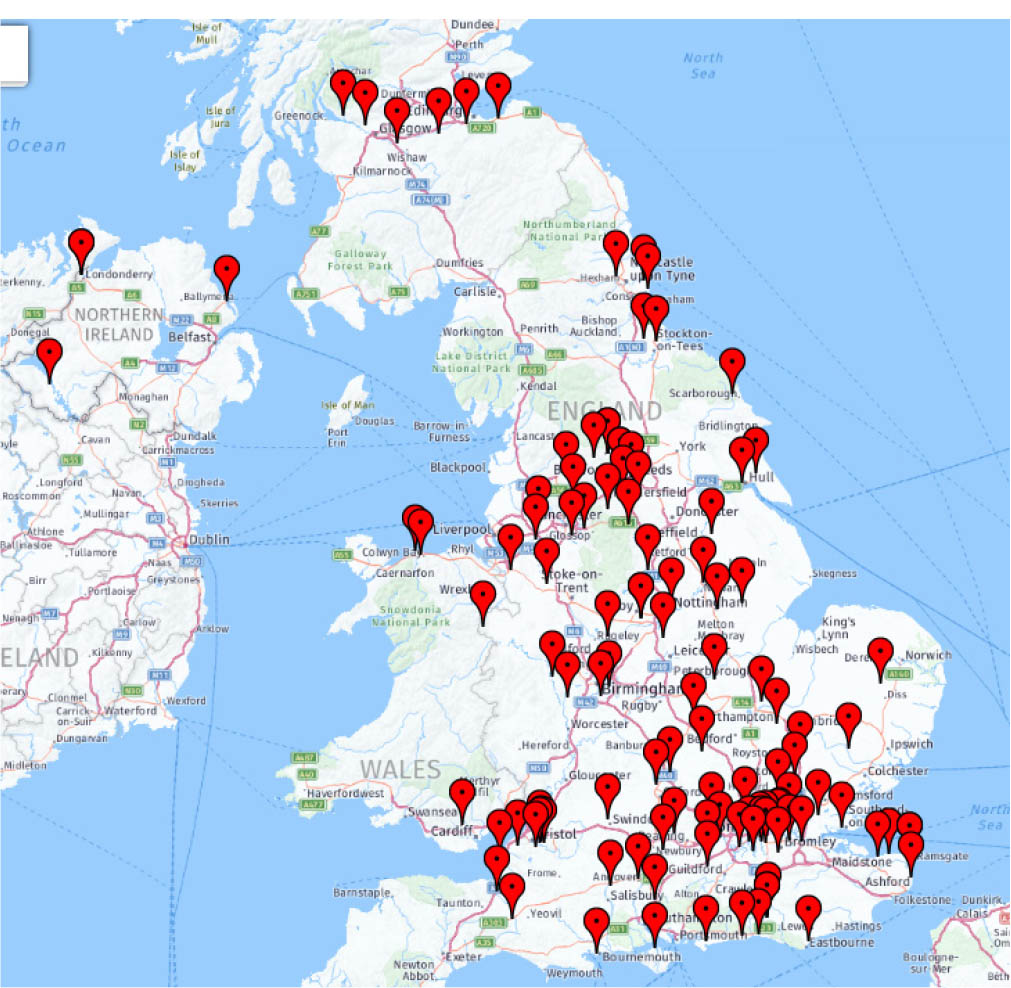
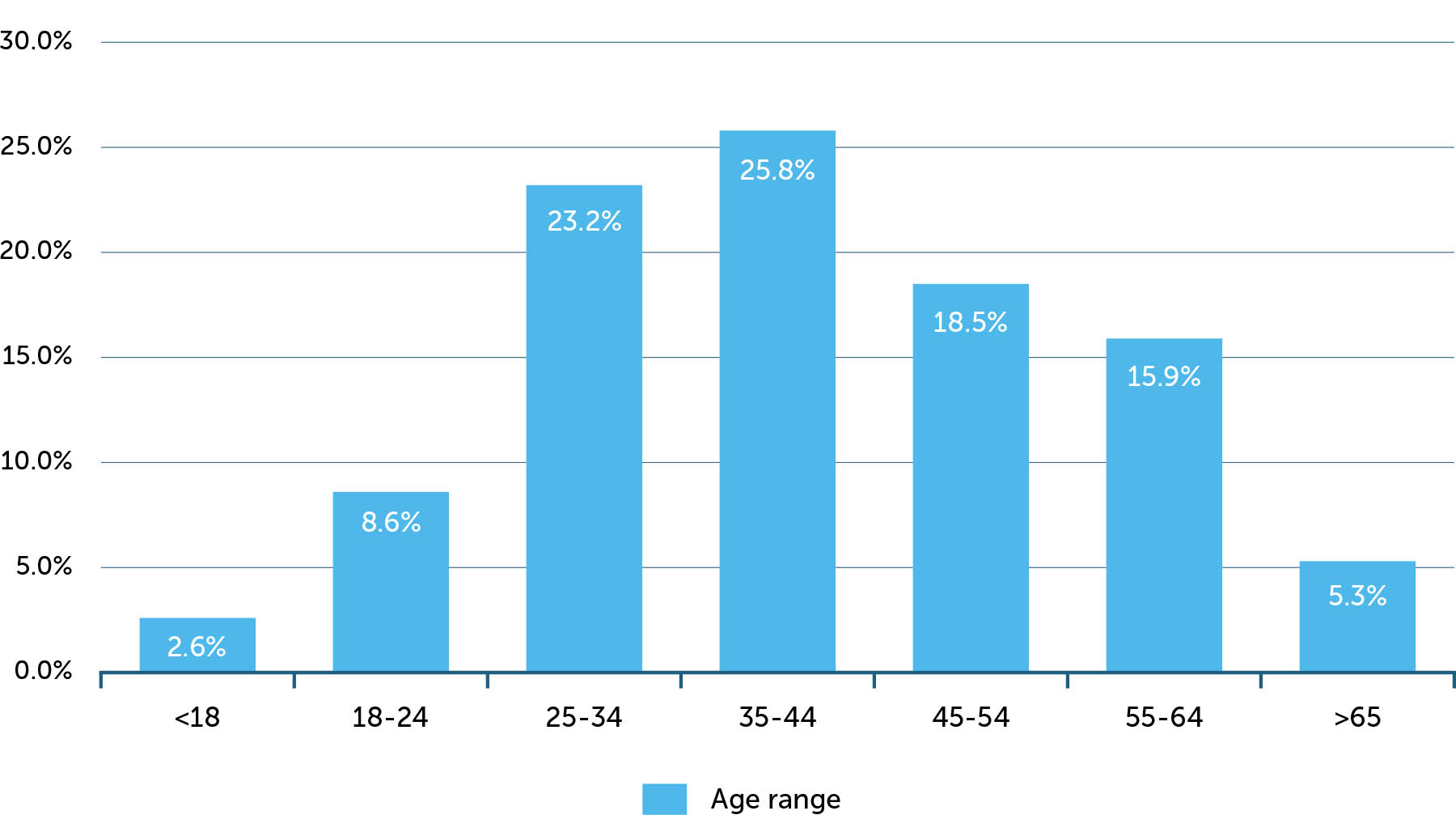
Figure 1

Distribution of respondents

https://www.doogal.co.uk/BatchGeocoding.php

graphic/j_jhp00173_fig_001.jpg
Figure 2

Age distribution of respondents

graphic/j_jhp00173_fig_002.jpg

Bleeding disorders

Ninety per cent of respondents (136/151) stated they identified as a person with a bleeding disorder (Figure 3). One respondent reported a diagnosis of activated protein C resistance, a hypercoagulation disorder, but reported heavy periods which may have been due to anticoagulation; this respondent was excluded from the analysis. The majority had von Willebrand disease (VWD) or haemophilia A or B; 13 women stated they were carriers, of whom 11 specified they were carriers of haemophilia A. Specified platelet disorders included storage pool deficiency, Glanzmann's thrombasthenia and immune thrombocytopenic purpura. Three respondents stated they did not know what their bleeding disorder was; two stated it was unclassified or undiagnosed; and two stated menorrhagia.
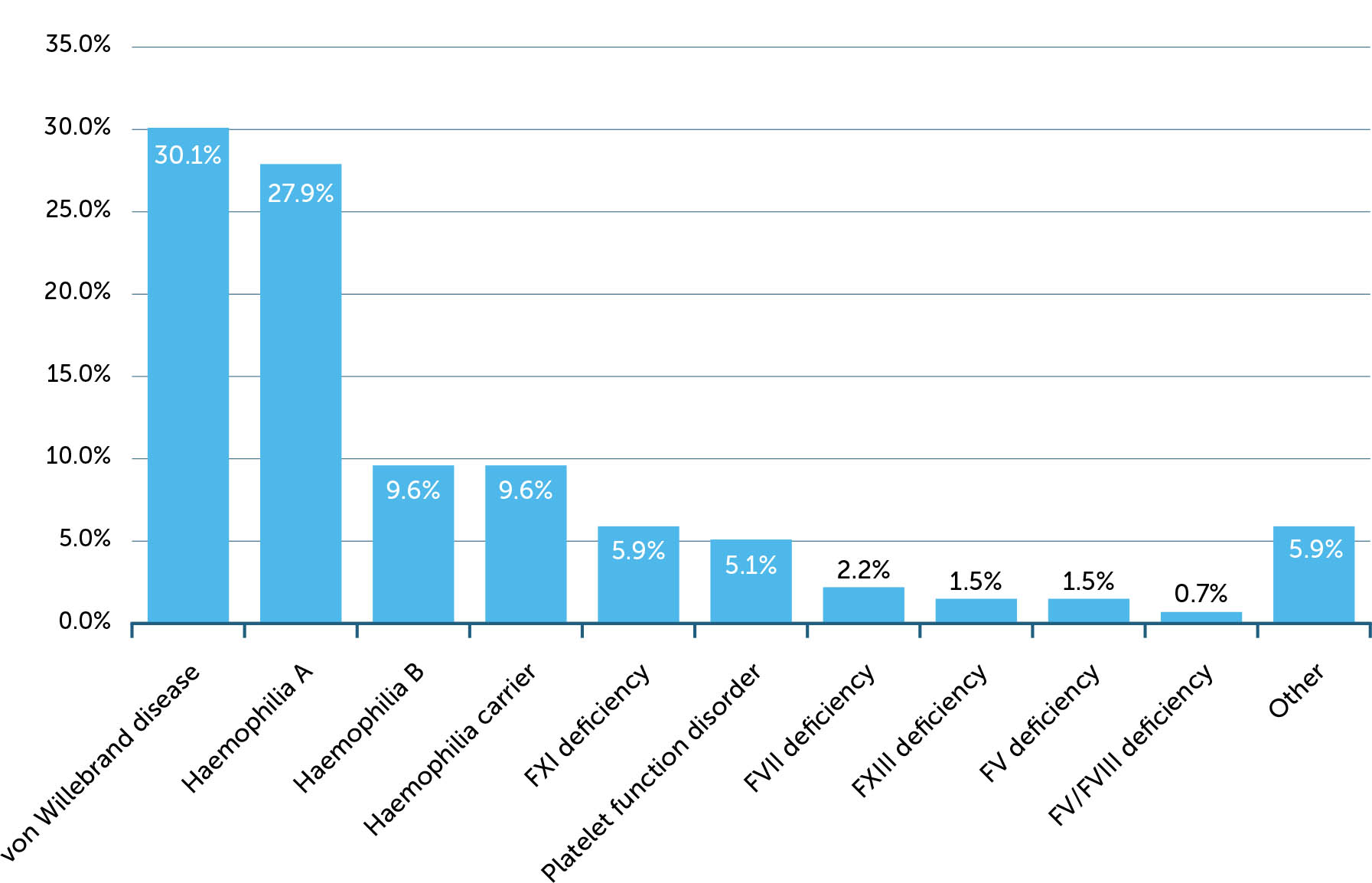
Figure 3

Distribution of reported bleeding disorders

graphic/j_jhp00173_fig_003.jpg

Of the 15 respondents who did not identify as a person with a bleeding disorder, none reported a diagnosis, but they did report signs and symptoms of heavy menstrual bleeding. These data were therefore analysed separately.

Age at diagnosis was specified by 126 of the 130 women reporting a diagnosis. Median age at diagnosis was 18 (range 0–60). Of the remainder, one was diagnosed in childhood, two as teenagers, and one was unsure.

Signs and symptoms associated with bleeding disorders

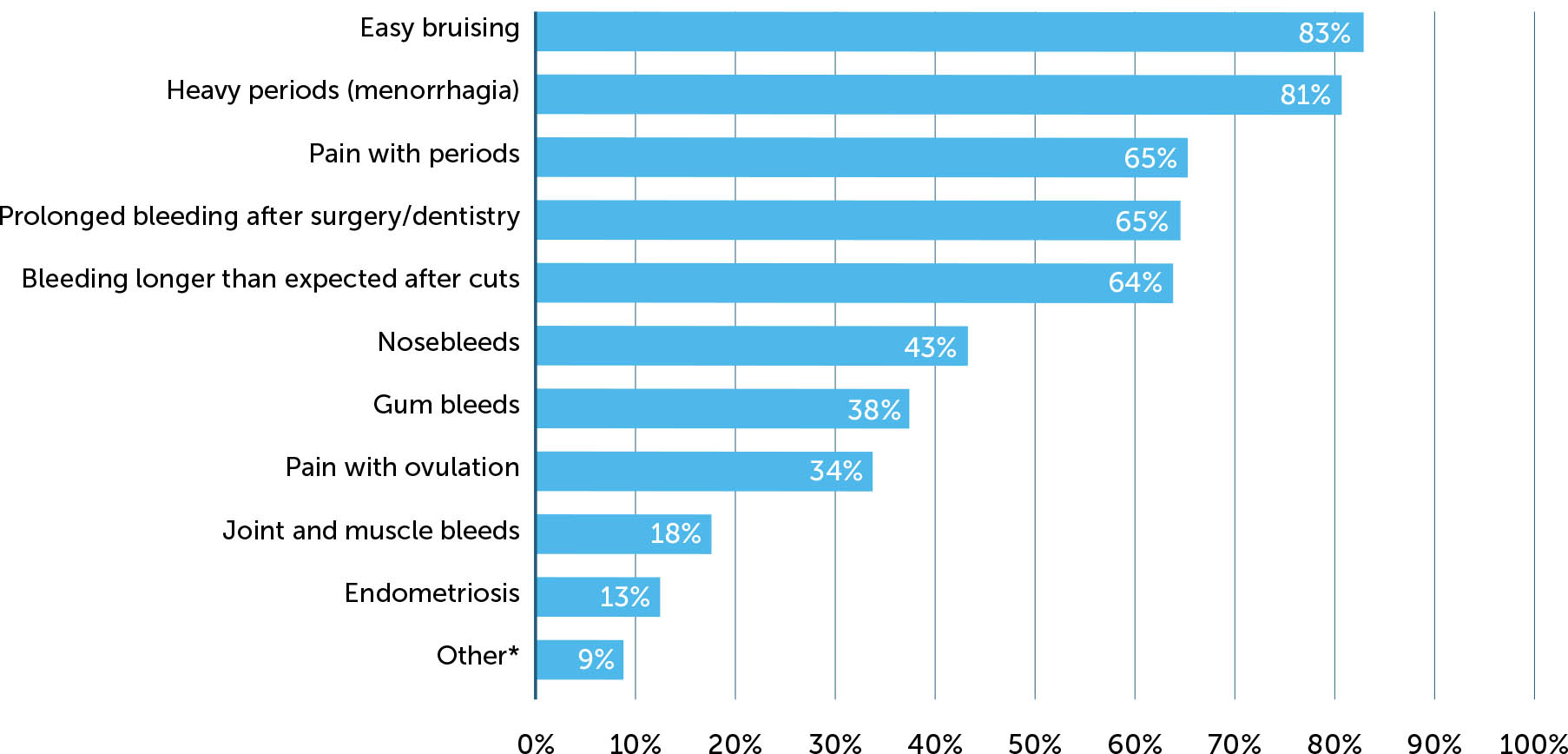
Most respondents reported experiencing easy bruising, heavy periods and prolonged bleeding after cuts, surgery or dental procedures (Figure 4). Pain with periods was reported by approximately two thirds of respondents and with ovulation by about one third. Events that were consistent with spontaneous bleeds were nosebleeds (43%), gum bleeding (38%), and joint and muscle bleeds (18%). ‘Other’ reported events included gastrointestinal bleeding (n=4), subarachnoid haemorrhage (1), prolonged bleeding after childbirth (1), and chronic severe anaemia (1).

Figure 4

Reported signs and symptoms associated with bleeding disorder

*Other symptoms reported by respondents were random soft tissue bleeding after exercise and minor joint bleeding; gastrointestinal bleeds, including due to angiodysplasia; the unpredictable nature of bleeding and pain when bleeding after a knock or injury; gastrointestinal bleeds; easy bruising and long-lasting bruises; prolonged bleeding after childbirth; large clots during period; blood transfusions after surgery; and subarachnoid haemorrhage (spontaneous bleed).
graphic/j_jhp00173_fig_004.jpg

Impact of bleeding disorder on periods

Data on the duration of periods was provided by 121 respondents, of whom 100 provided solely numerical data (i.e. not qualified by text). Interpreting ranges as the maximum duration (i.e. ‘7–10 days’ = 10 days), the median duration of periods was 7 days (range 2–42), and 8% of respondents reported periods lasting ≥15 days. Of the 21 remaining respondents, five reported periods of very variable duration (5–28 days) or irregularity; five reported no or shortened periods following intervention (medication, IUD, ablation); eight reported no longer having periods (e.g. due to menopause); and three stated this question was not applicable.

Information about taking time off work or study due to heavy periods was provided by 121 respondents. Of these, 36% stated they had taken time off, 42% stated they took no time off, and 6.6% did not know. Forty-two women provided information about the duration of time taken off: 19 stated one day, 17 stated 2–3 days, one stated 3 or more days, three stated 4–5 days, one stated 7 days, and one stated 12 days. Six respondents said they carried on working or rearranged work during their period, one of whom stated this was ‘a struggle’; two mentioned ‘suffering’ and reduced productivity. One mentioned occasionally taking time off due to pain. Nine stated they no longer had periods due to surgery or the menopause, they did not work, or the question was not applicable.

Forty-two per cent of respondents stated their bleeding disorder affected their social life (Appendix 1). Three themes can be defined: not going out, going out despite the impact of periods (or ‘not applicable’), and symptoms. Reasons cited for not going out were very heavy bleeding, debilitating symptoms, worry about flooding or staining in public, and access to toilet facilities or sanitary products. Public embarrassment from staining was a frequent theme. Symptoms were sometimes extreme or severe and included pain, tiredness (including feeling drained, lethargy and fatigue), anxiety, weakness, nausea, fainting, and altered mood (lack of motivation, feeling uncomfortable, on edge, paranoid). Respondents who stated they did go out used strategies such as ensuring access to toilet facilities and taking spare clothing to manage bleeding, or rearranging travel and their social life around their periods (e.g. only going out with friends ‘who understand’). Several stated that their periods had no impact on their social life (including due to the use of contraception) or that they did not let it.

The treatments currently used for heavy menstrual bleeding recorded by respondents are listed in Table 1. These treatments may not have been used exclusively to treat period symptoms, or if a treatment is not mentioned it may not have been perceived by the respondent as a treatment for period symptoms. The most frequently cited was tranexamic acid, which was taken by 23 of the 41 respondents with VWD, 18 of the 64 with haemophilia or diagnosed as a haemophilia carrier, and 18 of the remaining respondents.

Table 1

Current treatments for period symptoms (n)

TREATMENT NUMBER OF RESPONDENTS
Hormone therapies (oral)* 37

Mirena intrauterine device 22

Desmopressin 8

Tranexamic acid 60

Other
  Factor replacement 4
  NSAIDs 3
  Simple analgesics 2
  Other intrauterine device 1

* Combined oral contraceptive, progestogen-only contraceptive or progestogen

Sanitary protection

The types of sanitary protection recorded by respondents are listed in Table 2. Several respondents reported having to use the largest size of tampon, heavy duty night-time pads and ‘ultra’ towels, several pads at night, and incontinence pants or period pants.

Table 2

Sanitary protection used by respondents (n)

PRODUCT NUMBER OF RESPONDENTS PRICE RANGE FOR PRODUCT* (£ PER UNIT)
Menstrual cup 5 14–30

Night sanitary towel 25 0.07–0.23

Sanitary towel 28 0.05–0.14

Tampon 36 0.05–0.13

Other
  Combination of two products 14
  Combination of three products 4

120 respondents provided information about their expenditure on sanitary protection. Most spent £2–£10 per month (39%) or £11–£20 per month (37%). Thirteen women (8.6%) spent £25 or more per month. Of these 13 respondents, one was diagnosed as a haemophilia carrier, six had VWD, two had haemophilia, and one had factor XI deficiency; two stated their diagnosis was menorrhagia and one did not know her diagnosis. Ten reported at least one additional bleeding symptom (e.g. nosebleed, excessive post-surgical bleeding) and 11 said they did not have a social life/leave the house during their period.

Of the 14 respondents who did not report expenditure, 11 were peri- or postmenopausal and three reported one-off spending on a menstrual cup (of five users of such products). Eighteen respondents said they had at some time struggled to pay for sanitary products, nine of whom reported spending £25 or more per month. Twenty-four respondents (20%) stated they had at some time used substitutes for sanitary products (e.g. socks, toilet paper) because they could not afford to buy pads or tampons. Three specified they had used toilet paper or kitchen towel; one stated she had used ‘hand towels, nappies in plastic pants, also just sitting on the loo bleeding’.

Asked ‘What other monthly expenses do you have as a result of your heavy periods (e.g. bedding, clothing, etc.)?’, 82 provided information (listed in Appendix Two), of whom 78 mentioned having to frequently wash or discard bedding and/or clothing, including a mattress in two instances. This was an occasional expense for some respondents but constant or frequent for others. One correspondent stated she had lost her job as a result of excessive bleeding. Three respondents estimated their additional monthly expenditure at £12, £15 and £20.

Differences between bleeding disorders

Numbers of respondents with bleeding disorders other than haemophilia A or VWD were small but some trends are evident (Figure 5). The proportion reporting heavy periods was higher for women diagnosed as a carrier than for those with a bleeding disorder, and though similar proportions reported painful periods, a smaller proportion reported an impact on social life. This group also reported a higher prevalence of treatment with tranexamic acid and a comparable prevalence of hormonal medication. Finally, more respondents in this group reported using a combination of sanitary protection products. Compared with respondents with haemophilia A or B, a higher proportion of respondents with VWD reported an impact of periods on social life, hormonal treatment and use of tranexamic acid, use of combinations of sanitary protection products, and a tendency for higher spending on sanitary protection products.
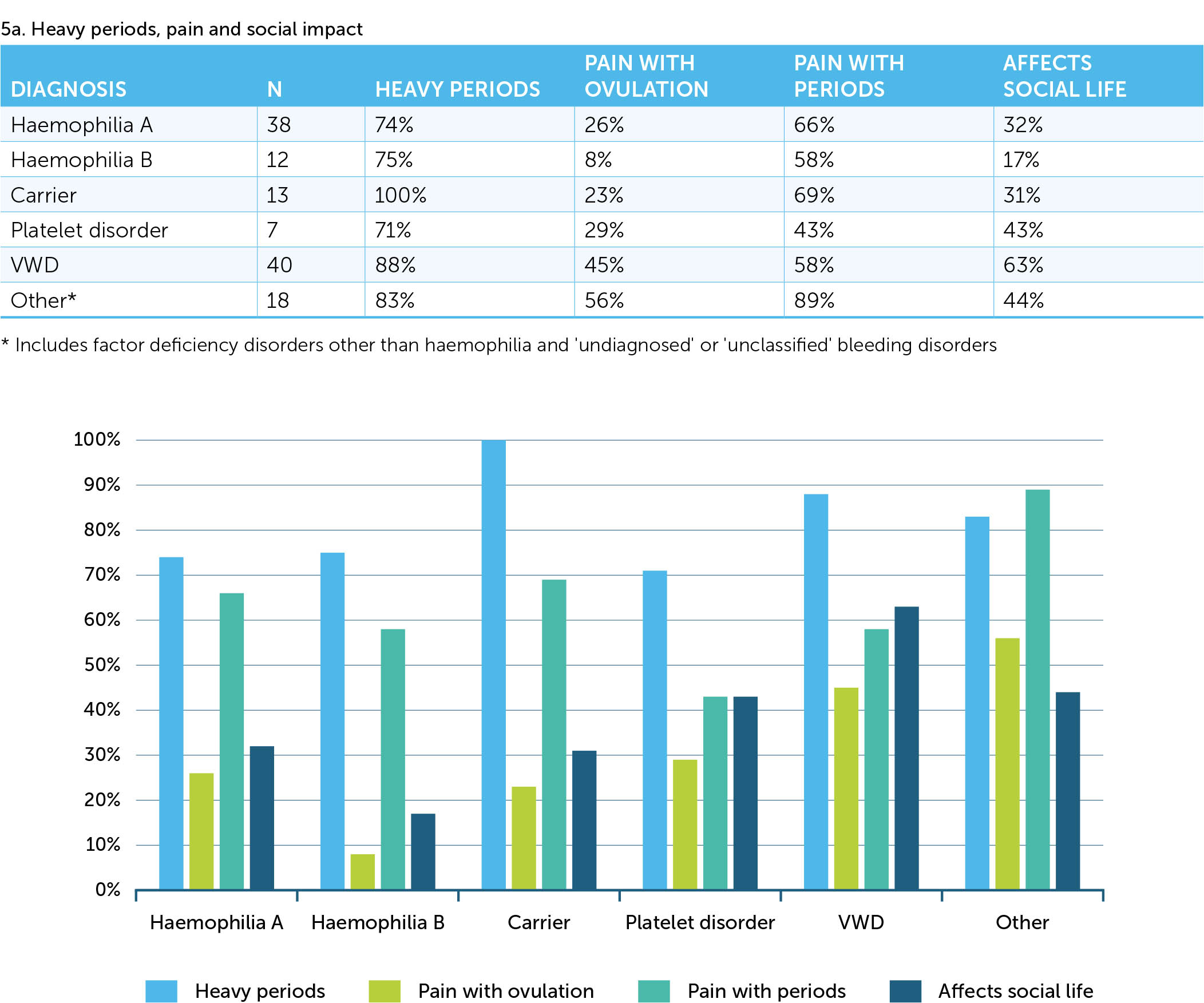
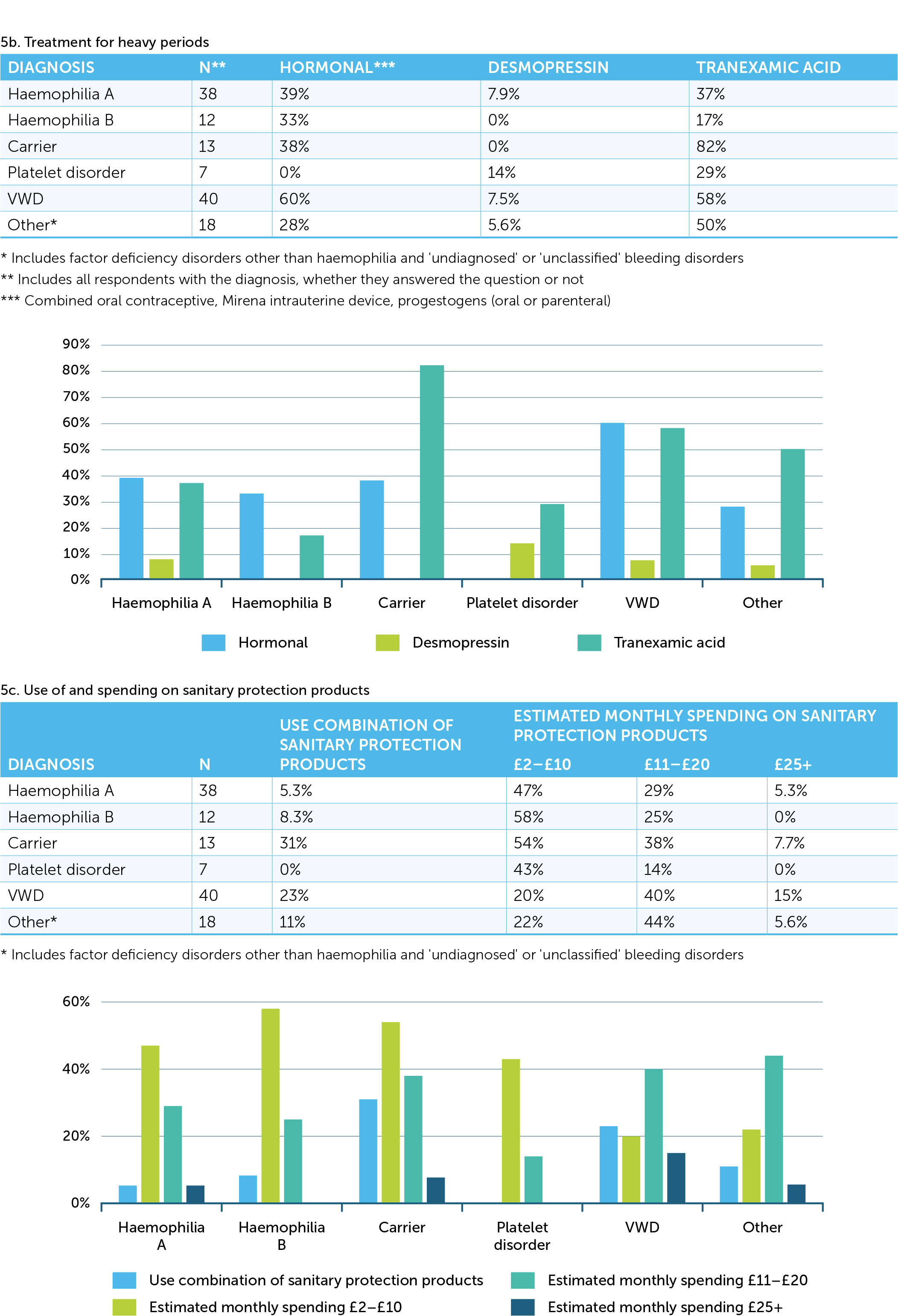
Figure 5

Symptoms and impact by diagnosis (%)

Excludes diagnoses stated as ‘don’t know’, ‘menorrhagia’, and activated protein C resistance

graphic/j_jhp00173_fig_005a.jpggraphic/j_jhp00173_fig_005b.jpg

Women who did not identify as a person with a bleeding disorder

Of the 15 women who did not state that they identified as a person with a bleeding disorder, 11 were aged <45 and two were aged ≥55. Two stated they were diagnosed as carriers of haemophilia and a further two probably were: one stated she had given her son his ‘life-threatening bleeding disorder’ and one stated she had four sons with haemophilia. For this subgroup of respondents, the median duration of an ‘average’ period was seven days (range 5–10). Ten respondents stated they never took time off work or studying due to their period, and three stated they did so for between two and five days. The impact of heavy periods on social life was similar to that for the main cohort, with some women severely limited; others were either unaffected or had developed a strategy to allow socialising to continue (Appendix 1). Medication for periods included tranexamic acid (n=7), the combined oral contraceptive (3) and the Mirena coil (3). Nine respondents used solely sanitary towels and five used solely tampons; one used a combination of both. Monthly expenditure on sanitary protection products was £2–£10 for six women, £11–£20 for six women, and ≥£25 for two women. Three women said they had at some time struggled with paying for sanitary protection products, in one case when a student but not currently. Four had substituted other items when they could not afford sanitary protection products (one when a student). All but one of this subgroup stated the additional costs associated with heavy periods included washing and replacing bedding and clothing; the other respondent stated she sometimes doubled up pantyliners.

DISCUSSION

The lives of many women with bleeding disorders are blighted by the consequences of prolonged bleeding. This survey shows that not all women are affected in all respects but the impact on those who do experience heavy bleeding can be profound, such as heavy and painful periods that are difficult to manage and impose severe limitations on social life. Some respondents described being unable to leave home during their period because they could not manage the heavy bleeding. Some feared the social consequences of their bleeding becoming apparent and suffered stigma, anxiety and worry. About 60% of respondents took time off work or studying due to their periods. Conversely, some women continued their social and work lives despite their symptoms – for example, stating they did not let their periods stop them or that they made provision to manage their bleeding. These problems were not specific to any bleeding disorder and were shared by women who had been diagnosed as a carrier.

Up to 40% of the respondents were old enough to be potentially peri- or postmenopausal; this information was not specifically sought in the questionnaire but was inferred or included by nine respondents (i.e. they mentioned menopause or stated ‘not applicable’ when answering the question about period duration). Not surprisingly, they tended to report less impact from heavy bleeding.

The median duration of periods was slightly longer than the norm for the UK. According to information for the public provided by the NHS (https://www.nhs.uk/conditions/periods), periods typically last for between three and eight days, with an average duration of five days. The median duration for respondents was seven days, but 8% reported a duration of 15 days or more and the maximum duration was 42 days. This presumably reflects episodic and very disruptive bleeding. About 16% of respondents reported having to use a combination of two or three sanitary protection products to manage their bleeding, suggesting that the volume of bleeding is very high for a substantial proportion of women. Eighteen respondents reported struggling to pay for their sanitary protection products at some time and several mentioned having to substitute alternatives such as toilet paper as a consequence. The highest level of spending (£25+ per month) accounted for only half of these cases, suggesting that bleeding severity is not a reliable indicator of the hardship associated with heavy periods. Government action to reduce taxation and increase access to sanitary protection is therefore welcome, but for most WBD expenditure also includes the cost of frequent washing and replacement of clothes and bedding, and therefore the economic burden will persist for many women.

Most respondents in this survey had been diagnosed with haemophilia A or VWD, reflecting the higher prevalence of these disorders, but women diagnosed as a haemophilia carrier or with haemophilia B each accounted for about 10% of respondents. This is lower than the proportion of cases registered in the UK National Haemophilia Database which includes 6,243 males and 2,617 females with haemophilia A (31% females) and 1,245 males and 591 females with haemophilia B (32%) [7]. Even these figures are likely to underestimate the prevalence of bleeding disorders in women as many haemophilia treatment centres do not measure levels of factor VIII and factor IX or may not register these women in the database. The prevalence of menorrhagia is estimated at 30% [8], and among women referred for investigation of menorrhagia the prevalence of a bleeding disorder is 17–30% [9, 10, 11]. It has been suggested that for each male with haemophilia there are 2.7–5 potential female carriers, 1.5 actual somatic carriers, and 0.3–1 carriers with factor VIII or factor IX activity below 0.4 IU/mL[12].

It is possible that WBD were more likely to respond to the survey if the impact of their disorder was greater, in which case the results may reflect – albeit indirectly and inaccurately – the level of harm experienced by some women. Further, the distinction between the label of ‘carrier’ and a diagnosis of haemophilia may be blurred. Of the 15 women who did not answer ‘yes’ to the question ‘Do you identify as having a bleeding disorder?’, four stated or inferred they were a haemophilia carrier and reported excessive bleeding. This lack of awareness in some women that carrier status is not a benign diagnosis suggests the need for greater recognition among health care professionals and education of families living with haemophilia.

The most frequently used treatments for excessive bleeding were tranexamic acid and hormonal products; this is consistent with current practice [13]. Four respondents stated that they used factor replacement, of whom three had VWD and one was diagnosed as a haemophilia A carrier. Given the prevalence of heavy, prolonged bleeding and pain among respondents, and the impact on social life, this treatment strategy is clearly not successful, though the data provided in this survey are not sufficient to determine where treatment is failing individual women.

Comparisons between bleeding disorders are limited by small numbers but there is a striking trend for a higher proportion of women diagnosed as a carrier to report heavy bleeding, and to have more prevalent treatment with tranexamic acid and more frequent use of a combination of sanitary protection products. (Paradoxically, they also report a lower social impact.) This highlights the possibility that women diagnosed as carriers have a significant burden of morbidity and management but perhaps receive less support than others who, with a diagnosis of a bleeding disorder, have access to specific treatment. The survey did not request information about investigations carried out to reach a diagnosis. This would have revealed whether factor activity had been measured in those diagnosed as a carrier or if they had been informed of this status solely as part of genetic counselling. Further studies are needed to explore how this gap in management can be bridged, including the wider of use of factor VIII, factor IX and von Willebrand factor measurement in women in families with a bleeding disorder.

Limitations

This survey was conducted over a brief period in the UK and was accessible only to women capable of using online media who were aware of or associated with The Haemophilia Society. The respondents may therefore have greater awareness and/or concern about heavy menstrual bleeding. The absence of randomisation in the recruitment of respondents raises the risk of bias due to self-selection; it is therefore unclear how representative the respondents are of WBD in the UK. The number of respondents was relatively small, and it was not possible to draw definitive conclusions about the characteristics associated with different bleeding disorders. Details of treatment such as factor prophylaxis or on-demand factor replacement, perhaps more likely to be used in women with VWD than haemophilia carriers, were not recorded and these are likely to be an important determinant of the frequency and severity of bleeding symptoms.

CONCLUSION

This study confirms that WBD experience a high prevalence of heavy bleeding and prolonged, painful periods despite using appropriate symptomatic treatment. For some, this has a profound impact on their mental health and limits their social life due to fear of embarrassment and stigma. It also shows that the morbidity experienced by women diagnosed as a carrier is comparable with that described by respondents with a diagnosis of bleeding disorder. This suggests they have inadequate access to care and support because they are clinically unrecognised. Women who are haemophilia carriers are underrepresented in bleeding disorders registries, raising the possibility of a substantial unmet need. Respondents reported that heavy periods were difficult to manage and may require the use of several sanitary protection products combined. Bleeding in women diagnosed as carriers may be worse than reported by women with a diagnosed bleeding disorder, possibly due to lack of treatment; further work is needed to explore this issue.

ACKNOWLEDGEMENTS

The Haemophilia Society has received support from Shire Pharmaceuticals, now part of Takeda, to produce this report. Shire, now part of Takeda, was not involved in developing the content of this report. Writing support was provided by Steve Chaplin.

This paper reports on a survey to which participants responded knowing any comments may be reported.

REFERENCES

1 

Noone D, Skouw-Rasmussen N, Lavin M, et al. Barriers and challenges faced by women with congenital bleeding disorders in Europe: Results of a patient survey conducted by the European Haemophilia Consortium. Haemophilia 2019; 25: 468–474. doi: 10.1111/hae.13722.

D NooneN Skouw-RasmussenM LavinBarriers and challenges faced by women with congenital bleeding disorders in Europe: Results of a patient survey conducted by the European Haemophilia ConsortiumHaemophilia20192546847410.1111/hae.13722

2 

Hirayama AB, Silva AKCD, Rocha JS, Roberti MDRF. Prevalence of symptoms in hemophilia carriers in comparison with the general population: a systematic review. Hematol Transfus Cell Ther 2019; 41: 349–355. doi: 10.1016/j.htct.2019.02.006.

AB HirayamaAKCD SilvaJS RochaMDRF RobertiPrevalence of symptoms in hemophilia carriers in comparison with the general population: a systematic reviewHematol Transfus Cell Ther20194134935510.1016/j.htct.2019.02.006

3 

James PD. Women and bleeding disorders: diagnostic challenges. Hematology Am Soc Hematol Educ Program 2020 Dec 4; 2020(1): 547–552. doi: 10.1182/hematology.2020000140.

PD JamesWomen and bleeding disorders: diagnostic challengesHematology Am Soc Hematol Educ Program2020Dec42020154755210.1182/hematology.2020000140

4 

Weyland AC, James PD. Sexism in the management of bleeding disorders. Res Pract Thromb Haemost 2020; 5(1): 51–54. doi: 10.1002/rth2.12468.

AC WeylandPD JamesSexism in the management of bleeding disordersRes Pract Thromb Haemost202051515410.1002/rth2.12468

5 

Arya S, Wilton P, Page D, et al. “Everything was blood when it comes to me”: Understanding the lived experiences of women with inherited bleeding disorders. J Thromb Haemost 2020; 18: 3211–3221. doi: 10.1111/jth.15102.

S AryaP WiltonD Page“Everything was blood when it comes to me”: Understanding the lived experiences of women with inherited bleeding disordersJ Thromb Haemost2020183211322110.1111/jth.15102

6 

The Haemophilia Society. Talking Red. Available from https://haemophilia.org.uk/support/talking-red/talking-red (accessed 10 March 2021).

The Haemophilia SocietyTalking RedAvailable from https://haemophilia.org.uk/support/talking-red/talking-red (accessed 10 March 2021).

7 

UKHCDO. UKHCDO Annual Report 2019 including bleeding disorder statistics for 2018/2019. A report from the UKHCDO and NHD. October 2019. Available from http://www.ukhcdo.org/wp-content/uploads/2019/11/UKHCDO-Annual-Report-2019.pdf (accessed 10 March 2021).

UKHCDOUKHCDO Annual Report 2019 including bleeding disorder statistics for 2018/2019. A report from the UKHCDO and NHDOctober2019Available from http://www.ukhcdo.org/wp-content/uploads/2019/11/UKHCDO-Annual-Report-2019.pdf (accessed 10 March 2021).

8 

Oehler MK, Rees MCP. Menorrhagia: an update. Acta Obstet Gynecol Scand 2003; 82: 405–422. doi: 10.1034/j.1600-0412.2003.00097.x.

MK OehlerMCP ReesMenorrhagia: an updateActa Obstet Gynecol Scand20038240542210.1034/j.1600-0412.2003.00097.x

9 

Knol HM, Mulder AB, Bogchelman DH, et al. The prevalence of underlying bleeding disorders in patients with heavy menstrual bleeding with and without gynecologic abnormalities. Am J Obstet Gynecol 2013; 209: 202.e1–7. doi: 10.1016/j.ajog.2013.05.059.

HM KnolAB MulderDH BogchelmanThe prevalence of underlying bleeding disorders in patients with heavy menstrual bleeding with and without gynecologic abnormalitiesAm J Obstet Gynecol2013209202.e1710.1016/j.ajog.2013.05.059

10 

Kadir RA, Economides DL, Sabin CA, et al. Frequency of inherited bleeding disorders in women with menorrhagia. Lancet 1998; 351: 485–9. doi: 10.1016/S0140-6736(97)08248-2.

RA KadirDL EconomidesCA SabinFrequency of inherited bleeding disorders in women with menorrhagiaLancet1998351485910.1016/S0140-6736(97)08248-2

11 

Edlund M, Blombäck M, von Schoultz B, et al. On the value of menorrhagia as a predictor for coagulation disorders. Am J Hematol 1996; 53: 234–8. doi: 10.1002/(SICI)1096-8652(199612)53:4<234::AID-AJH4>3.0.CO;2-Z.

M EdlundM BlombäckB von SchoultzOn the value of menorrhagia as a predictor for coagulation disordersAm J Hematol199653234810.1002/(SICI)1096-8652(199612)53:4<234::AID-AJH4>3.0.CO;2-Z

12 

Hermans C, Kulkarni R. Women with bleeding disorders. Haemophilia 2018; 24 Suppl 6: 29–36. doi: 10.1111/hae.13502.

C HermansR KulkarniWomen with bleeding disordersHaemophilia201824Suppl 6293610.1111/hae.13502

13 

Srivastava A, Santagostino E, Dougall A, et al; WFH Guidelines for the Management of Hemophilia panelists and co-authors. WFH Guidelines for the Management of Hemophilia, 3rd edition. Haemophilia 2020; 26 Suppl 6: 1–158. doi: 10.1111/hae.14046.

A SrivastavaE SantagostinoA DougallWFH Guidelines for the Management of Hemophilia panelists and co-authorsWFH Guidelines for the Management of Hemophilia3rd editionHaemophilia202026Suppl 6115810.1111/hae.14046

Appendices

APPENDIX 1

Impact of periods on social life

Answers to the question ‘How does your period affect your social life?’

Responses are grouped into to the categories ‘Did not go out’, ‘Went out +/− adjustment’, and ‘Signs and symptoms’. Individual statements may be included in more than one category. Responses from the subgroup of women who did not identify as having a bleeding disorder are given at the end of each table.

A. DID NOT GO OUT

I cannot go out for at least 2—3 days due to heavy bleeding and pain throughout my entire body. I spend approximately 3 weeks of each month feeling drained and lethargic, an average 7 days with normal energy levels. This dramatically affects what I will socially do. Mild exercise can cause pain and minor joint pain/bleeding.

Either confined to bed as amount of blood loss in such a fast time drains me despite taking tranexamic acid, or very limited activity due to feeling awful.

I feel I can’t go out if I’m not going to be able to get to a bathroom regularly as I’m conscious that I bleed through.

I can’t go out.

I don’t go to events when I’m on my period.

It's doesn’t really, unless it's [my] time of the month. I don’t make plans cuz the bleeding is so bad. I tend not to make plans so there are no embarrassing accidents.

The first day or two I avoid having much planned so I can be at home if possible.

When I am due on my period I get severe pains and am unable to leave the house. Also, as I bleed so heavy I don’t feel comfortable going out or socialising as often I will leak through my tampon and pad, I sometimes need to wear full briefs to contain my period which I feel are very visible, therefore I wouldn’t leave the house for the first day or two. Also, I wouldn’t sleep in the same bed as my partner as I would often leak onto the bedding, which is very embarrassing.

I can’t go out sometimes because my period is too heavy.

I work and crawl into bed. I cannot afford not to work so I give up my social life.

Less interested to go out and about, especially if [there's] no toilet.

Very tired and often won’t go out

Did greatly

Too scared to leave home in case I soak through, and I am that drained I don’t have energy to do anything.

Extremely painful, cannot leave the house as physically cannot stand up. I faint and get sickness with them. Bleeding is heavy at the beginning and [I] therefore cannot go very long without access to a toilet etc!!!

Had to stay in as would overflow. Impossible to protect against leakage. Became anaemic. All before diagnosis.

Having to go to the toilet all the time, and if it's that bad I don’t go out.

I don’t have one when I was heavy.

Difficult to go out on day 1 of my period. Worry about flooding.

Stops me wearing certain clothes or even going out. Also makes me irritable or dizzy and fatigued, so avoid talking with others.

I won’t leave the house when I’m at my heaviest bleeding.

3 days out of 7 periods are too heavy to leave my house.

I sometimes could not go out.

Cannot go out during the heaviest days

Sometimes I am unable to leave the house due to prolonged and heavy periods. I have to pre-plan arrangements for when I can change my tampon or pad. I have had to leave events early and have been embarrassed at friends’ houses due to overflow.

Heavy bleeding and flooding mean I prefer to stay home with easy access to toilet facilities/change of clothes.

Afraid to leave home in case of leaking

The pain and heavy bleeding on the first 2 days, I have to cancel plans or change them.

I’m constantly worrying about leaking, in excruciating pain, I lose a lot of blood, I’m restricted in what I can wear, the activities I do. I have to stay home some days because it's unbearable.

I couldn’t go out at all

Wouldn’t leave the house

The pain causes me to miss classes/social events.

On edge and paranoid that I will bleed heavily, so don’t really have a social life when I’m on my period.

It made me not want to socialise in case of having an accident with my pads, moodiness.

No sex, no swimming, in pain, always worrying I’ll bleed through clothes.

When my period is at its heaviest, midway through them, I try to avoid long social engagements because of the risk of leakage from my period onto my clothes. Also, I find I’m limited in what I can wear anyway, and the pain can stop me going out.

Makes me not want to go out

Feel very uncomfortable and don’t want to leave the house in case of leaking onto clothes and chairs.

Massively. I tend not to arrange to go out anywhere when I am due on my period. I have to take changes of clothes, wipes, sanitary wear to change every half an hour. It is easier to stay at home.

Rarely go [out] when on period

Difficult to find energy to participate, and on heavy bleed days I literally cannot leave the house.

Feels like I’m constantly on my period. It doesn’t make me feel like socialising.

If I’m on my period and it's the first few days I make no plans and stay in bed.

Used to stop me going for walks with friends. Needed to make sure I was close to toilets.

The first few days are difficult and painful, and l will avoid going out.

I am not able to engage in certain physical actives when it's my period, due to heavy blood loss.

Would not make arrangements to go out in case period came.

Heavy bleeding, so I generally don’t arrange to do anything socially whilst I have a period.

Used to stop me going out for first few days as was so heavy, or wear a plus tampon & huge pad so clothing was a problem.

Couldn’t go out during it

Responses from subgroup of women who did not identify as having a bleeding disorder

Massively. I can’t do anything when I’m on due to the pain and huge blood loss.

I can’t go swimming and I only go to places where I can access a good clean toilet. No long walks or anything like that.

Have to plan everything around it as some days don’t want to risk leaving the house.

I’m afraid to go anywhere.

I avoid planning anything during that time.

B. WENT OUT +/− ADJUSTMENT

Note: Responses of ‘It doesn’t’, ‘n/a’, etc. are not listed.

It doesn’t too much, I try and use a menstrual cup which helps, but I have to be very careful on first three days to check often.

Needed to carry extra products and underwear

Usually by worrying about being close to a bathroom

Need to be near a toilet in order to regularly change sanitary protection — sometimes hourly.

They were that heavy I only went out when I had to. I was well packed up to avoid leaking. I took multiple sanitary products with me to change if I suddenly started to haemorrhage, which was the norm.

Not at all since Mirena coil was fitted

As a dancer, I struggle more with the pain and leaking through clothing even with changing often. It often leaves me very tired therefore putting me in a bad mood, which is hard at school when others don’t understand how annoying a month-long period is.

It doesn’t really anymore since having the coil.

Organise my social life to coincide with when I’m not on my period in case of excessive bleeding.

Need to make sure I had access to toilet facilities

It doesn’t anymore, I had a hysterectomy in 2003.

Just stops me swimming

I have to go out with friends/family who understand and tend to avoid very crowded places due to being knocked around in a crowd.

Not now as I’m older

I have to carry spare clothes everywhere with me. Sometimes I have had gushes of bleeding in public.

I try not to let it. I just need to make sure I have the things I need with me.

Access to toilets. Clothes I can wear.

In my early years I would always have to carry underwear with me.

Plan around this

It doesn’t since going on birth control in my teens to stop them. Before that I was massively impacted and could[n’t] be more than a few minutes from a toilet.

Rarely impacts it, may avoid going out when the pain is bad. The main impact is on my career.

Makes it difficult to go out without careful planning and taking extra clothes.

Currently on the pill because I could not cope with my periods. I went on the pill before being diagnosed with FVII deficiency and now I understand why they were so heavy and painful.

Have to take pads and tampons wherever I go just in case my period comes. I constantly worry about flooding.

Not as much as it used too

Social arrangements would be made around ‘heavy’ days. Attempt to book holidays around dates of period. Avoid flying as increased bleeding. Avoid long car journeys or motorway journeys for risk of travel delays.

Embarrassing to go and change my tampon/pad every couple of hours. Can’t wear the clothes I want to wear.

Responses from subgroup of women who did not identify as having a bleeding disorder

Not really. It was always annoying, but I got used to it.

Doesn’t if treated correctly

C. SIGNS AND SYMPTOMS

Tiredness, drained

I cannot go out for at least 2–3 days due to heavy bleeding and pain throughout my entire body. I spend approximately 3 weeks of each month feeling drained and lethargic an average 7 days with normal energy levels. This dramatically affects what I will socially do. Mild exercise can cause pain and minor joint pain/bleeding.

Pain is severe, bleeding is only very heavy on the first day.

The key distinction about having a bleeding disorder, especially one diagnosed at birth, is that it pervades all aspects of your life and you learn to accommodate and work around it. For example, heavy periods can lead to iron deficiency which can cause extreme tiredness and fatigue limiting what you feel capable of in your social life and other parts of life too. There is very little support for this, so you just get on with it. This just becomes part of how you live and so it's very difficult to quantify just how much your bleeding disorder is changing and shaping your life.

Makes me very tired

Embarrassing, I flooded everywhere, at the drop of a hat.

Sometimes just don’t want to bother

Menorrhagia causes anaemia which makes me fatigued and can stop me from participating as much in social activities. It has stopped me from taking part in sports clubs and sports days before.

When I am due on my period I get severe pains and am unable to leave the house. Also, as I bleed so heavy I don’t feel comfortable going out or socialising as often I will leak through my tampon and pad, I sometimes need to wear full briefs to contain my period which I feel are very visible, therefore I wouldn’t leave the house for the first day or two. Also, I wouldn’t sleep in the same bed as my partner as I would often leak onto the bedding, which is very embarrassing.

As a dancer, I struggle more with the pain and leaking through clothing even with changing often. It often leaves me very tired therefore putting me in a bad mood, which is hard at school when others don’t understand how annoying a month-long period is.

I’m always conscious of getting my clothes stained from the period because of the heavy flow.

Very tired and often won’t go out

Had to stay in as would overflow. Impossible to protect against leakage. Became anaemic. All before diagnosis.

Extremely painful, cannot leave the house as physically cannot stand up. I faint and get sickness with them. Bleeding is heavy at the beginning and therefore cannot go very long without access to a toilet etc!!!

Feel sick, weak and flood

The pain can limit me on what I can do.

I am very tired and my bones ache meaning I need to rest more.

No sex, no swimming, in pain, always worrying I’ll bleed through clothes.

As a teenager it caused anxiety due to the potential to flood in public.

Stops me wearing certain clothes or even going out. Also makes me irritable or dizzy and fatigued so avoid talking with others.

Forever checking for leaks and needing to change my sanitary product as I have had leaks in my teenage years.

Too scared to live home in case I soak through and I am that drained I don’t have energy to do anything.

Painful

Makes me anxious about leaving the house, especially when heavier days.

It makes me very anxious and uncomfortable to go out.

Can struggle with pains and can be really tired.

Constant nosebleed and bruises, affects energy levels and ability to do a lot of activities.

The pain and heavy bleeding on the first 2 days, I have to cancel plans or change them.

I bleed so heavily I am always aware that I may leak so it makes me self-conscious.

I leak through pads.

I’m constantly worrying about leaking, in excruciating pain, I lose a lot of blood, I’m restricted in what I can wear, the activities I do. I have to stay home some days because it's unbearable.

It made me not want to socialise in case of having an accident with my pads, moodiness.

The pain causes me to miss classes/social events.

On edge and paranoid that I will bleed heavily, so don’t really have a social life when I’m on my period.

Tiredness and pain

Pain, feeling miserable

I often feel faint because I bleed a lot and it's uncomfortable. I can’t do my aerobic or dance classes at all when I am on my period.

Either confined to bed as amount of blood loss in such a fast time drains me despite taking tranexamic acid, or very limited activity due to feeling awful.

Responses from subgroup of women who did not identify as having a bleeding disorder

Last month I was in bed most of the time and I’ve never been like that.

Badly, as they can be [so] heavy that I leak.

Doesn’t really, unless heavy with pain.

I leak and it's embarrassing.

I have a pad on all the time.

I suffer with anxiety when I am on my period due to it being very heavy and painful.

APPENDIX 2

Responses to the question ‘What other monthly expenses do you have as a result of your heavy periods (e.g. bedding, clothing etc)?’

Note: Responses of only ‘none’, ‘n/a’, etc. are not listed.

Bedding is constantly soiled and needing to be replaced. Underwear is constantly soiled and regularly needs to be thrown out. Clothes are constantly damaged/soiled and need to be thrown out. I therefore always only have one or two items in use at a time.

Replacing sheets, underwear and nightclothes that have got too stained to clean. Buying products to remove stains from things that can be cleaned. I also buy absorbent pads/sheets that are usually used when night training children or for older people who may have accidents to try to protect my bedding.

New clothing every so often but not every month.

Clothing, bed sheets

Occasional extra washing if blood gets on clothes!

Cost of painkillers and iron supplements

Iron tonic and chocolate

Extra washing

New mattress, constant new underwear

None that I can think of on a regular basis although it has ruined some of my clothing before.

Not too much, often underwear and sometimes leggings and tights.

Cost of prescription for tranexamic acid

New knickers

Bedding, clothing, mattresses because of constant staining

Used to have additional washing of bedding

Bedding and clothing, it's difficult to get the stain of blood out of bedding, underwear and clothes so often find that I am replacing these very often.

£15

Additional washing of sheets, underwear

I use hand towels and bath towels in the bed and on chairs at home. I avoid going out if at all possible. I am very anxious when I go to work that two night time sanitary towels will not be enough at one time as the blood goes up my back. I feel exhausted and it can be very difficult to concentrate. I am a carer and have five jobs to support my family and I am exhausted. Because I work across a number of work setting no one knows me very well and I cannot confide in anyone or ask for time off.

New underwear

Beddings

Pants always having to be thrown!! Bed sheets and nightwear often ruined from heavy period as are bath towels!!!! I bleed very heaving after showers!!

Underwear

When this applied to me — extra laundry, suitable special underwear

Underwear, clothes

Extra electric for use of washing machine and tumble dryer nearly every day while on my period (otherwise I normally change my bedding once a week).

Underwear (as a result of staining)

Washing towels

Washing clothes and period pants

New underwear due to leaks as not many sanitary towels hold it in place especially at night time causing damage to pyjamas etc and staining of towels after a bath.

Bedding, extra laundry, 30 pairs of black belly-warmers

Bedding and underwear

Bedding but have not replaced it.

Bedding underwear

New bedding and nightwear

Literally lost a job due to it

Extra vanish and wash powder

Constantly washing clothes, underwear and bedding because of “flooding” issues

Bedding, clothing, towels which I use to line my bed, washing, etc.

Paying for new underwear

Growing up it was awful as doctors refused to believe that women could suffer from haemophilia, so I was left to get on with it on my own. I’m classed as an affected carrier.

More washing of clothes and bed linen

Bedding and clothing

Washing bedding clothing, new underwear

Laundry, bedding, clothing, mattress protector, bed sheet pads like the continence service use, taxis to and from places as dizzy/breathless, paying other people to do my shopping, paying a premium for an online shop, missing paid work, getting a cleaner/carer in.

Bedding

Bedding, towels, underwear, petrol (driving to hospitals for iron infusions)

Bedding, clothing, underwear

New underwear, bedding, clothing, pyjamas

Washing of clothes and bedding more, having to lay towels down

Washing clothing and bedding, extra showers

Washing powder to clean clothes and bedding. Towels. Sheets. Bleach.

Bedding and underwear doesn’t last very long

Knickers! Stained clothing. Learned that black and dark colours are my best friend!

Stain removers, pain killers and prescription charges for tranexamic acid

Incontinence pants. Prescription medication. Washing bedding. New knickers. Buying clothes if out and have leaked on ones I have on.

More washing due to blood on sheets

Replacement of bedding and clothing that are stained, and the price of pain killers.

Washing up, clothing, bedding, rugs, towels, napkins

Underwear and tights

Bedding, clothing

New bedding, pants, towels and jeans due to staining in past

Washing bedding, clothes, stain removal products for clothes, carpet and furniture sometimes

Bedding, clothing, furniture if I’ve leaked on it, e.g. chairs, sofa, etc.

More washing

Used to need to replace bedding regularly as it was blood stained and wouldn’t always wash out.

Buying new pants on a fairly regular basis. Bedding has been ruined on a regular basis for years. Washing them is expensive too!

Always wear black or dark coloured clothing during period, helps disguise blood leakage. Have to wash more, changing underwear several times a day, changing bedding and bed clothes due to leakage during the night.

Extra washing, spare clothes

Bedding, underwear and clothes needed frequent washing and drying

Washing liquid to wash soiled bedding & clothes

£20

Bedding and clothing need binned regularly

Extra washing bedding changed most days. Also several mattresses ruined.

Extra washing and buying extra underwear

Products to wash bedding

New underwear every couple of months, probably about £12

Pyjamas, bedding

Tend to buy more pants. Washing increases.

I have old knickers for then as I often ruin them from leaking. Washing night clothes and bedding.

N/A but washing bedding in past

Prescription for tranexamic acid