In countries with limited resources, a regimen of low dose prophylaxis or access to on-demand therapy with factor replacement can help to improve bleeding rates, joint health and functional ability for children with haemophilia, thereby improving school attendance.
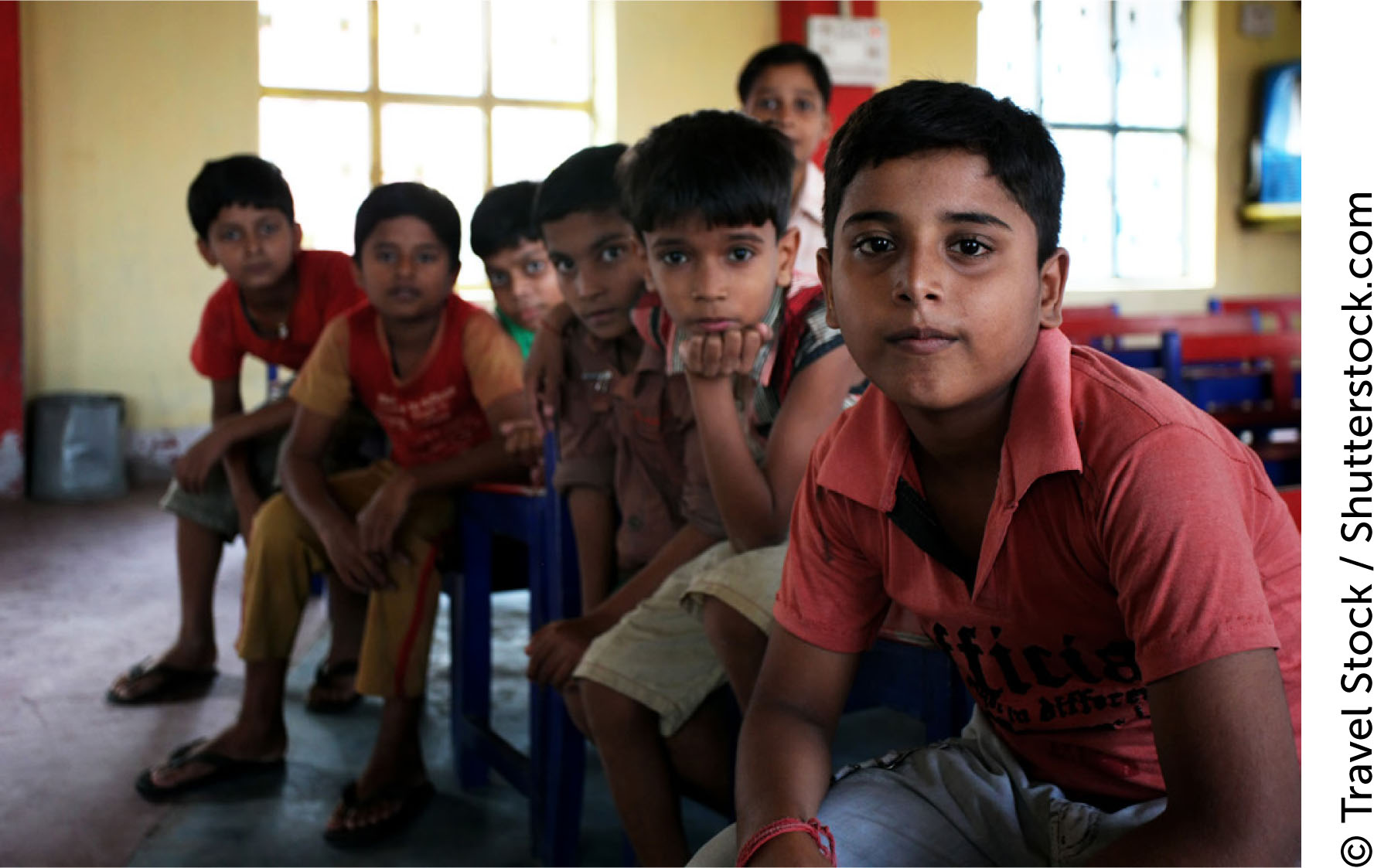
Haemophilia, an X-linked bleeding disorder, is characterised by reduced levels of coagulation factor VIII (FVIII) or factor IX (FIX) in haemophilia A and B respectively. People with haemophilia (PwH) suffer from repeated bleeding episodes in to joints and muscles that can lead to long-term musculoskeletal complications including conditions such as synovitis, degenerative arthropathy and physical impairment [1]. The frequency of bleeding depends on the residual coagulation factor level and the genotype of the patient [2]. PwH are classified as having severe, moderate or mild haemophilia based on clotting factor levels <1%, 1–5% and 5–40% of normal, respectively [3,4]. The standard of care recommended by the World Federation of Hemophilia (WFH) is treatment with factor replacement therapy to prevent or treat bleeds, and to make joint damage less likely in the future [5]. This is usually according to the Malmö protocol in which factor concentrate of 25–40 IU/kg is administered three times a week for those with haemophilia A and twice a week for those with haemophilia B, or the Utrecht protocol, where factor concentrates of 15–30 IU/kg is administered three times a week for those with haemophilia A and twice a week for those with haemophilia B. In countries with significant resource constraints, lower doses of prophylaxis may be an effective option. Clotting factor concentrate, an orphan drug [6], is the preferred treatment option, although cryoprecipitate or fresh frozen plasma are also used to treat haemorrhagic episodes [3,4,7,8,9,10]. Treatment with replacement therapy at the time of haemorrhage is known as on-demand therapy; regular infusions of coagulation factor replacement to prevent haemorrhages is known as prophylaxis.
Bleeding episodes and their complications can affect the physical, psychological and social wellbeing of PwH and haemophilia is considered as a significant lifetime burden due to its impact on health-related quality of life (HRQoL) [2,11,12]. Absence from school is an important HRQoL issue for children with haemophilia (CwH). Frequent absences from school or colleges can result in reduced educational opportunities which later on may impact graduation and employment opportunities and produce low self-esteem. Reports in the literature document higher rates of school absence in children with haemophilia than others [13,14,15,16].
Historically, haemophilia has been underdiagnosed in India due to lack of awareness, poor diagnostic facilities and limited registry data [17]. Factor concentrates are costly, and both on-demand and prophylactic treatment can be inaccessible due to issues of availability and affordability. Assam is a state in Northeast India, situated south of the Eastern Himalayas. Its economy is predominantly agriculture-based, and the majority of the population live in rural areas. PwH in the region are treated at Assam Medical College and Hospital (AMCH), which serves upper Assam and areas in the neighbouring states of Arunachal Pradesh and Nagaland. Factors were made available to the AMCH haemophilia treatment centre (HTC) by the WFH via Humanitarian Aid from January 2017 and by the Government of Assam from June 2018. Following this, PwH attending the centre, who had mostly not been on any factor replacement therapy until this time, were informed about prophylaxis and registered with the HTC for factor replacement treatment. Those who agreed to try prophylaxis were initially started on plasma-derived factor concentrate at a low dose of 10 IU/kg once a week for one month to see whether they were compliant and motivated enough to continue prophylaxis. Once they started attending the HTC regularly, the dose was increased to 10–15 IU/kg twice a week for those with haemophilia A, and 15–20 IU/kg once a week for those with haemophilia B [18]. Doses were subsequently tailored individually after clinical assessment. Some patients discontinued or did not consent to prophylaxis but continued to attend the HTC for on-demand treatment.
A number of those recently registered for factor replacement treatment at AMCH HTC are of school-or college-going age. The objective of the study reported here was to assess impact of access to factor replacement therapy, either prophylaxis or on-demand, on school absences.
METHODS
This was a single centre, retrospective, questionnaire based, cross-sectional observational study.
Study participants
Persons diagnosed with haemophilia A or B, within the age group 6 to 21 years, continuing their studies at school or college, and receiving factor replacement treatment, either prophylaxis or on demand, at AMCH HTC were included in the study. CwH who had finished their education or dropped out of school were excluded.
Recruitment
Participants were recruited from the database of the AMCH HTC and contacted via telephone. Those who were eligible for inclusion were asked to take part in a questionnaire-based interview. Informed consent was obtained from parents/guardians or patients as approved by the Institutional Ethical Committee of Assam Medical College.
Data collection
Participants were assessed using a questionnaire. Data was captured on their haemophilia type and severity, history of factor consumption, type of factor used, duration of factor used, and treatment as prophylaxis or on-demand therapy. Data on the number of days absent per month in the years before and after enrolment for treatment at AMCH HTC were collected from parents/guardians and the participants. Parents were asked to recollect the number of days their child was absent from school due to haemophilia complications, such as a joint bleed or continuous bleeding due to injury. Absences from school due to other reasons were not counted.
Detailed data on physical examination, annual bleed rate (ABR), annual joint bleed rate (AJBR), Haemophilia Joint Health Score (HJHS) and Functional Independence Score in Haemophilia (FISH) for functional ability were collected from participants’ HTC records from their date of enrolment. The recorded date of joining the HTC provided individual timelines demarcating the period before and after treatment.
Statistical methods
Data were presented in Mean (+SD). Pearson correlation was used to show the correlation between school absences and number of bleeding episodes, FISH and HJHS and type of treatment (on-demand or prophylaxis). Student t-test was used to compare number of days absent in a month, ABR, HJHS and FISH in prophylaxis and on-demand groups before and after enrolment with the HTC for factor replacement treatment.
Table 1
Characteristics of participants
| VARIABLE | PROPHYLAXIS MEAN (±SD) | ON-DEMAND MEAN (±SD) |
|---|---|---|
| Age at enrolment (years) | 13.1(±4.5) | 11.7(+4.5) |
| Duration of prophylaxis (years) | 1.4(±0.2) | – |
| Haemophilia type | ||
| Haemophilia A | 21 | 10 |
| Haemophilia B | 5 | 2 |
Table 2
Days of school absence (per month) in the year before and after enrolment with HTC
| VARIABLE | BEFORE ENROLMENT MEAN(±SD) | AFTER ENROLMENT MEAN(±SD) | P-VALUE* |
|---|---|---|---|
| Number of days absent (prophylaxis) | 15(+6) | 4(+3) | <0.001 |
| Number of days absent (on-demand) | 10(+5) | 3(+2) | 0.477 |
| Scores during prophylaxis | |||
| ABR | 37.8(±20.0) | 5.8(±4.6) | <0.001 |
| HJHS | 31.1(±18.1) | 4.7(±4.6) | <0.001 |
| FISH | 21.4(±4.2) | 27.9(±3.3) | <0.001 |
| Scores during on-demand treatment | |||
| ABR | 25.5(±19.9) | 8.7(±6.2) | 0.006 |
| HJHS | 13.8(±11.4) | 3.1(±4.2) | 0.002 |
| FISH | 24.6(±4.5) | 29.1(±2.6) | <0.001 |
Table 3
Correlation between school absences and ABR, HJHS and FISH during prophylaxis and on-demand treatment
RESULTS
Of the 79 patients registered for factor replacement treatment at AMCH HTC, 46 met the age criteria for the study. Five were no longer attending or had dropped out of school and were excluded from the study. A further three were treatment naïve and were also excluded from the study.
Of the 38 CwH who were eligible for the study, 26 (68.4%) were on prophylaxis and 12 (31.5%) received on-demand therapy. The mean age of the participants was 13.1 (+4.5) years in the case of prophylactic treatment, and 11.7 (+4.5) years for on-demand treatment. For those receiving prophylactic treatment, the mean duration of treatment was 1.4 (+ 0.2) years (Table 1).
The number of days absent from school in a month was significantly reduced among the participants who had enrolled into prophylaxis therapy, from an average of 15 before enrolment to four after enrolment (Table 2). A reduction in days of absence was also seen in the on-demand treatment group, from 10 before enrolment to three after enrolment; however, due to the lesser number of participants in this group the reduction was not statistically significant. Similarly, ABR and HJHS were found to be significantly less in CwH now receiving prophylaxis, while the FISH score was significantly higher, indicating an improvement in their functional ability. There were also significantly higher FISH scores in the group receiving on-demand treatment. ABR and HJHS showed improvement in the on-demand treatment group, but not significant at p<0.001.
Both ABR and HJHS were positively correlated with school absence for CwH on prophylaxis (Table 3). Although the HJHS showed a positive correlation with school absence after the introduction of prophylactic treatment, no significant difference could be seen. In the case of on-demand treatment, the HJHS before and after enrolment for treatment showed a positive correlation with school absence but was not significant. The FISH score showed a negative correlation in both prophylaxis and on-demand treatment.
DISCUSSION
Several studies have shown higher levels of absence from school in CwH than in their non-affected classmates and lower academic performance/actual achievement relative to potential [13,14,15,16]. Frequent bleeding episodes have a significant impact on school attendance. Shapiro et al. found that the number of bleeding episodes was found to be positively correlated with school absences (Spearman correlation 0.23) and that excessive absences from school resulted in lower levels of academic achievement [19]. Children with fewer bleeding episodes have also been shown to have better PFS (Physical Functioning Scale) scores than children with high levels of bleeding episodes, which can similarly impact on the child's ability to fulfil their potential during school and later in life [19]. The current study demonstrated a statistically significant improvement in the ABR after school-aged children were enrolled with AMCH HTC and began having treatment with prophylaxis or on-demand treatment as needed, with a corresponding reduction in the number of absences from school. Prophylactic treatment has been shown to minimise both the bleeding episodes and HJHS score, increasing the FISH score [20], which was also seen in the current study.
Figure 1
Correlation of ABR, HJHS and FISH with days of absence during prophylaxis and on-demand treatment
Key:  Initial values
  Final values
The main physical problems for CwH are not external cuts or wounds, but repeated bleeding into joints that can lead to painful, crippling and permanent damage [13]. Factor replacement therapy can significantly reduce bleeding frequency and improve joint and functional scores, which in turn impacts on HRQoL. Currently, challenges exist for implementation of this effective treatment in resource-poor nations where the cost of factor treatment can be prohibitive. However, low dose prophylaxis (LDP) is an option that is relevant and more achievable in low-resource settings and can help to minimise these challenges and to provide better care. Although the aim of prophylaxis is to raise clotting factor levels and keep them at 1% or higher at all times, it is shown to be beneficial even when factor levels are not maintained at this level all the time [21]. Data on LDP in low-resource settings has become available in recent years and shows that it can help reduce the number of bleeding episodes and the associated long-term issues with joint health experienced by PwH [22,23,24,25]. LDP is recommended by the Indian Academy of Pediatrics [26] and is also the standard of care for low resource settings recommended by the WFH [6]. Therapeutic care programmes involving LDP can help children with haemophilia in academic achievement by lowering bleeding complications and the number of days when they are from school and help them to actively participate in school and social functions.
Alongside this, however, there is a need to improve diagnosis of haemophilia in India. The latest Indian data published in the WFH Annual Global Survey shows a significant increase (79.3%) in the number of people known to have haemophilia, from 11,586 in 2011 to 20,778 in 2018 [27,28]. However, estimates based on population data in comparison with haemophilia prevalence in countries with higher rates of diagnosis and better developed registries suggest that the actual number of PwH in India is likely to be in excess of 70,000 [29]. Epidemiological data published by the Haemophilia Federation of India (HFI) indicates that Northeast India has a total of 370 registered cases, but the expected number is much higher.[29]
CONCLUSION
Factor replacement, in the form of prophylaxis or on-demand therapy, significantly reduces absences from school among CwH. The effect may be slightly better with prophylaxis, but benefit is seen in all types of therapy with factor replacement. This has a huge impact on the lives of the children affected and positively correlates with improvements in bleed rates, joint health scores and functional assessment. LDP in particular has a significant role to play in improving the lives of CwH in India and enabling them to fulfil their potential as they become adults. However, diagnosis of haemophilia in India also needs to be improved in order for this treatment protocol to benefit a greater number of those affected by the disease.