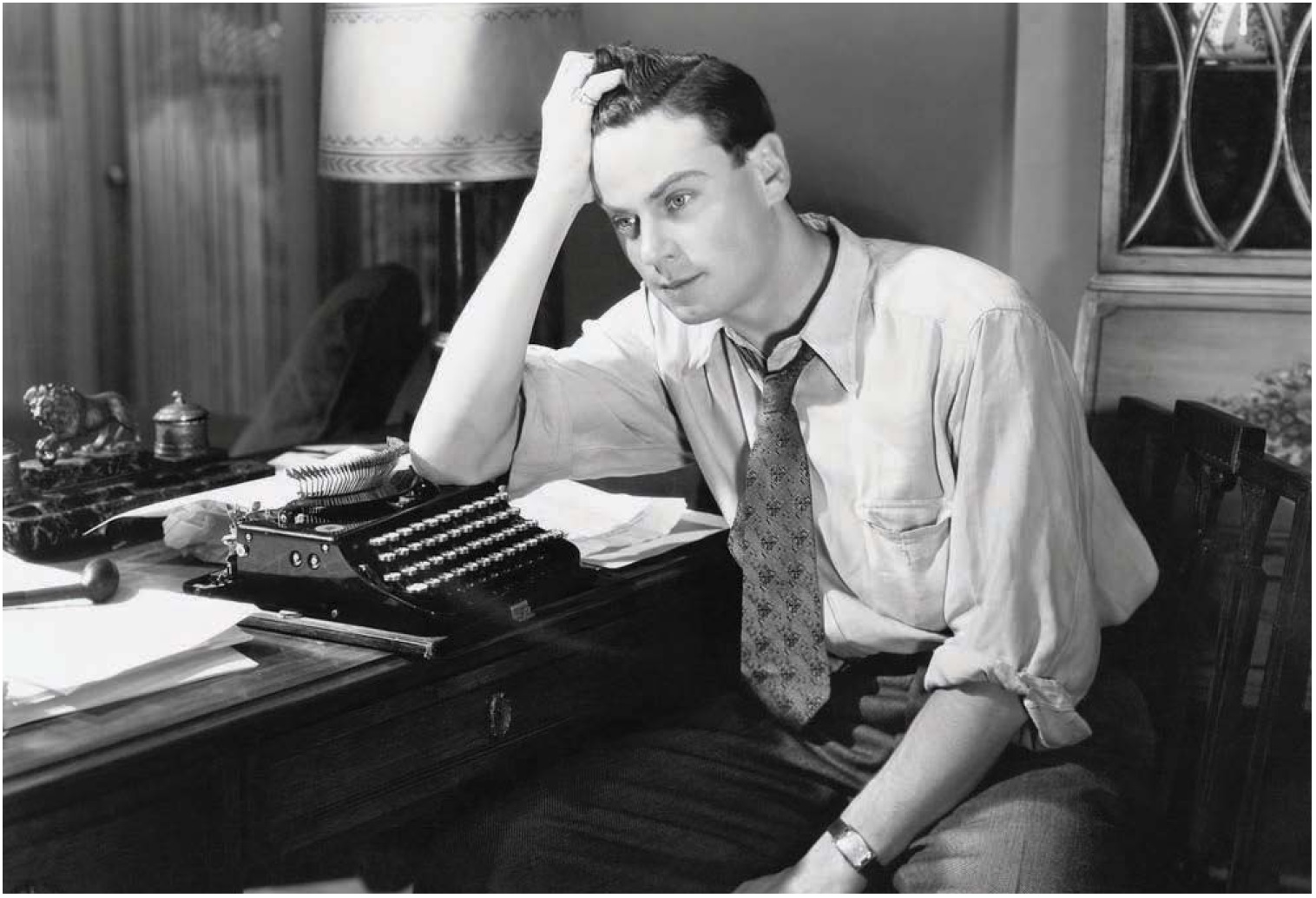
This may seem counter-intuitive but the clue to effective writing is to spend a great deal of time not writing. Instead you should put more effort into musing about what you want to write and organising your material before you put pen to paper or finger to keyboard. Only when you have a clear path that you want your article to follow should you start writing.
This is true for any piece of writing and for any audience. It is equally applicable if you want advice about a particular patient from a consultant and need to write up your notes, and when you want to write to the patient’s GP or to the patient about any changes in treatment that you have discussed and agreed. The principles underpinning any writing are the same, whether it is a detailed report for colleagues, an email about a politically sensitive topic for the head of your department, or an article you would like to be published in a journal.
People who lack confidence in their abilities to express themselves properly with the written word often report one or more of the following problems:
I have too many ideas and do not know where to start
I do not have enough time; I find I have to devote many of my precious weekends to writing when I have to complete a report for work
I find it difficult to write for different audiences
I find it difficult to stop researching
I tend to write too much and then have to spend hours cutting and editing
I often get stuck in the middle of a writing project
I spend too much time rewriting
My writing tends to come back full of corrections from other people
I do not know what is meant by ‘good writing’.
The list is not exhaustive and you may think of other problems you face. But be assured: you are not alone. Unless you are a professional writer, or you have had so much practice that you have learnt how to write effectively by default, few people – particularly those who have studied science subjects at school and university – will ever have been taught how to communicate effectively.


Luckily it seems it is never too late to break the bad habits that can make writing such a misery. I have run effective writing courses for health professionals whose ages range from their early 20s to their mid-50s and they all say they have developed techniques that have made writing much less daunting.
“Many documents are long and convoluted because the writers are not quite sure what they want to write”
So what is effective writing? In short, it is making sure that what you want to say is understood clearly by your target audience. Simple – job done!
Things go wrong when you are not sure what your message is; you confuse your message with the title of your article; or you change your message after you have started writing. Look back at the list of problems above and see how many can be explained by not having a clear idea from the beginning about what you are writing.
As a result the writing becomes unintentionally unclear. Many documents are often written in “management speak” and sentences are long and convoluted because the writers are not quite sure what they want to write. They use jargon because they do not have a firm idea of how they should express themselves. With practice you can identify material that is intentionally unclear because the writer wants to hide the message – but that is a different story.
The next challenge is to identify your audience. Who do you want to target? You may have the same message for a patient and a GP but you need to approach them in different ways.
When I started writing for the national papers in the 1980s, I was told that The Times was read by the leaders of the country; The Guardian by those who want to lead the country; The Telegraph by those who used to lead the country; the Daily Mail by the wives of the leaders of the country; and The Sun by those who didn’t mind who ran the country as long as she was well endowed!
Things have changed but probably not as much as many of us hoped 30 years ago and, yet, those differences are still useful for defining your audience and pitching your writing at their level. The reading age required to understand a “quality” newspaper is about 15; mid-market publications (such as the Daily Mail and women’s magazines) require a reading age of 12 and The Sun a reading age of eight. Scientific journals, on the other hand, require an understanding that is usually only gained at degree level. (And, as a health professional, you may not like it but the Daily Mail knows exactly what its message is and who its target audience is – every edition is a masterclass in effective writing.)
Once you have worked out your message and your audience, you can then start planning your article. There are ways to help you marshall your thoughts and research to ensure that you do not over write and waste time cutting at a later stage.
Only then do you start writing. The best way is to keep going until you finish what you have planned to write. Do not stop to reread and rewrite the first paragraphs until you have got to the end. Then you can have a go at editing and rewriting, checking for spelling mistakes and problems with punctuation, showing other people if you need their sign off or acceptance.
Another tip worth noting is that if you need colleagues to read your article before it is distributed make sure any changes they suggest add to your message – not that the changes primarily meet their own agendas.
At this stage – and before you press the “send” button for the final time – find somewhere quiet and read out what you have written aloud. Make sure you read what you have written and not what you think you have written:
‘Anyone who is concerned about the speech and language, or swallowing of a family member or themselves, is welcome to attend one of the open days.’ Just one misplaced comma changes the meaning completely.
‘Anyone who is concerned about the speech and language or swallowing, of a family member or themselves, is welcome to attend one of the open days.’
Reading aloud is the best way to detect problems with the flow, the meaning and your punctuation. And if you, the writer, hesitate over a sentence, find chunks repetitive or think you have gone off the point – what hope is there for those people you want to read your report and learn from it?
If you would like to know more about how to write effectively take a look at my website. I run courses for health care professionals who find writing 5,000 word reports, 500 word emails and 50 character tweets a challenge and want writing to be a bit more fun.