Qualitative Research | Open Access | Volume 13 (2026): Issue 1 | Pages 57–73 | DOI: 10.17225/bdcp-2026-0006
Simon Fletcher1, Kathryn Jenner2, Kate Khair3
1 University of Oxford, Oxford, UK. Email: simon@haemnet.com; 2 Haemnet Ltd, London, UK; 3 Haemnet Ltd, London, UK
Non-factor replacement therapies and gene therapy for severe haemophilia convert the bleeding phenotype to mild or moderate. People with haemophilia (PwH) who transition to a milder phenotype as a result of their treatment may require a greater degree of ongoing care and support than those with genetically mild or moderate haemophilia, due to previous bleeding episodes. Assessing the subjective experiences of PwH with genetically mild or moderate haemophilia compared to those converted to a milder phenotype enables a comparison of expectations across the spectrum of the disease. Understanding the lived experience of genetically mild and moderate haemophilia can therefore inform the anticipated care needs of the growing group whose treatment converts a severe phenotype to a non-severe one.
Qualitative interviews were undertaken as part of a mixed-methods study examining the lived experience of non-severe haemophilia. Forty-four men with haemophilia (15 mild, 10 moderate, 11 severe, 8 post-gene therapy) aged 16-76 years were interviewed between January and August 2023. Interviews were recorded, transcribed, and thematically analysed using NVivo software, with cross-validation by two researchers. Analysis followed a grounded theory-informed approach.
Five main themes emerged within the overarching theme of Ability vs. Disability: 1) Acceptance vs. Rejection, 2) Benefits vs. Burdens, 3) Control vs. Uncertainty, 4) Freedom vs. Constraint, 5) The Future vs. the Past. Participants with genetically non-severe haemophilia reported significant treatment disparities compared to those with severe haemophilia, including delayed diagnosis, inability to self-treat, and limited access to prophylaxis. Despite higher factor levels, individuals with non-severe haemophilia and those who had transitioned to a non-severe phenotype experienced similar issues with regard to bleeding episodes. Paradoxically, while participants reported their condition did not significantly impact daily life, they described constant background concerns about injuries and activity limitations.
PwH of all severities experience similar quality of life impacts, particularly during bleeding episodes. Treatment disparities must be addressed to improve outcomes for those with non-severe haemophilia, including individuals on phenotype-altering treatments. Recommendations include facilitating self-infusion and home treatment for all severity levels, ensuring rapid access to bleed assessment and follow-up regardless of primary diagnosis, and addressing the mixed messaging from healthcare teams regarding activity restrictions and treatment protocols.
Treatments for severe haemophilia now include non-factor therapies and gene therapy. These treatments effectively change severe haemophilia to moderate or mild haemophilia. People with moderate or mild haemophilia usually only have bleeds after trauma or surgery. However, people with severe haemophilia who use treatments that convert their haemophilia to moderate or mild may have joint damage from previous spontaneous bleeds into their joints, meaning they may need more care and support. We wanted to understand and compare the experiences of people who have always lived with moderate or mild haemophilia with the experiences of people with severe haemophilia who effectively have moderate or mild haemophilia due to their treatment. This will help us better understand the impacts of moderate or mild haemophilia on quality of life, which in turn can help inform future care. Access to haemophilia care and to newer treatments varies widely around the world; this study reflects the experiences of people treated in the UK.
175 men with haemophilia of all severities responded to a questionnaire about their experiences, 44 of whom then participated in an in-depth interview. In the interviews, they spoke about the impact of haemophilia on their everyday lives, and their experiences of and thoughts about their treatment and care. Interviewees with severe haemophilia commented on improvements in treatment, but those who had always lived with moderate or mild haemophilia were less aware of treatment developments and often felt ‘left behind’ in terms of care.
Overall, we found that haemophilia had similar impacts on the quality of life of all interviewees, regardless of their haemophilia severity. All groups reported problems in recognising bleeds or having bleeds recognised by their care teams, and people with mild or moderate haemophilia often experienced difficulties because they were often not offered the training or support to treat their own bleeds at home. The study findings suggest that the impacts of moderate and mild haemophilia are under-recognised. Enabling people with moderate or mild haemophilia to administer their own treatment for bleeds and taking steps to ensure that bleeds are diagnosed more quickly are among the measures that could be taken to help improve this.
Non-severe haemophilia, Quality of life, Lived experience
Haemophilia is a rare, X-linked congenital disorder in which production of clotting factor VIII (FVIII) or factor IX (FIX) is impaired in haemophilia A (HA) and haemophilia B (HB), respectively. Characterised by spontaneous and post-traumatic bleeding, it affects an estimated 850,000 individuals globally, of whom around 289,000 have severe haemophilia [1]. Bleeds are most common in severe haemophilia and in weight-bearing joints, leading to haemophilic arthropathy, impaired joint function and chronic pain [2].
Access to haemophilia care worldwide is highly unequal. Most people with haemophilia live in low- and middle-income countries, where diagnosis is difficult and access to clotting factors for prophylaxis, let alone newer non-factor therapies, is either unavailable or severely limited [1]. The disparities highlighted in this study sit within this global context and magnify it.
The major goal in treating severe haemophilia (<0.01 IU/mL) is to reduce bleed frequency and, consequently, morbidity and joint damage. Historically, treatment has involved intravenous replacement of the missing clotting factor on demand, when bleeding occurs, or prophylactically. Prophylaxis is standard of care, with dose, frequency, and replacement therapy type tailored to patients’ age, lifestyle, and individual preferences. Treatment can be burdensome [3,4], with complications including inhibitors, pain and arthropathy, alongside psychological and economic impacts [5].
Contemporary management of haemophilia aims to eliminate bleeding and reduce treatment burden, thereby improving quality of life (QoL) [6]. Treatments are now available which effectively change severe phenotypes to a moderate (0.01-0.05 IU/mL) or mild (0.06-0.40 IU/mL) phenotype [7]. These include non-factor replacement therapies, given subcutaneously [8,9,10], and gene therapy (GTx), which inserts a functional FVIII or FIX gene into liver hepatocytes, enabling production of the missing factor [11,12,13]. GTx has been described as a ‘functional cure’ [14]; many of those treated in clinical trials have achieved a moderate or mild phenotype [15].
Spontaneous bleeds are less common in people with moderate and mild haemophilia, who usually only bleed following trauma or surgery; however, the impact of non-severe phenotypes on QoL is increasingly recognised [16-20]. The clinical impact of mild haemophilia may be ‘under-represented’ and unmet needs remain [17]. Because non-factor replacement therapies and gene therapy convert those with a severe phenotype to a mild or moderate one, the lived experience of people who are genetically mild or moderate provides an evidence base for anticipating the care needs of those who transition to a milder phenotype through treatment, as well as for improved outcomes and care for people with genetically non-severe haemophilia and for those who become clinically mild following non-factor or gene therapy.
The Learning to Live study investigated lived experience and treatment disparities among people with haemophilia (PwH), including those whose treatment has enabled transition to non-severe phenotypes.
This nested mixed methods study comprised an online quantitative survey, using validated tools (The Patient Reported Outcomes, Burdens and Experiences [PROBE] measure [21] and the Patient Health Questionnaire-8 [PHQ-8] [22]). The non-validated mental health questionnaire (CoreHEM_MHO) [23,24,25] was also administered to support the development and validation of mental-health items for the study population. Eligible participants were men aged ≥16 years with a confirmed diagnosis of HA or HB of any severity, who were recruited via treatment centres, social media sites, and UK-based patient organisations. In-depth qualitative interviews with a subset of survey participants. Only males were invited to this study as they were those most likely to be offered GTx and non-factor therapies in the UK at the time of the study. All respondents self-reported a confirmed clinical diagnosis, type and severity at screening, and for interviewees these details, together with factor level and treatment history, were corroborated during the in-depth interview. Qualitative findings are reported here.
Interview participants were purposively selected by diagnosis and treatment to ensure inclusion of all haemophilia types and severities (Table 1). Shortlisting was purposive and structured to ensure representation across haemophilia type (A or B) and severity (mild, moderate and severe). The interview sampling strategy is shown in Appendix 1, and the achieved distributions are shown in Table 1. Interviews were conducted either online (via a video-conferencing platform), or face to face. All interviews were audio recorded for later verbatim transcription and analysed using a grounded theory-informed approach [26]. All transcripts were coded by a single researcher (SF) using NVivo (version 13) and themes were identified using a descriptive framework analysis [27]. Codes were created through a process of open, line-by-line coding and constant comparison until saturation consistent with a grounded theory approach was achieved [28,29]. The emergent codes were then organised and compared across cases using a framework matrix, which supported systematic cross-severity comparison. The analysis is described as grounded theory-informed to reflect this integration of inductive grounded-theory coding with framework-based organisation of the findings. A second researcher (KK) re-coded a random sample, and both investigators met monthly to discuss completed interviews to ensure the reliability of the codes generated. Field notes were also reviewed to provide added context to the discussions and code generation. This process was continued until saturation was achieved and the interviews discontinued. Upon completion of the interviews, the study team reviewed all the emergent codes, refined them further, and final themes were identified.
Ethical approval was granted by the UK Healthcare Research Authority and Research Ethics Committee (22/WM/0205). Written informed consent was obtained from all participants and verbal confirmation requested prior to each interview. Interview participants received a £50 Amazon voucher, approved by the Research Ethics Committee, as an appropriate payment for their time.
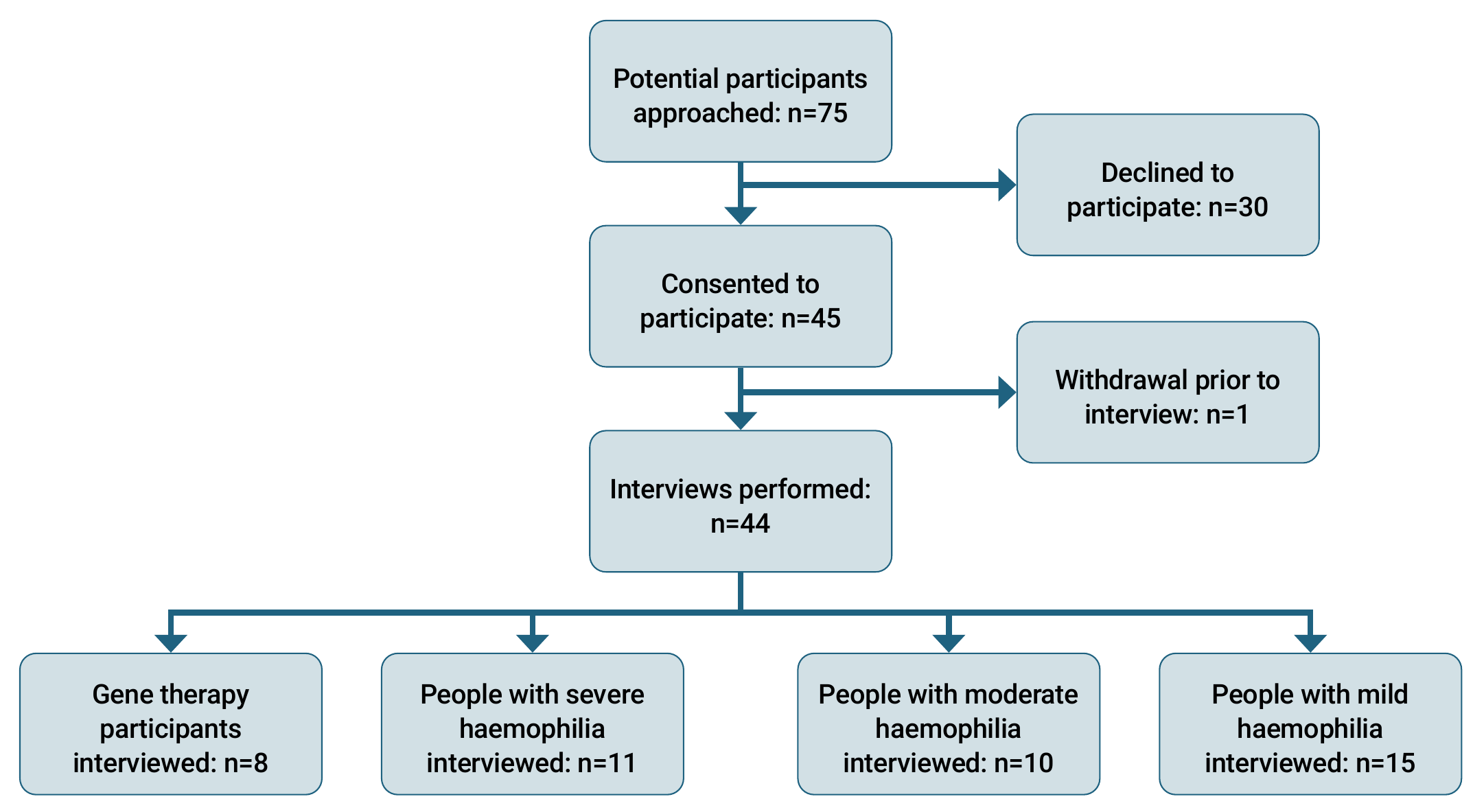
Of 175 survey participants, 136 indicated willingness to be interviewed; 75 were selected based on demographic data; 45 were consented. Forty-four PwH aged 16-76 years (mean 42 years) were interviewed (Figure 1; Table 1). Fifteen had mild haemophilia (34%; 12 HA, 3 HB with Leyden mutation, classified as severe in childhood), 10 moderate (22.7%; 8 HA, 2 HB), 11 severe (25%; 7 HA, 4 HB); 8 had received GTx (18%; 4 HA, 4 HB). The final qualitative sample comprised 44 participants (n=44).
Table 1. Participant demographics
| Participant no | Current age | Age at diagnosis | Haemophilia type | Severity | Factor level at diagnosis* | Baseline factor level at interview* |
|---|---|---|---|---|---|---|
| L2L-001 | 56 | 0 | A | Post GTx | <1 | >100 |
| L2L-002 | 34 | 1 | A | Post GTx | <1 | 10 |
| L2L-003 | 35 | 0 | A | Severe | <1 | <1 |
| L2L-004 | 49 | 0.5 | B | Severe | <1 | <1 |
| L2L-005 | 70 | 5 | A | Moderate | 3 | 3 |
| L2L-006 | 39 | 1 | A | Moderate | 1 | 1 |
| L2L-007 | 47 | 4 | A | Mild | 20 | 20 |
| L2L-008 | 22 | 0 | B | Severe | <1 | <1 |
| L2L-009 | 27 | 7 | A | Mild | 27 | 27 |
| L2L-010 | 16 | 0 | B | Mild | <1 | 14 |
| L2L-011 | 60 | 26 | A | Mild | 35 | 35 |
| L2L-012 | 76 | 7 | A | Mild | 5 | 17 |
| L2L-013 | 60 | 3 | A | Moderate | 2 | 6 |
| L2L-014 | 57 | 1.5 | A | Moderate | 3 | <1 |
| L2L-015 | 53 | 1.5 | A | Severe | <1 | <1 |
| L2L-016 | 42 | 1 | A | Mild | 6 | 6 |
| L2L-017 | 26 | 0 | B | Severe | <1 | <1 |
| L2L-018 | 25 | 13 | A | Moderate | 4 | 4 |
| L2L-019 | 24 | 0 | A | Severe | 1 | 1 |
| L2L-020 | 40 | 14 | A | Moderate | 4 | 4 |
| L2L-021 | 37 | 0 | A | Severe | <1 | 1 |
| L2L-022 | 38 | 0 | B | Moderate | <2 | 2 |
| L2L-023 | 72 | 11 | A | Mild | 19 | 19 |
| L2L-024 | 40 | 3 | A | Mild | 2 | 20 |
| L2L-025 | 17 | 0 | B | Mild | <1 | 22 |
| L2L-026 | 52 | 2 | A | Severe | <1 | <1 |
| L2L-027 | 24 | 15 | A | Mild | 7 | 7 |
| L2L-028 | 70 | 11 | B | Moderate | 4 | 7 |
| L2L-029 | 66 | 0 | A | Mild | 9 | 20 |
| L2L-030 | 36 | 0 | B | Severe | <1 | <1 |
| L2L-031 | 36 | 0 | A | Post GTx | <1 | 19 |
| L2L-032 | 29 | 0 | B | Post GTx | <1 | 21 |
| L2L-033 | 30 | 0 | B | Post GTx | <1 | 40 |
| L2L-034 | 27 | 0 | B | Post GTx | <1 | 42 |
| L2L-037 | 25 | 2.5 | B | Mild | <1 | 46 |
| L2L-038 | 53 | 0 | A | Severe | <1 | <1 |
| L2L-039 | 42 | 12 | A | Mild | 20 | 20 |
| L2L-040 | 28 | 1.5 | A | Moderate | 1 | 1 |
| L2L-041 | 40 | 0 | A | Mild | 7 | 7 |
| L2L-042 | 54 | 0 | A | Post GTx | 1 | >100 |
| L2L-043 | 35 | 0.5 | A | Moderate | 3 | 3 |
| L2L-044 | 65 | 0 | B | Post GTx | <1 | 48 |
| L2L-045 | 62 | 20 | A | Mild | 24 | 24 |
| L2L-046 | 68 | 3 | A | Severe | <1 | <1 |
* Factor level (iu/dl) at diagnosis and baseline factor level are self-reported
Analysis identified the over-arching theme ‘Ability vs. Disability’, within which five major sub-themes emerged (Figure 2):
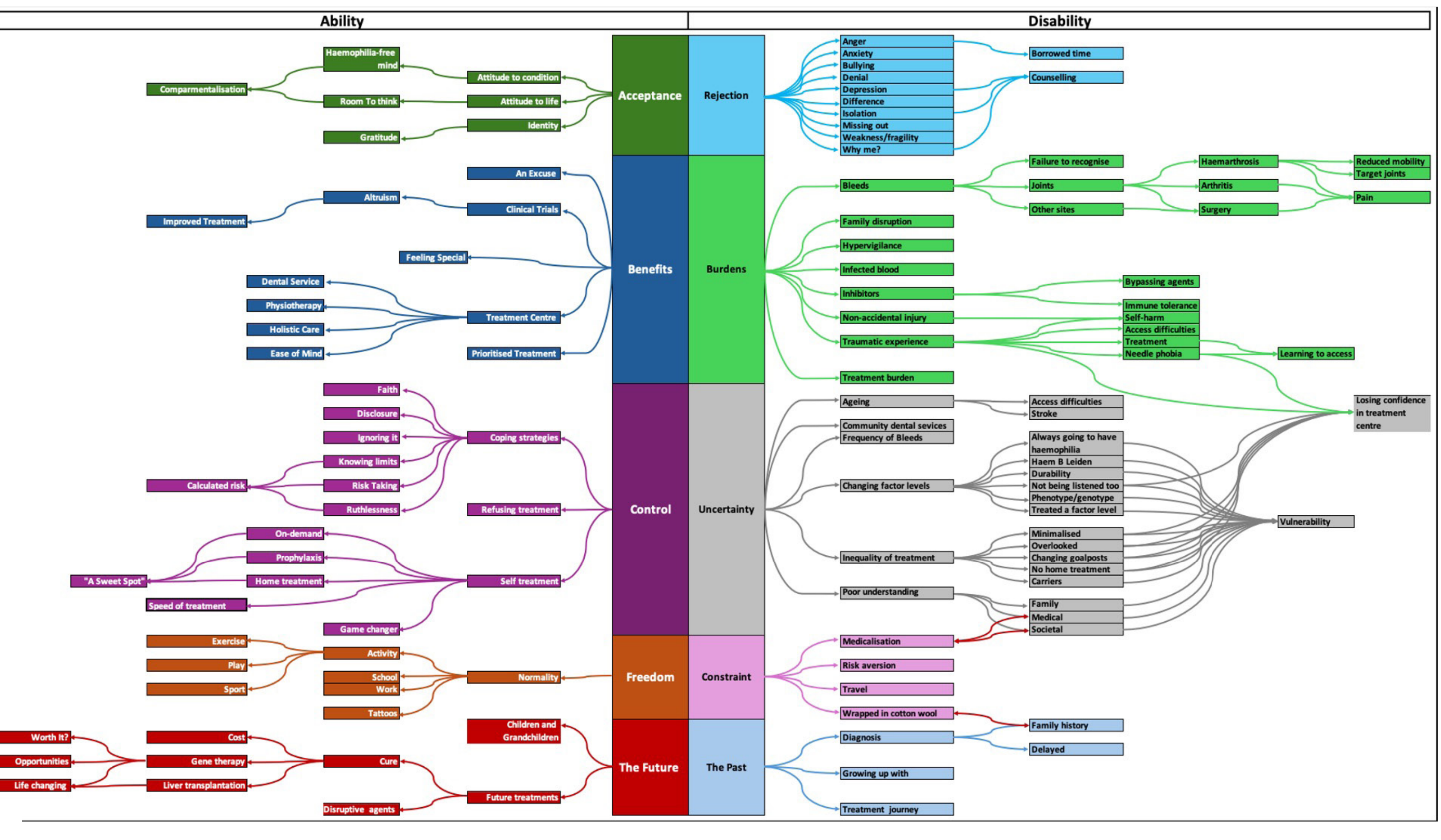
The majority of participants, including 18 with non-severe haemophilia, did not feel haemophilia impacted their everyday lives. Although they generally reported being able to live the life they wanted, haemophilia and its potential consequences remained a constant background concern. Haemophilia was described as “life-inconveniencing” rather than “life-threatening” [L2L-018], and PwH of all severities admitted that concerns about injury, for example, meant it was never far from their minds.
“It would be a great thing to get a haemophilia-free mindset, but that doesn’t change my life and it doesn’t change the risks.”
[L2L-016]
This paradox was also evident in tacit acceptance of the need to work with any haemophilia-related limitations. Some participants with severe haemophilia reported moderating activities without being overtly conscious of haemophilia impacting their lives.
“So while [haemophilia] was on my mind, it wasn’t something that defined me and stopped me from doing things, or maybe I learned to not want to do the things that experience had shown me I couldn’t do.”
[L2L-026]
Conscious or subconscious acceptance of haemophilia’s impact led to acceptance of not being as physically robust as peers or being rejected by peers as frail. Some participants reported feeling shame or rejection due to the limitations it imposed. Again, these concepts were not dependent on phenotype.
“I think people saw it as being weaker or you’re too fragile to do certain things.”
[L2L-009]
“I felt like I was less of a normal person and as such it’s something that I was never comfortable talking about openly.”
[L2L-006]
Though participants of all phenotypes said they were not defined by their haemophilia, five post GTx participants admitted that haemophilia had preoccupied them previously.
“It took me a year or two, but I was just thinking about other things rather than haemophilia-related things […] doing gene therapy just frees up your whole life.”
[L2L-002]
All participants spoke of benefits of haemophilia. These were predominantly treatment-related and included access to specialist treatment centres and to new treatments through clinical trials. For some, there was also a perception of being prioritised in emergencies; however, this sense of prioritisation was not a universal experience. Indeed, the wider literature, indicates that many people with haemophilia encounter delay and a lack of prioritisation in emergency care [30,31].
“With haemophilia, because it’s such a dangerous condition if you’re waiting long, you tend to skip A&E queues, so you get fast treatment from doctors.”
[L2L-010]
The majority were happy with treatment, citing the holistic nature of care and access to physiotherapy and dentistry as beneficial. Five with non-severe haemophilia, however, perceived a lack of care and reported frustration with their treatment centre.
“Well, nothing really changes is the thing, so it’s not like you go and anything new or interesting happens. Usually they come in, they take some blood, I never hear back about the blood that’s taken, so they never do tell me what it is they are checking or testing for.”
[L2L-024]
Two post GTx participants reported loss of faith in the benefits offered by specialist care. Having changed to a non-severe phenotype, they reported that concerns about possible bleeds were not taken seriously by their treatment centres.
“I don’t feel they listen. I feel like if I said, I’m having a bleed, they’d be like, come in, and if they’ve got the ultrasound thing, the physio’s available, they might look. Otherwise they’d just be going, ‘No, you’re fine.’”
[L2L-031]
Bleeds and related consequences were described as a burden by three participants with non-severe haemophilia, who reported developing and clearing FVIII inhibitors.
“The difference between 0% and 3% is massive, right. In the end I had to give up my job. I was in and out of the hospital for three years, it went on every other month I was in there with a bleed.”
[L2L-005]
Participants with non-severe haemophilia frequently mentioned investigations for non-accidental injury around the time of diagnosis, several describing the stress experienced by their family. One explained the impact of being accused of self-harm.
“My family assumed that whatever bleeding and bruising I had was something which I was causing to myself. I had, I think, what I can only describe as a kind of mental breakdown, because my parents were arguing that this is my fault, I knew it wasn’t, and nobody was doing anything to prevent the bleeding.”
[L2L-023]
Acceptance of haemophilia and rejection of its impact on daily life were enabled by control through treatment. All participants felt their treatment gave a level of control that allowed a ‘normal’ life.
“I’ve never thought of myself as a person with severe haemophilia. I thought of myself as a person with haemophilia who is controlling that with treatment.”
[L2L-044]
The availability of and access to new treatments through clinical trials was also seen as a positive for those with severe haemophilia.
“The other year when I did [a clinical trial], when I was on the treatment, because I had a constant level in me all the time, it felt good.”
[L2L-038]
Some with non-severe haemophilia, however, were concerned about being left behind or forgotten in terms of treatment.
“So when I was knocked off the bike I went into [centre] and they sort of gave me some treatment and they said, off you go. There wasn’t a follow-up. And then came in the week after, when the stitches came out, they said ‘hm, maybe we should have seen you a bit more’.”
[L2L-020]
Four felt not being able to self-treat disadvantaged them, delaying and prolonging treatment, with the concomitant risk of potential joint damage.
“I would have injected myself [after a bleed] wouldn’t I? ... To me that would be the thing for myself, someone who’s active all the time.”
[L2L-045]
Similarly, some participants, particularly those post GTx, reported centres being reluctant to treat what felt like a bleed.
“It felt like a bleed, but it didn’t, they wouldn’t treat it … probably two weeks later they were like, ‘We’re not sure’. They did the ultrasound on it and there was fluid there. Whether or not it was a bleed or not, they don’t know, because of my levels – they’re saying they’re too high to have a bleed, but it took me ten days for it to get back to normal.”
[L2L-031]
Some participants reported that their factor levels seemed to change over time but no satisfactory reason was ever given, leading to uncertainty and worry. One participant, whose level had increased from 5% at diagnosis to “about 17[%]”, said, “Nobody tells me why … it’s a bit disturbing” [L2L-012].
In some cases, this led to concern about being declassified and a change in their perceived identity as a person with haemophilia.
“My factor has been going up gradually as I’ve got older. So when it was first measured, I think it was about 35 and now I think it’s just crept to between 48 and 52 … But I’m still a haemophiliac.”
[L2L-011]
Constraints of haemophilia were reported by participants of all severities, despite most saying they were able to live the life they wanted. One said his diagnosis and understanding of his condition led him to be risk-averse and avoidant of conflict.
“There’s a little bit of anxiety that comes out when I’m in a position of conflict and I think it’s all because of having haemophilia.”
[L2L-041]
Eight participants with non-severe haemophilia reported feeling constrained by not being able to travel freely due to concerns about access to treatment.
“Going on holiday to Corfu, my brother was like ‘well Albania’s only just across the way,’ but Albania’s outside of Europe … So holiday destinations and things like that, there’s a few that you can’t go to isn’t there, or it’s unwise.”
[L2L-007]
Those with severe haemophilia were generally less concerned about travel as prophylaxis, self-treatment and improvements in treatment afforded a greater level of freedom.
“Before this new medication, the problem was, you know, you go travelling, you have to have a second suitcase to carry everything you need to take with you and keep cool, to have injections.”
[L2L-019]
Age at diagnosis presented constraints for many with non-severe haemophilia. While the majority of those with severe haemophilia were diagnosed within the first year of life, those with moderate and mild haemophilia were diagnosed later in childhood (6 years and 8 years respectively). This later diagnosis introduced new restrictions which could be difficult to understand and accept.
“I wasn’t aware I had it, so growing up I didn’t have that in the back of my mind, so I didn’t feel any different, and I think perhaps people sort of then telling you after, ‘Oh, you can’t do X, Y, Z,’ makes you sort of… it’s frustrating.”
[L2L-009]
Discussion of the future vs. the past focused on treatment developments, with a split between the views and experiences of those with severe haemophilia vs. those with moderate or mild.
All participants with severe haemophilia referred to changes and improvements in treatment during their lifetimes.
“We’ve seen the advances in the different factors that have become available, from cryoprecipitate, then to the powdered type of factor, which started off in [large bottles] and now, ironically, is down to these tiny little vials … it’s miraculous how far we’ve actually come in such a short time.”
[L2L-042]
Those with non-severe haemophilia were less aware of these developments. Some noticed the difference in access to treatment for younger PwH but expressed feeling left behind and under-treated.
“Looking at how my nephews are treated, it is completely different. If there’s even like a minor bleed or something, the centres just say come in, whereas I didn’t have that.”
[L2L-020]
The possibility of passing haemophilia on to future generations remained a concern for most participants across all severities.
“We knew it would wipe the disease out in my family because, you know, my two boys are perfectly healthy, touch wood. I never had a daughter but I know if I had a daughter, she would have been a carrier.”
[L2L-005]
Further indicative quotes can be found in Appendix 2.
Although our study included three distinct groups who have been and continue to be affected by haemophilia in different ways (those with genetically severe or non-severe haemophilia and those with severe haemophilia who now live with a non-severe phenotype) it found similarities in impacts relating to QoL [32]. This raises questions around approaches to the long-term care and management of PwH of all severities. These questions also reinforce the debate about how haemophilia should be classified. Thachil et al. [33] proposed moving beyond the conventional tripartite severity model towards a definition of outcomes and phenotype as new targets – a proposal that prompted some debate at the time [34,35], though little seems to have changed. The findings here, though, support the view that a classification anchored to baseline factor level does not capture the needs of people with mild or moderate haemophilia, or of those converted to a non-severe phenotype by treatment.
Most participants, particularly those with non-severe haemophilia and those who later became non-severe (e.g., following GTx, increased factor levels with age (FIX Leyden), or improvements in assay techniques), reported that haemophilia mostly did not intrude on their lives. Paradoxically, many described never being truly free from the impact or awareness of haemophilia. Across all severities, psychological constraints associated with a constant background awareness of risk remained, even when not burdened by prophylactic regimens requiring frequent treatment. Among those who had transitioned from a severe to a non-severe phenotype, physical sequelae (haemophilic arthropathy, blood-borne viral infection) meant haemophilia continued to be very present in their lives. Rather than living with a “haemophilia-free mind”, haemophilia remained a burden for most, albeit one frequently accepted as part of life [36-39].
Physical sequelae may mean that those who become phenotypically non-severe following treatment (GTx or non-factor replacement) experience bleeds despite having higher factor levels. Recent research on the experience of people with non-severe haemophilia also suggests that the impacts of bleeding and bleeding risk have been underestimated [18,40]. This is concerning in relation to ongoing monitoring and thresholds for treatment, including reintroduction of prophylaxis for those with haemophilia post GTx if levels decrease over time [41,42]. It also raises questions around treatment access for people living with mild and moderate haemophilia.
Two findings in particular warrant further emphasis because they are under-represented in the existing literature. First, participants with non-severe haemophilia frequently described the trauma of delayed diagnosis, including investigations for non-accidental injury, resulting family distress, and, in one account, being accused of self-harm. This aligns with evidence that later diagnosis in mild and moderate haemophilia carries a psychosocial cost that is easily overlooked once the diagnosis is confirmed [43]. Secondly, participants described a disruption to their identity when their measured factor levels changed over time, with some fearing they might be reclassified, or ‘declassified’, as a person with haemophilia. This connects to work on illness identity and the classification debate noted above, and suggests that changes in phenotype which may affect both physical and psychological health, should be accompanied by clear explanation and access to psychological support.
Many participants reported receiving contradictory advice and education on living with haemophilia and managing bleeds. In particular, those with genetically non-severe haemophilia described being advised to limit or give up sports due to associated bleeding risks, but also that their factor levels were such that they should not get bleeds and should wait to assess potential injury-related bleeds. Uncertainty around what to do in the event of injury led to delays in initiating treatment, which was further complicated by the need to access treatment via their treatment centre and/or emergency department [20,44]. PwH post GTx were not always able to access treatment any quicker as their relatively high factor levels made care teams reluctant to initiate treatment. Unlike those with non-severe haemophilia, however, they were able to self-treat once treatment was initiated.
This highlights a treatment disparity, whereby individuals with non-severe haemophilia can be significantly disadvantaged during bleeding episodes. This issue has potential to grow as innovative therapies increase the cohort of PwH effectively living with a non-severe phenotype, who are less able to recognise and treat bleeds [45-47]. Although home therapy and self-infusion are not restricted by severity in the UK, and some people with moderate haemophilia, are trained to self-treat, self-treatment is frequently not offered or facilitated for many people with non-severe haemophilia. Extending training and supply for home and self-treatment could facilitate improved care and outcomes [48].
Many of the constraints described can be understood through the social model of disability, in which limitation arises from social and environmental factors rather than from the medical condition alone [49]. Participants often located their restrictions in the expectations of others, in the consequences of later diagnosis, and in contradictory advice from care teams, rather than solely in their bleeding phenotype. Understanding these accounts in this way reinforces the argument that care, communication and access, as much as factor level, shape quality of life.
Mental health was assessed in the quantitative strand of the study using the PHQ-8 and the CoreHEM_MHO questionnaire, and those data are reported separately. The qualitative interviews explored psychological impact through lived experience rather than direct clinical questioning. It should be noted, though, that participants seldom identified mental-health support among the services they received, despite the psychosocial burden they described. This is consistent with reports of unmet mental-health need in haemophilia [50] and strengthens the case for integrating psychological support into comprehensive care.
We acknowledge the potential limitations inherent in this study. Participants were self-selecting [51]; their views may not reflect those of the wider haemophilia community. Using a purposive strategy to identify and recruit interviewees helped mitigate this. Diagnosis was self-reported at screening, although type, severity and treatment history were corroborated and confirmed during the interviews.
Although the overall number of participants was appropriate for qualitative research [52,53], the number of post GTx participants (n=8) was smaller than hoped. This may reflect growing discomfort and fatigue with the ongoing research into their situation: GTx was supposed to enable freedom to live a ‘normal’ life, yet post GTx PwH remain the subject of continued research and speculation, perhaps beyond the follow-up initially anticipated.
A further study limitation is that no women were included. It is recognised that the experiences of women with low factor levels have been overlooked [54]. Future studies should consider women with haemophilia, of all levels, as this will add important data and increased nuance to our understanding of living with haemophilia. In addition, we did not systematically collect the full range of sociodemographic characteristics, such as socioeconomic status, ethnicity, primary language, education and social support, for the interview subset, which may affect the transferability of the findings; fuller collection is recommended in future work.
People with all severities of haemophilia in this interview study reported similar impacts on QoL, particularly during bleeding episodes. All groups reported problems recognising bleeds and having bleeds recognised by their care teams, often leading to delays initiating treatment and, for those with non-severe haemophilia, difficulty maintaining treatment due to inability to self-treat. They also expressed frustration with mixed messaging from their care teams. These findings highlight treatment disparities that must be addressed to improve QoL for those with non-severe haemophilia, including individuals on phenotype-altering treatments. This includes facilitating self-infusion and home treatment for all, and ensuring rapid access for bleed assessment and follow-up, regardless of primary diagnosis. For many people with non-severe haemophilia, this barrier reflects home treatment and self-infusion not being offered or facilitated, rather than a categorical prohibition.
We would like to thank the participants of this study for sharing their views and time.
The Learning to Live with Non-Severe Haemophilia study was funded by BioMarin.
Simon Fletcher is a former employee of Haemnet Ltd and continues to work with Haemnet as a researcher. Kathryn Jenner is an employee of Haemnet Ltd and Editor of Bleeding Disorders: Care & Practice. Kate Khair is CEO of Haemnet Ltd.
SF and KK designed the study and the interview guide, analysed transcripts and defined themes. SF facilitated the interviews, and wrote the initial draft of the manuscript. KJ transcribed all focus group and interview recordings. All authors reviewed, amended and approved the final draft of the manuscript.
No large language models were used in the writing of this paper.
Simon Fletcher – https://orcid.org/0000-0001-9018-6176
Kathryn Jenner – https://orcid.org/0000-0002-2704-0606
Kate Khair – https://orcid.org/0000-0003-2001-5958
Fletcher S, Jenner K, Khair K. The paradox of ‘non-severe’ haemophilia: Qualitative analysis of treatment disparities and quality of life impacts from the Learning to Live study. Bleeding Dis Care Pract 2026; 13(1): 57-73. https://doi.org/10.17225/bdcp-2026-0006
This is an Open Access article distributed under the terms of the Creative Commons Attribution-NonCommercial-NoDerivs 4.0 International License (https://creativecommons.org/licenses/by-nc-nd/4.0/deed.en) which permits use and distribution in any medium, provided the original work is properly cited, the use is non-commercial, and no modifications or adaptations are made. Copyright is retained by the authors.
Authors ©2026: Simon Fletcher, Kathryn Jenner, Kate Khair. Published by Haemnet Ltd. eISSN: 2978-4204. Journal Contact: publishing@haemnet.com
Acceptance vs. Rejection
| Participant ID | Quote |
|---|---|
| L2L-002 | “Well, like I said, it obviously makes me who I am today, which I’m quite pleased about. Because it’s… well, I feel really lucky. I feel extremely lucky […]. If I’d been born somewhere else, it would have been horrendous. So, it’s just… I’m just grateful, really. But other than that, I think… yes, it’s just… I’m pleased that I’ve sort of had it, in a way, and it’s just made me who I am, really. That’s why I’m not sure if I would change it or not.” |
| L2L-003 | “So it’s… I never let it kind of define me or… but I always live, I lived with it, it’s who I am, you wake up, ‘Oh my ankle’s stiff, oh I shouldn’t do that, I should be careful with this,’ you know, I live with it, it’s in my head all the time.” “It did shape who I am but it doesn’t define me.” |
| L2L-004 | “Now, I feel, at times, like when I don’t have a bleed for like a month or six weeks, I don’t really feel like I’ve got haemophilia anymore. As I say, it doesn’t rule us anymore like it used to, you know, and as I say, yeah, it doesn’t feel like I’ve got haemophilia anymore, to be honest. But when I get like a small niggle or like sometimes, I could be in bed and I think, oh my ankle feels a bit dodgy, that I just sort, I always, I try and catch a bleed very early. Even if it’s just a, like I’ve got an ache, I try and, I may still have a dose just to make sure it doesn’t develop into anything. But obviously, because of the new treatment, I can’t just have a dose of [my previous treatment] now, I have to call up the hospital and get their… just to let them know. I have like a new diary as well that I have to fill in so they can see that.” |
| L2L-009 | “I don’t think my condition defines me.” |
| L2L-015 | “I think mainly because of maturity that, you know, I know I’ve got it and nothing’s going to change it and I know how to live with it. That’s my life.” |
| L2L-022 | “I felt it made me feel a bit fragile.” |
Benefits vs. Burdens
| Participant ID | Quote |
|---|---|
| L2L-004 | “Not miss… I wouldn’t miss obviously the bleeding aspect of it. But the fact of me going up to the… like obviously, you know, I know them all at the hospital and stuff from going up there, and the physios and, you know, the social workers and all that, you know. So, I would miss sort of seeing them obviously. But the haemophilia itself, no, I wouldn’t miss at all, to be honest.” |
| L2L-008 | My mum’s always talked about it like having the support was a big thing. Because obviously with her being… well she wasn’t, she had had my sister before me, but her first kid with like a genetic disorder, like that it was also very confusing for her and she had to learn a lot of things about it to know what to do. So then I always hear about stories about when I was younger of like how many ambulances I’ve been in and how many trips it took back and forth to the hospital.” |
| L2L-014 | “I would have guessed the impact would have been greater for my family. Because I have a brother who’s 18 months older than me, so when I was young and he… you know, obviously he was young too and mum would be spending large amounts of time in hospital with me. And I have an older brother who’s 12 years old than me, so a lot of the domestic stuff fell to him, where, you know, back at home with dad and my other brother and him, were left home alone I suppose, left to fend for themselves.” |
| L2L-026 | “I have tried to get rid of the hepatitis C three times. I had a treatment of… I think it was 12 months of Interferon only, and yeah no, that’s not fun. It had an initial effect and then after a month or so the effects faded away and then nothing happened. A few years after I was on a second round of Interferon and Ribavirin, so that caused a few days off [work] because, yeah, you’re sick as a dog, it’s like you’ve got an influenza when you take that stuff. Had an initial effect, then it stopped working. Then I think it was three years ago, four years ago, three years ago I think it was, there was a new antiviral treatment that came out, can’t remember exactly what it did, how it worked, but I was, I was showing no hepatitis C detectable within a week and it was gone.” |
Freedom vs. Constraint
| Participant ID | Quote |
|---|---|
| L2L-001 | “The idea that… who dares wins, basically. And it was a case of, that was the way I always looked at it. And disability doesn’t mean inability, and I’ve always fought for that.” |
| L2L-007 | “Treat me as me […] don’t treat me as a condition, don’t look at me different, don’t stop me from doing things, I’ll tell you what I can’t do and let’s just roll with it for the rest of it.” |
| L2L-010 | “I’m a lot more laid back. I don’t even think when I injure myself ‘Oh I have haemophilia’, I just think ‘Oh I’ve bruised my leg, it’s fine. Later on when I get home if it’s still bad I’ll do my injection.’” |
| L2L-019 | “Before this new medication, the problem was, you know, you go travelling, you have to have a second suitcase to carry everything you need to take with you and keep cool, to have injections, you know. I’ve travelled through Saudi Arabia, Thailand, with my factor with me.” |
| L2L-014 | “His position is don’t do anything, don’t move, don’t breathe, don’t live, don’t whatever you do lift anything heavier than, you know, a kilo at most, you know? And the other problem with my left arm, I had a big bleed in my forearm, and it crushed the nerves and my hand was paralysed for a considerable amount of time. So there’s very, very restricted movement in my left hand, and elbow. So I am very right hand dependent, so that, you know, if I weren’t able to use my right arm at all I would be screwed really, in so many respects. So it’s a really difficult one, because I’m not given to caution, but I don’t want to foolhardy, but it’s so frustrating because with the [new treatment] now if it weren’t for the elbow my life would be just very different, you know? That that is a big restricting factor in my life, currently. But still you know, I swim, and he reluctantly said I could do that, so I swim quite a lot now, and I’ve just been this morning, so probably I swim four or five times a week a kilometre a time, so that’s quite good now. And then living here, there’s a lot, it’s quite a physical life really.” |
| L2L-021 | “Every time I said, ‘Oh look at my brother, I don’t want to have all of this pain and problems’, so I didn’t do [the same]. And anyway I didn’t… to be honest, I didn’t care for the opinion of other people. My brother, I think he cared what the other people said, so he was like… he didn’t accept he was haemophiliac.” |
| L2L-031 | “The only thing it’s ever stopped me doing is going travelling.” |
| L2L-038 | “I used to play a lot of sports which was really, really concerning for my parents because I was really active in sport. Obviously I didn’t play rugby – that would have been, you know… but I used to play football, I used to play quite a bit of volleyball, but I also used to do like squash, tennis, I was really, really active.” “And then from about the age of 14 to the age of 18 at school I started playing volleyball, and at that time there was no set laws on wearing elbow guards and knee guards.” “Obviously, as years went by, I started understanding my limits and saying ‘You know what, I cannot actually do this sport anymore because I’m… you know, the injuries are coming every week or 2 weeks on that’, or… So I started cutting that down.” |
Control vs. Uncertainty
| Participant ID | Quote |
|---|---|
| L2L-004 | “I used to do PE and sports at school, which obviously the teachers were a bit wary of. But I said, ‘Look, I know my limits, I know what I can and can’t do. If I get a bleed, it’s my consequence, not yours.’” |
| L2L-008 | “It gives me more control of my life, like who I want to know will know, people who I don’t want to know then won’t know. Whereas, as you said, in school everyone knows that you have it and you’re that person [with haemophilia], then it’s like you’ve always got eyes on you. So especially… well, as I’m older it’s… I would prefer to much keep a private life and have only people that I need to know about it.” |
| L2L-019 | Interviewer: And you’ve got severe haemophilia A is it? Participant: Well, right now it’s severe. For most of my life, it wasn’t. [Laughs] Interviewer: So it was moderate? Participant: But because of the percentage, they were always saying it’s 4% of my own factor, and only recently they did the deeper studies into that, into my blood test, and they were like, ‘Well, actually when you look deeper into it, it becomes below 2,’ or something like that. Because even though I had a moderate haemophilia, I still had spontaneous bleeds. I had… you know, like, I would do nothing literally for a whole day and I couldn’t walk at the end of the day. Just randomly. Interviewer: And that’s only been in the past sort of, what, couple of years, is it? Participant: So, as a severe haemophilia, it’s probably been about a year, two years, something like that. Interviewer: And how did that make you feel? Did you think to yourself, ‘this answers a lot of the questions I’ve had about my haemophilia over the years’? Participant: Yes, and definitely a lot of questions the doctors were asking. I had doctors saying that I pretend to have bleeds. Even though I actually couldn’t walk. |
| L2L-038 | “My faith has really changed. And obviously going on the Hemlibra, getting all that treatment has also helped in there, but… It’s actually weird for someone to understand, but it’s not a case that… Well, prior to that I would always say, ‘God, why have I got this? Why me? Why am I in pain? Why do I deserve it? I do good all the time.’ But now, for the last 10 years, and how my faith has deepened, I say, ‘God, thank you that I’m not severe, wheelchair-bound or motor neurone disease.’ or whatever, you know, someone in that thing, you know. And I thank God for helping me every single day, getting me through haemophilia.” |